Insurance runs on conversations. Filing a claim, adjusting a policy, asking about coverage, disputing a charge. Every interaction is a conversation that determines how customers feel about their provider. The problem is that most insurance companies handle these conversations the same way they did 20 years ago: long hold times, rigid IVR menus, and human agents buried under repetitive inquiries.
Conversational AI in insurance changes this by automating routine customer interactions while keeping the nuance that insurance requires. When a policyholder calls to report a fender bender, the system captures the details, initiates the claim, and confirms next steps. No 15-minute hold. When someone asks whether their health insurance covers a specific procedure, they get an accurate answer drawn from their actual policy, not a generic FAQ.
But conversational AI refers to more than just chatbots with better scripts. It means AI-powered systems that understand natural language, pull data from policy management and claims systems, take action, and know when to involve human agents. Insurance providers who get this right reduce costs, improve customer satisfaction, and handle more volume without hiring proportionally. Those who don't lose policyholders to competitors with faster, more accurate insurance services.
What Is Conversational AI in Insurance?
Conversational AI in insurance uses artificial intelligence to handle customer interactions through natural language: chat, voice, messaging apps, or phone. Instead of navigating phone trees or waiting for human customer service representatives, policyholders interact with a virtual assistant, describing what they need in their own words, and the system responds intelligently.
The technology behind it combines natural language processing (NLP), machine learning, and dialogue management to understand customer queries, maintain context across a conversation, and take action. A customer might say, "I got rear-ended on I-95 this morning, and my bumper is wrecked." The system recognizes the intent (file a claim), extracts the details (accident type, location, damage), asks follow-up questions (injuries, police report, other vehicles), and initiates the claims processing workflow, all within the same conversation.
This is different from the scripted chatbots many insurance providers deployed five years ago. Those required customers to select from menus or phrase things exactly right. Modern conversational AI technology handles the way people actually talk: vague descriptions, interruptions, topic changes, and follow-up questions. A policyholder who starts asking about their deductible and then pivots to "actually, can I just add roadside assistance?" doesn't break the system.
For insurance companies, conversational AI solutions bridge the gap between the digital transformation customers expect and the regulated processes insurance requires. Rasa's CALM framework enables this by combining guided skills for critical paths (claims intake, identity verification) with language model flexibility for natural conversation. The AI enforces underwriting rules and compliance requirements while adapting to how policyholders communicate.
Why Conversational AI Is Transforming the Insurance Industry
The insurance sector faces pressures that make conversational AI necessary, not optional. Rising customer expectations, growing inquiry volumes, thinning margins, and increasing regulatory scrutiny are all hitting at once. Here's why insurers are moving now.
Customer expectations have shifted permanently. Policyholders compare their insurance experience to every other digital interaction they have. When they can track a pizza delivery in real time but can't get a straight answer about their insurance claim status without calling during business hours, frustration builds.
Volume is outpacing capacity. A mid-sized insurance company handling 50,000 customer inquiries monthly can't scale by adding headcount indefinitely. Claims processing alone generates enormous call volume: first notice of loss, status updates, document requests, and payment questions. Each one requires a human agent's time for what is often a two-minute lookup. Conversational AI handles these routine queries instantly, freeing human insurance agents to focus on complex cases that require judgment, empathy, and expertise.
Cost pressure is constant. Insurance operations run on tight margins. Every minute an agent spends answering "What's my deductible?" is a minute not spent on a contested claim or a retention call. Automating routine tasks and repetitive inquiries delivers cost savings that compound as the system handles more use cases. Most insurance firms see 30-50% reductions in routine support volume after implementing conversational AI.
Policyholder retention depends on service quality. Customers who have a bad claims experience leave. A policyholder who waits three days for a callback after filing a claim is already shopping with competitors. Conversational AI for insurance provides instant acknowledgment, real-time status updates, and proactive communication. That's the kind of service delivery that keeps customers from switching without compromising service quality.
Regulatory demands keep growing. Every customer interaction needs documentation. Every decision needs an audit trail. Manual processes miss things. Conversational AI logs every exchange automatically, creating the compliance documentation regulators expect without additional overhead for insurance operations.
How Conversational AI Works in Insurance
Here's what happens under the hood. Understanding the technology stack helps you evaluate platforms, set realistic expectations, and ask the right questions during procurement.
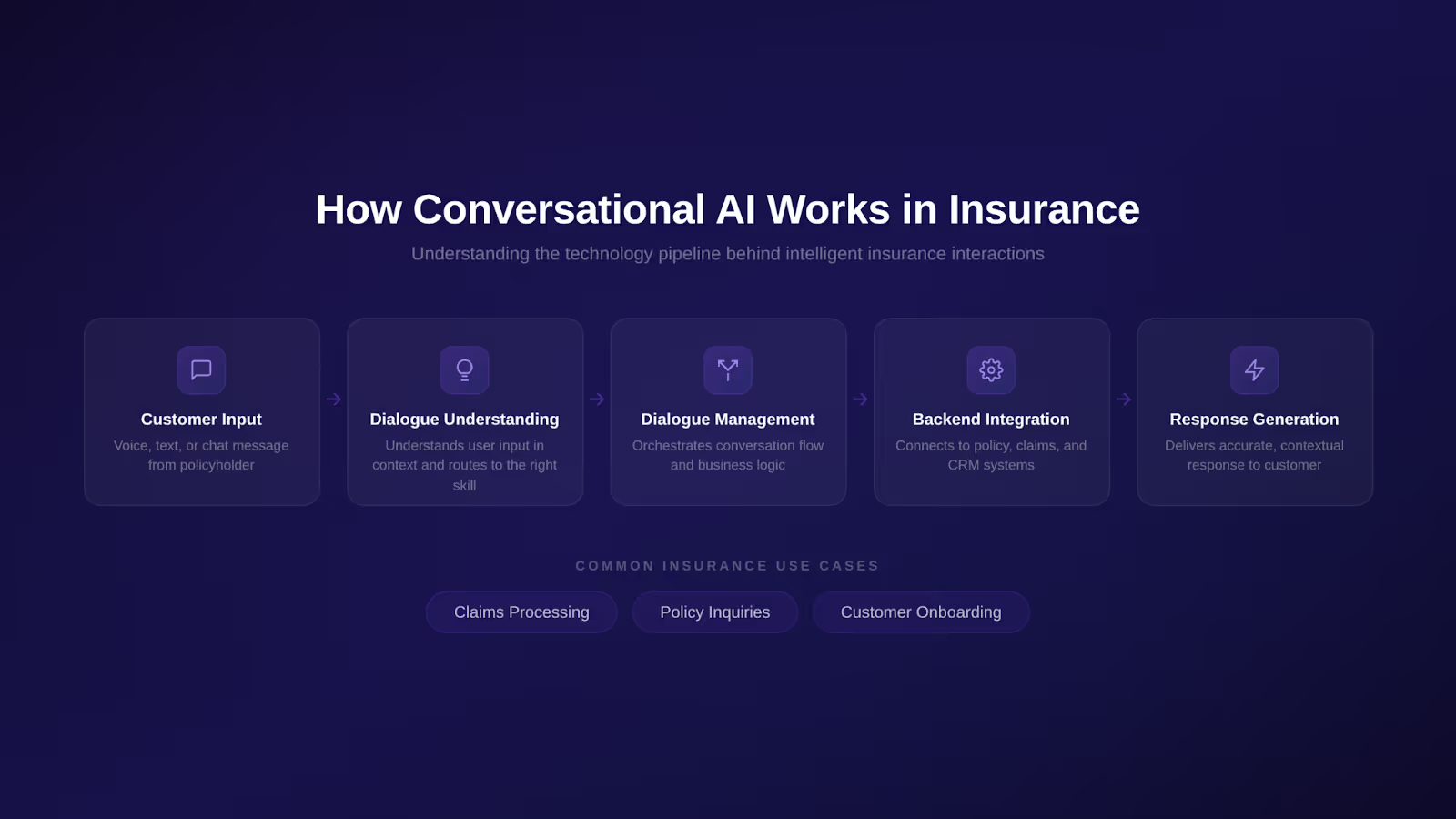
Natural language processing (NLP) parses what customers say, whether typed or spoken through speech recognition, and extracts meaning from messy, real-world language. A customer saying "my basement flooded last night" and another saying "I've got water damage from the storm" are expressing the same claim type. NLP handles these variations so the system responds correctly regardless of how customers phrase their queries.
Intent recognition and entity extraction determine what the customer wants and identify the specific details. "I need to add my daughter to my auto policy" has the intent (add driver) and entities (daughter, auto policy). Strong NLU is what separates AI agents that resolve issues from those that frustrate customers with "I didn't understand that."
Dialogue management controls the conversation flow. Insurance conversations are rarely simple. A claims intake might require collecting incident details, verifying policy status, confirming coverage, scheduling an adjuster, and explaining next steps. Rasa's CALM framework manages these multi-turn conversations, handling interruptions and topic switches without losing context. When a customer stops mid-claim to ask, "Wait, is this covered under my plan?" the system answers and picks the intake flow back up.
Backend integration is where conversational AI stops being a Q&A tool and starts taking action through orchestration. Connected to policy management systems, claims platforms, billing engines, and CRM databases, the AI retrieves customer data, initiates claims, processes payments, and updates policy details in real time. Without deep integration into existing systems, you're just building a fancier FAQ page.
Finally, Voice AI handles phone-based interactions with natural, real-time conversation. Many insurance customers still prefer calling, especially for claims. Rasa's voice agents conduct these customer calls with natural turn-taking, handle interruptions, and process speech input with sub-second latency — all running in your environment, not a third-party black box.
Benefits of Conversational AI for Insurance Companies
The business case for conversational AI in insurance goes beyond cost-cutting. It touches claims, compliance, customer retention, and how your team spends its time. Here's where insurance companies see the most impact.
Faster Claims Processing
First notice of loss (FNOL) is one of the highest-volume, most time-sensitive insurance operations. Conversational AI captures claim details through guided conversation, verifies policy coverage, and initiates the claim. Intake drops from 15-20 minutes to under 5. For a carrier processing 10,000 claims monthly, that's thousands of agent hours reallocated to adjustment, investigation, and customer relationships.
Round-the-Clock Availability
Insurance claims don't happen during business hours. A car accident at 11 PM or a house fire at 3 AM requires immediate response. Conversational AI provides 24/7 claims intake, policy inquiries, and status updates without staffing a night shift. This alone helps boost customer satisfaction scores because policyholders get help when they need it.
Improved Customer Experience
When customers get instant, accurate answers to billing inquiries, policy questions, and claim status requests, satisfaction climbs. No hold times, no transfers, no repeating information. The AI remembers previous interactions and personalizes responses based on customer data and history. AI-powered systems that handle customer queries well enhance customer experience across the board. Insurance providers consistently report higher Net Promoter Scores and lower churn.
Reduced Operational Costs
Automating routine customer inquiries (policy details, billing questions, claims status, document requests) cuts support costs significantly. Insurance companies handling 100,000 monthly interactions typically see 35-45% of volume shift to AI resolution. That's direct headcount savings plus reduced training costs, since new hires focus on complex work from day one rather than learning to handle routine queries.
Better Compliance Posture
Every AI interaction is logged, timestamped, and auditable. The system enforces verification steps consistently on every transaction — no shortcuts, no skipped authentication. For insurance companies navigating state and federal regulations, this documentation exceeds what manual processes produce.
Valuable Insights from Conversation Data
Automated interactions reveal patterns: what customers ask about most, where policies confuse them, which claim types generate the most follow-ups, and how customer sentiment shifts over time. This customer feedback data informs product development, process improvements, and customer behavior analysis in ways manual call reviews can't.
Proactive Engagement
Beyond reactive support, conversational AI enables insurance providers to proactively reach customers with policy renewal reminders, coverage recommendations based on life changes, and claims status updates. Many insurance providers using proactive outreach see measurable renewal rate increases and engage customers before problems escalate, strengthening customer relationships and helping enhance customer satisfaction.
Conversational AI vs Traditional Insurance Chatbots
Traditional chatbots in insurance follow rigid scripts. They work for single-turn questions ("What's the claims phone number?") but break immediately when conversations get real. A customer saying "I think my roof was damaged in the hail storm, but I'm not sure if my policy covers it, and I also need to know my deductible" overwhelms a rule-based bot. It can't handle the compound query, doesn't understand customer queries with multiple intents, and typically responds with "I didn't understand. Please choose from the following options."
Conversational AI handles this naturally. The system identifies three intents (report damage, check coverage, find deductible), addresses each one by pulling data from the customer's actual policy, and guides the conversation forward. It understands context, remembers what was discussed, and adapts when customers change direction. When the conversation requires human intervention (a disputed claim, an emotional customer, a complex coverage question), it escalates to human agents with the full conversation history intact.
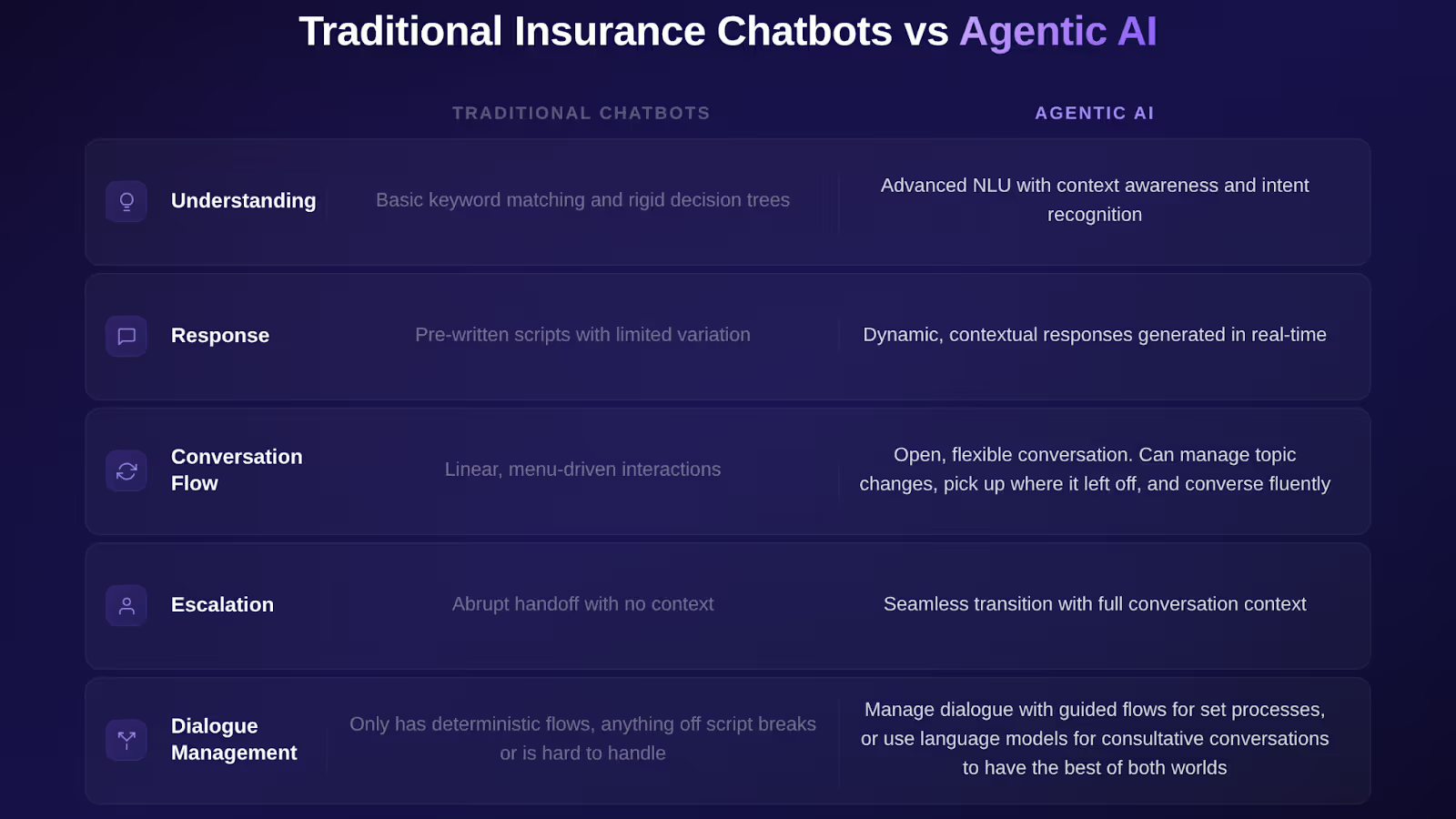
The difference in outcomes is stark. Traditional chatbots in insurance typically deflect 20-30% of interactions successfully. A well-built conversational AI platform with virtual agent capabilities resolves 50-70%. That gap represents thousands of customers who either got help or didn't. For insurance companies competing on customer experience, that gap determines whether policyholders renew or switch.
Virtual agents powered by conversational AI also learn and improve over time. Machine learning models get better at understanding customer queries as they process more interactions. New insurance policy types, seasonal claim patterns, and evolving customer language all feed back into the system. Traditional chatbots stay exactly as capable as the day they were scripted. They can't handle complex queries beyond their predefined scripts, and they can't adapt to how customers communicate.
Implementation Guide for Conversational AI in Insurance
Deploying conversational AI in insurance is more about strategy than technology. The platforms are mature. What separates successful implementations from wasted investment is how you scope, integrate, and iterate.
Start with high-impact, high-volume use cases
Don't try to automate everything at once. Begin with interactions that are high volume, follow clear patterns, and deliver immediate customer value when automated. For most insurance companies, that means claims intake (FNOL), policy status inquiries, billing inquiries, and basic coverage questions. These use cases deliver measurable ROI quickly and build internal confidence in the technology.
Map your customer journeys
Before building anything, understand how real customer interactions flow. Pull data from call transcripts, chat logs, and customer feedback. What do policyholders actually say when they file an insurance claim? How do they describe damage? What follow-up questions do they ask? Don't guess. Analyze real conversations. This data becomes your training foundation and ensures the AI handles customer queries the way they're expressed, not how your team assumes they'll be phrased.
Integrate with core insurance systems
Your conversational AI solution needs to connect to your policy administration system, claims management platform, billing engine, CRM, document management, and identity verification tools. That integration is what turns the AI from an information tool into an operational channel. A customer asking "what's the status of my claim?" should get the actual status pulled live from your claims platform, not a generic "we're working on it." Rasa's orchestration coordinates these connections, letting the AI agent access multiple backend systems within a single conversation.
Plan for escalation from day one
No conversational AI handles everything. Insurance involves emotional situations: a family after a house fire, a driver after a serious accident. Build clear escalation paths so complex queries and sensitive interactions transfer to human agents with full context. The handoff quality defines the customer experience as much as the automation itself. Human customer service representatives should receive the complete conversation history so customers never repeat themselves.
Deploy across channels
Insurance customers engage through phone, web chat, mobile apps, email, and messaging platforms. Your conversational AI platform should support all of them with a consistent experience and shared context. A policyholder who starts a claim on their phone during an accident and continues on their laptop at home shouldn't restart the process. Multilingual capabilities extend reach for insurance providers serving diverse populations without building separate systems for each language.
Measure, learn, iterate
Track resolution rates, customer satisfaction, escalation frequency, handle time, and operational efficiency. Use these metrics to identify gaps and expand coverage. If billing inquiries resolve at 80% but claims questions only hit 50%, invest in claims conversation design. The best implementations treat launch as the starting point, not the finish line. Monitor customer sentiment and adjust the AI based on real interaction data.
The Right Conversational AI Platform for Insurance
Insurance isn't retail or banking. It has unique requirements that general-purpose AI platforms often miss. When evaluating conversational AI for insurance, these are the capabilities that matter most.
Compliance and Data Control
Insurance companies handle sensitive customer data: medical records, financial information, and personal details. Your platform needs on-premises or private cloud deployment options so data never leaves your infrastructure. Rasa offers both, giving insurance providers full control over where data lives and how it's accessed. This isn't optional for insurance operations handling health insurance claims or personally identifiable information.
Domain Flexibility
Insurance products vary wildly: auto, home, health, life, commercial, specialty. Your AI needs to handle policy-specific language and workflows without rebuilding for each line of business. Rasa's architecture lets insurance companies build once and customize per product line, reusing core logic across the insurance sector.
LLM Control
Many insurance providers can't send customer data to third-party AI models. You need a platform that lets you choose your language models, run them on your infrastructure, and maintain audit trails. Rasa is LLM-agnostic. Choose your models, swap them without rebuilding, and keep customer data under your control.
Integration Depth
Legacy systems are a reality in the insurance industry. Your platform should work with your existing systems, not require replacing them. Rasa connects to policy administration, claims management, billing, CRM, and document systems through flexible APIs and enterprise RAG for pulling verified information from your knowledge bases.
Proven in Insurance
nib Group, an Australian health insurance provider covering over 1.4 million residents, deployed Rasa and saw member interactions increase by over 900% with a 95% conversation understanding rate and over 50% of conversations resolved through self-service. Groupe IMA uses Rasa architecture to provide 24/7 intelligent support for nearly 30 million drivers across France. And ERGO Group AG (a Munich Re company) is using Rasa to, in their words, "completely rethink how we build customer support experiences" with a focus on developing faster, cheaper, and at scale.
Conclusion
The insurance industry is moving from reactive, phone-first service to proactive, AI-assisted customer engagement across every channel. Conversational AI for insurance isn't a future technology. Insurance companies are deploying it now to handle claims, service policies, assist customers, and reduce operational costs.
The difference between success and failure comes down to platform choice and execution. Insurance needs AI agents that handle complex, regulated workflows with precision. Generic chatbot platforms can't deliver the compliance controls, integration depth, and conversation quality insurance operations require.
Rasa helps insurance providers build conversational AI that works in production, resolving real customer needs while maintaining the security and governance your organization requires. Try Hello Rasa to start building in minutes, or contact sales to see how insurance teams deploy AI agents at scale.