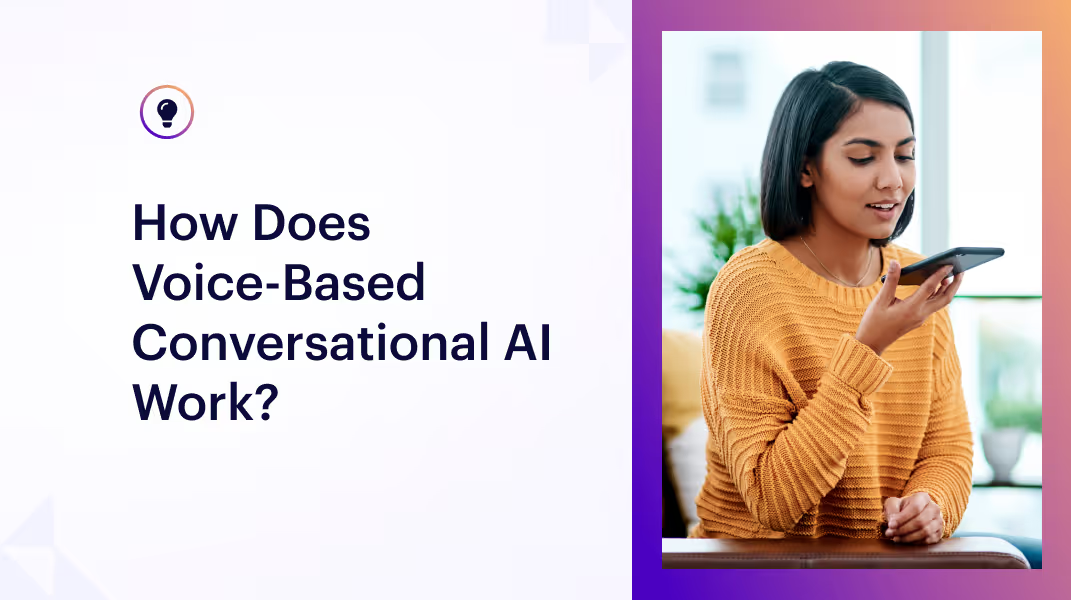

When a customer calls a support line and speaks to an automated agent to resolve an issue, they’re using voice-based conversational AI. In many enterprises, this experience builds on traditional Interactive Voice Response (IVR) systems, but replaces rigid menus with natural conversation.
This technology lets users interact with systems through natural speech rather than typing or navigating menus.
It relies on automatic speech recognition and natural language processing (NLP), supported by machine learning, to understand intent and deliver real-time responses. By removing keypad prompts and scripted call trees, voice-based artificial intelligence (AI) to make digital interactions faster and feel more natural.
For businesses, this technology improves how customers receive service. It reduces wait times and automates routine requests while supporting complex interactions without requiring constant human involvement. Industries, like telecommunications and public sector organizations, use it to strengthen customer engagement and increase operational efficiency.
As consumer expectations about simplified communication continue to rise, voice-based conversational AI has become a core part of digital transformation strategies. Below, we’ll explain how it works, explore the features that drive performance, and show how enterprises use it to create measurable value.
Key takeaways
- Voice-based conversational AI enables natural, real-time speech interactions, going beyond simple commands to support full, multi-turn conversations.
- Unlike traditional IVR, voice AI understands context, handles conversational repair, and personalizes experiences across channels and devices.
- Core features like speech recognition, NLP, and TTS work together to interpret user intent, generate accurate responses, and maintain fluid dialogue.
- Enterprises use voice AI to automate high-volume tasks, modernize IVR, improve accessibility, and meet strict compliance standards.
- Platforms like Rasa offer the flexibility to deploy voice AI on premises or in a private cloud, helping organizations balance performance, control, and security.
What is voice-based conversational AI?
Voice-based conversational AI understands spoken language and uses natural language understanding (NLU) to provide real-time, accurate responses. For example, a customer who asks a virtual assistant for their account balance can receive an immediate answer.
Unlike traditional systems that rely on typed or written text input, voice AI agents allow direct, natural communication, mirroring how people normally interact.
What makes voice-based AI different?
Voice-based AI goes beyond simple commands like “check my balance” or “flag a suspicious transaction.” Unlike text-based or command-only systems, it can have complete conversations, remember context, and adjust responses based on what the user says. Here’s what sets it apart:
- Natural communication: Users speak naturally, making it faster and more intuitive than typing, creating a smoother user experience.
- Context-aware responses: Retain information throughout the conversation, allowing follow-up questions and clarifications without needing to restate it.
- Improved accessibility: Voice AI makes technology more accessible to users who find typing difficult, such as older adults and people with disabilities.
For example, a customer calling a telecom provider might say, “I need help with my internet,” then add, “It drops every evening around 7 p.m.” The agent understands both statements and keeps the context, providing step-by-step troubleshooting without transferring the user to a live agent.
Turning routine tasks into natural conversations helps voice-based AI improve the customer experience while reducing the need for manual support.
Core capabilities of voice-based conversational AI
Voice-based conversational AI relies on a set of key capabilities to deliver effective instructions. These features ensure the AI system can understand users and respond accurately, while scaling across multiple use cases for more meaningful and reliable conversations.
Accurate speech recognition for real-world conditions
Advancements in voice-based AI technology mean it works well in conditions that may affect accuracy, such as background noise, different accents, and varied speaking styles. This accuracy matters, especially in fields like finance and healthcare, where mistakes can have serious consequences, like costly banking transaction errors or incorrect medication instructions.
Here’s how accurate speech recognition can make a difference:
- Telehealth: A patient describes symptoms, and the system records the information correctly for the doctor.
- Banking: Customers check balances or confirm transactions by voice.
- Customer support: Callers explain issues naturally, and the agent interprets and routes requests accurately.
NLP that understands context and intent
NLP lets voice-based AI understand what users mean, not just the words they say. This means the agent can follow multi-turn conversations and remember earlier details, while also asking questions to clarify when something isn’t clear. Rather than forcing users through rigid, scripted flows, NLP allows the conversation to be more flexible.
For example, if a customer asks, “Can I change my appointment?” and then adds, “Actually, make it next Friday,” the agent understands the update and adjusts the booking without starting over.
Seamless support across devices and channels
Modern voice-based AI can follow conversations across multiple devices and channels, including phone calls, mobile apps, and smart speakers. This omnichannel approach means users don’t have to repeat themselves when switching platforms, since context automatically carries over.
For instance, a customer might start troubleshooting an internet issue on their phone, continue the conversation on a smart speaker at home, and get updates via a mobile app. The agent remembers the previous steps, delivering a more fluid and responsive experience.
Tailored responses through personalization
An AI-powered voice model can personalize interactions, using user profiles, history, and preferences to deliver relevant answers. It can also handle multilingual conversations and understand industry-specific vocabulary, making the experience feel more helpful.
Personalization allows the agent to go beyond reactive support and offer proactive guidance, like:
- Suggesting next steps: Remind a customer to follow up on a recent service request.
- Providing timely alerts: Notify users when a bill is due or a prescription needs to be refilled.
- Offering personalized recommendations: Suggest products or services based on previous interactions.
Enterprise-grade security and compliance
Voice AI handles sensitive information, so keeping data secure is a top priority, especially in regulated industries like healthcare or finance, where breaches or mishandling can have serious financial or legal consequences.
Many organizations rely on private cloud (isolated storage) or on-premises server setups to meet strict compliance requirements, like HIPAA or GDPR.
Platforms like Rasa take enterprise control even further, combining the security of on-prem or private cloud setups with AI-specific tools. This lets companies manage who sees what, control logs, enforce encryption, and customize conversational workflows, while remaining compliant.
How does voice-based conversational AI work?
Voice-based conversational AI relies on several interrelated processes that turn speech into meaningful action. Below, we provide a concise step-by-step look at how those processes work together.
Capturing speech
The process starts with speech recognition. The system listens to what’s being said and turns spoken words into text, accounting for differences in accents, intonation, and pronunciation. Over time, advanced models improve as they learn from real conversations, reducing errors and boosting accuracy.
Understanding context
Next, NLP evaluates the transcribed text to determine what the user means and how it fits into the conversation. Rather than reacting to each sentence on its own, the agent connects the dots between messages so the exchange feels like a real, flowing dialogue.
Generating responses
Once the agent understands what the user wants, it decides on the right reply. It then turns that response into natural-sounding speech using text-to-speech (TTS) technology, so the answer feels like a real-world conversation.
Conversational repair
Real conversations aren’t always neat and predictable. People change their minds, interrupt themselves, jump to a different question mid-sentence, or repeat info. Voice-based AI uses conversational repair to handle these moments smoothly, keeping dialogue moving without confusion.
Rasa is a standout solution for this, letting businesses design their own repair strategies. That means the agent can recover gracefully from interruptions or unclear input and still deliver a helpful response—even in complex conversations.
Where voice AI delivers the most impact
Voice-based conversational AI brings real, trackable benefits across many industries, from banking and retail to healthcare and telecommunications. Here’s a look at why companies use it and where it fits into their operations.
Faster, more consistent customer experiences
Voice AI helps customers get answers quickly, reducing wait times and simplifying everyday tasks. Rather than navigating long menus or waiting on hold, users can speak naturally and get immediate support.
At the same time, AI agents handle routine tasks, like checking account balances, tracking orders, and resetting passwords, so human agents can focus on more complex issues.
For example, a telecom company using voice AI might see higher first-call resolution rates if an AI agent troubleshoots connectivity issues rather than handing off calls to live agents. Customers appreciate the speed and consistency, leading to higher CSAT scores and greater overall satisfaction.
Automating high-volume tasks in banking and finance
Voice AI makes it easy for banks and financial institutions to offer secure self-service. Customers can check balances, get fraud alerts, and review recent transactions without waiting for an agent.
AI agents also help automate identity verification and transactional support, freeing staff to focus on more complicated customer requests.
For example, voice AI can verify a customer’s identity through voice biometrics or assist with credit card payments or transfers. These types of tasks show how voice AI can efficiently handle routine requests.
But let’s look at a real-world case to better illustrate this: N26 uses Rasa to manage credit card inquiries, like reporting lost cards, entirely within its secure system. Rasa’s flexible, on-prem and private cloud setup enables N26 to automate high-volume support while keeping sensitive financial data fully controlled and compliant.
Supporting large-scale public sector needs
Voice AI helps governments manage high volumes of citizen requests without long wait times. That includes spikes in calls during busy periods, like tax season or benefit enrollment, ensuring people get the info they need fast.
People can get help with everyday tasks, such as renewing a driver’s license or checking for updates to benefit programs. With 24/7 availability, support isn’t limited to office hours. These systems also offer multilingual support, allowing public sector organizations to serve more citizens and reduce strain on call centers.
Enabling smarter retail and customer personalization
Retailers can use voice AI to turn every customer interaction into a smarter, more personalized shopping experience, even during peak shopping periods, like holiday sales or major promotions. Customers can ask for product recommendations, check stock, or get help finding the right item without digging through menus or waiting in line.
AI agents also help reduce cart abandonment, guiding users through checkout and suggesting complementary products. They improve product discovery, too, learning from past interactions and remembering preferences, so they can offer proactive suggestions.
For example, a shopper who frequently buys running gear might receive recommendations for new sneakers or accessories tailored to their past choices.
How voice-based conversational AI transforms IVR
IVR has been a core part of call centers for years, helping to route calls and handle simple customer requests. Voice-based conversational AI modernizes IVR by acting as its evolution, not a replacement, layering NLU and context awareness on top of existing call infrastructure.
But traditional IVR often frustrates users with rigid menus, long hold times, and limited capabilities. Voice-based conversational AI makes these interactions more dynamic and human-like.
What makes AI-driven IVR different:
- Conversational flexibility: Customers can speak normally instead of pressing buttons through pre-recorded menus. For example, a user might say, “I need to reset my password,” and the system guides them through the process step by step.
- Context awareness: AI remembers details from earlier in the conversation, letting users switch topics or add information without having to start over.
- Proactive assistance: Based on past interactions, the system can anticipate needs and offer solutions upfront, speeding up the process.
The benefits of modernizing IVR with AI include:
- Faster call resolution: AI reduces hold times and addresses queries quickly.
- Better customer satisfaction: Human-like interactions and quicker resolutions improve engagement and encourage loyalty.
- Improved operational efficiency: Automating routine tasks, like payments or account updates, frees staff to focus on more complex issues.
For example, in financial services, AI-driven IVR can handle balance checks and fraud alerts with minimal human involvement. In healthcare, it helps patients schedule appointments and securely access lab results.
Why upgrade your IVR with voice-based conversational AI?
Adding AI to your IVR transforms the way customers interact with your business. Instead of forcing callers to adapt to menu logic, an AI-driven IVR adapts to how people actually speak. It lets you deliver faster, more personalized service at scale. Platforms like Rasa make the switch easier, providing tools and APIs that let you tailor the AI to your industry and unique customer needs.
Whether you want to streamline call center operations or offer smarter self-service, AI-driven IVR opens the door to innovation that keeps customers satisfied, and your teams focused on higher-value work, like handling escalations that involve multiple departments or special approvals.
Build better voice experiences with Rasa
Voice AI is a real, scalable solution that works day after day under real-world conditions. With Rasa, you get a platform that flexes to fit your business needs, setting you up for success.
Rasa combines powerful language understanding with flexible conversation management. The robust engine accurately detects intent and extracts entities from real-world speech, while the dialogue management system adapts to interruptions and topic changes.
Rasa also supports on-premises and private cloud deployments, giving teams full control over data and compliance in a single platform built for real-world voice AI.
Ready to improve customer experiences and satisfaction with high-quality voice-based AI? Connect with Rasa to start your journey.
FAQs
What is voice-based conversational AI?
Voice-based conversational AI allows users to interact with systems through spoken language. It uses technologies like speech recognition and natural language understanding (NLU) to interpret user input and respond in real time.
How is voice AI different from traditional IVR?
Unlike IVR systems that rely on fixed menus and keypad input, voice AI enables natural conversations, remembers context, and adapts to user intent. This leads to faster, more human-like interactions and higher customer satisfaction.
What are the main benefits of using voice AI in customer support?
Voice AI helps reduce wait times, automates repetitive tasks, and delivers consistent service around the clock. It also frees up human agents to handle complex issues that require empathy or critical thinking.
Can voice AI handle conversations across different channels or devices?
Yes. Modern voice-based AI can follow users across phone, mobile apps, and smart speakers, maintaining context so users don’t need to repeat themselves.
Is voice-based AI secure enough for industries like finance or healthcare?
Yes, especially with platforms like Rasa, which support on-premises and private cloud deployments. These options give organizations full control over data privacy, security, and compliance with regulations such as HIPAA and GDPR.