Teams evaluating an AI customer service platform ask the same three questions: can we self-host, can our team own it, and what does it actually cost? Here's how Rasa compares on the dimensions that decide enterprise deals


Ada






Two platforms, two opposite philosophies
Ada is a no-code AI automation platform trained on knowledge base content, delivering automated resolution across chat, email, social, and limited voice.

Rasa is an enterprise conversational AI platform built on a self-hosted, developer-owned architecture. Patented dialogue management (CALM) delivers guided governance: business logic controls high-risk actions through explicit policies, regardless of LLM output. Native voice (Twilio, AudioCodes, Genesys), 100% on-prem or private cloud, transparent conversation-volume pricing. Customers include N26, Deutsche Telekom, Helvetia, Autodesk.
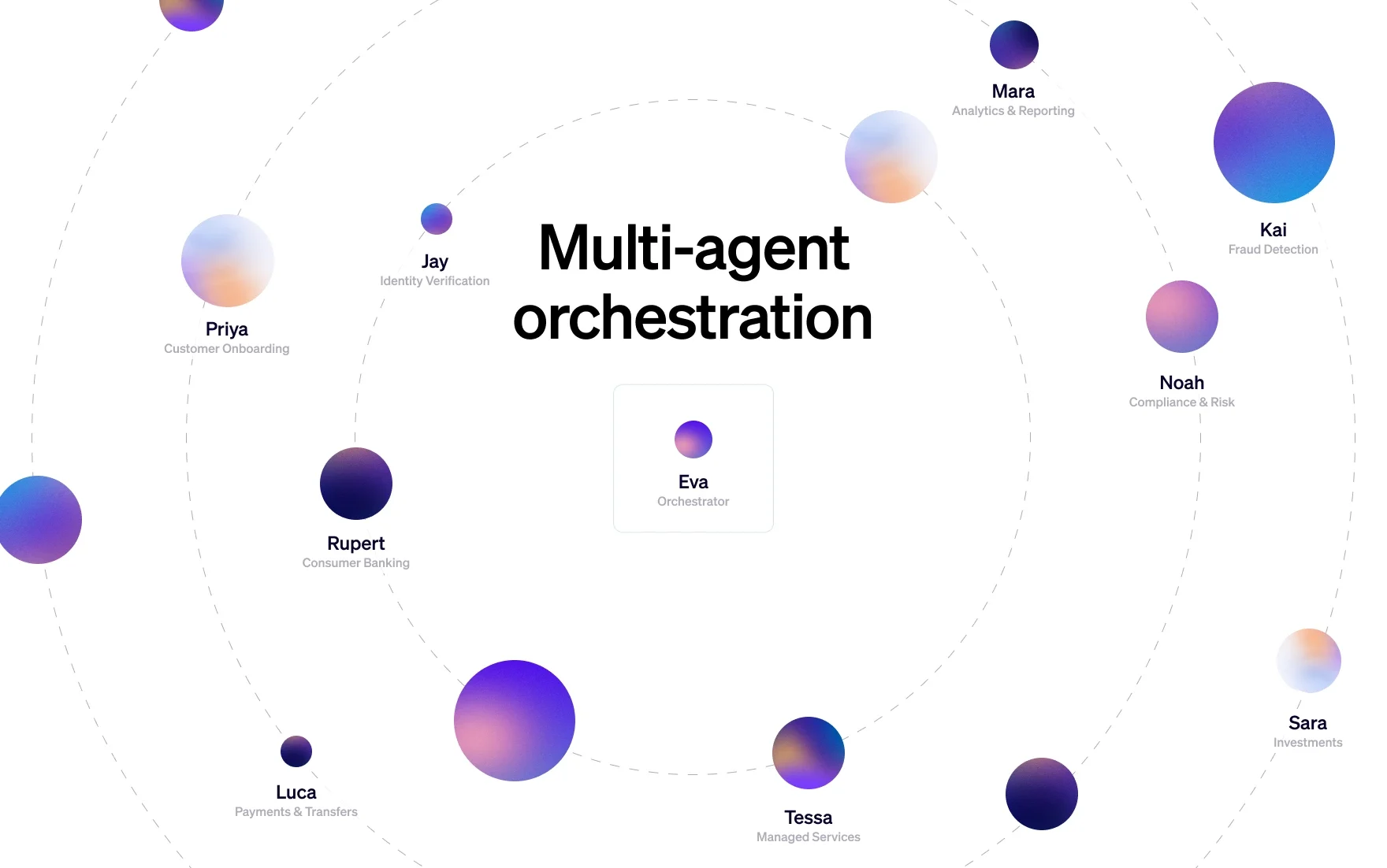
One platform for voice and chat, running in your environment
Rasa runs the same guided-governance engine across phone and chat, fully self-hosted. Your team configures flows, policies, and integrations directly, with no managed-service dependency.
- Native voice over Twilio, AudioCodes, and Genesys, sharing context with chat.
- Explicit policies control high-risk actions on regulated workflows, regardless of LLM output.
- Deploy on-prem, in private cloud, or air-gapped, with no customer data leaving your perimeter.
Side-by-side on the dimensions that decide enterprise deals
Our methodology
This comparison draws on user reviews from G2, Capterra, TrustRadius, and GetApp, combined with vendor documentation, published pricing, and enterprise buyer interviews. We review product documentation, pricing pages, and feature releases directly, and cross-reference reviews for real-world deployment patterns and common friction points, with a focus on regulated industries (banking, healthcare, telco, insurance) where deployment flexibility and governance architecture are hard gates.
Conflict of interest disclosure: This comparison is published on Rasa's website. Rasa is a commercial conversational AI platform and stands to benefit from enterprises choosing its platform. We address this by (1) publishing genuine competitor strengths, (2) using factual vendor documentation as primary evidence, and (3) maintaining a monthly review cadence.
This page is reviewed monthly. Last comprehensive review: May 2026.
The dimensions, side by side
No-Code Automation vs. Customizable Framework
Ada
| Rasa
|
Deployment Model & Data Sovereignty
Where and how your data lives determines compliance posture, latency, and switching costs.
Ada
| Rasa
|
NLU Capabilities & Accuracy
How the platform understands intent and where decision authority sits.
Ada
| Rasa
|
Security & Compliance
Certifications, data handling, and audit posture.
Ada
| Rasa
|
Developer Experience & Integration
Who builds, debugs, and extends the agent.
Ada
| Rasa
|
Pricing & ROI
Cost structure and predictability.
Ada
| Rasa
|
Customer Success and Support
What customers get when something breaks or scope changes.
Ada
| Rasa
|
Which platform wins for your use case
Ada
Ada fits support teams that want no-code automation and fast deployment for high-volume deflection, and that are comfortable with cloud-only SaaS and custom pricing.
Rasa
Rasa fits enterprises that need ownership, self-hosted deployment, native voice, deterministic governance, and transparent pricing.
More Conversational AI Comparisons
Common questions
What's the main difference between Ada and Rasa?
Ada is a no-code, knowledge-base-trained cloud AI for customer support. Rasa is an open-source conversational AI framework supporting on-premise deployment and deep customization.
What's the main difference between Ada and Rasa?
Ada is a no-code, knowledge-base-trained cloud AI for customer support. Rasa is an open-source conversational AI framework supporting on-premise deployment and deep customization.
Can I use Ada for anything other than FAQ-style customer support?
Ada is optimized for help-center-based queries. For complex workflows, internal processes, or custom domains, Ada is limited. Rasa supports any conversational AI use case.
Can I use Ada for anything other than FAQ-style customer support?
Ada is optimized for help-center-based queries. For complex workflows, internal processes, or custom domains, Ada is limited. Rasa supports any conversational AI use case.
Does Ada support voice?
Ada has limited voice support. Rasa supports native voice via Twilio, AudioCodes, Genesys.
Does Ada support voice?
Ada has limited voice support. Rasa supports native voice via Twilio, AudioCodes, Genesys.
Is Ada cloud-only?
Yes. Ada is cloud-only SaaS. Rasa supports cloud, on-premise, and hybrid.
Is Ada cloud-only?
Yes. Ada is cloud-only SaaS. Rasa supports cloud, on-premise, and hybrid.
How long does Ada setup take?
Ada: days to production, no-code. Rasa: open-source can start immediately; first bot in days with developer effort.
How long does Ada setup take?
Ada: days to production, no-code. Rasa: open-source can start immediately; first bot in days with developer effort.
Is Ada suitable for healthcare?
Cloud-only limits healthcare compliance unless . Rasa supports HIPAA via on-premise deployment + audit logging.
Is Ada suitable for healthcare?
Cloud-only limits healthcare compliance unless . Rasa supports HIPAA via on-premise deployment + audit logging.
AI that adapts to your business, not the other way around
See Rasa in your environment
Run Rasa self-hosted with native voice, guided governance, and transparent pricing. Talk to our team about your conversational AI roadmap.