
Most AI customer service software was built to deflect. Route the easy tickets. Answer the FAQ. Hand everything else to a human agent.
That model worked when chatbots handled 15% of volume. It breaks when you need the AI to actually resolve billing disputes, multi-step account changes, claims processing, and authentication workflows across voice and chat.
The best AI customer service software in 2026 doesn’t just deflect simple queries. It contains complex, multi-turn conversations that first-generation chatbots escalate.
We evaluated 10 platforms across containment depth, LLM governance, voice capability, deployment flexibility, and total cost of resolution. Each was assessed on its ability to provide the best customer support AI automation to resolve the conversations your current chatbot cannot.
Best AI Customer Service Software in 2026: Quick Comparison Table
How We Evaluated These AI Customer Service Solutions
Our team evaluated each platform across seven weighted dimensions. We’ve analyzed aggregated user reviews from G2 and Capterra, reviewed public pricing, tested deployment workflows, and consulted with enterprise engineering teams running conversational AI in production.
We prioritized platforms that enterprise buyers in regulated industries (financial services, telco, healthcare, government) would encounter during a real evaluation cycle.
Each platform was assessed on its production-readiness, not on demo-day performance.
Our Scoring Methodology
Top 10 Best AI Customer Service Software in 2026
#1. Rasa: Best AI for Customer Support Overall
Score: 9.3/10. Highest marks for containment depth (10/10), governance (10/10), voice (10/10), and deployment (10/10). Scored lower on community review volume (6/10).
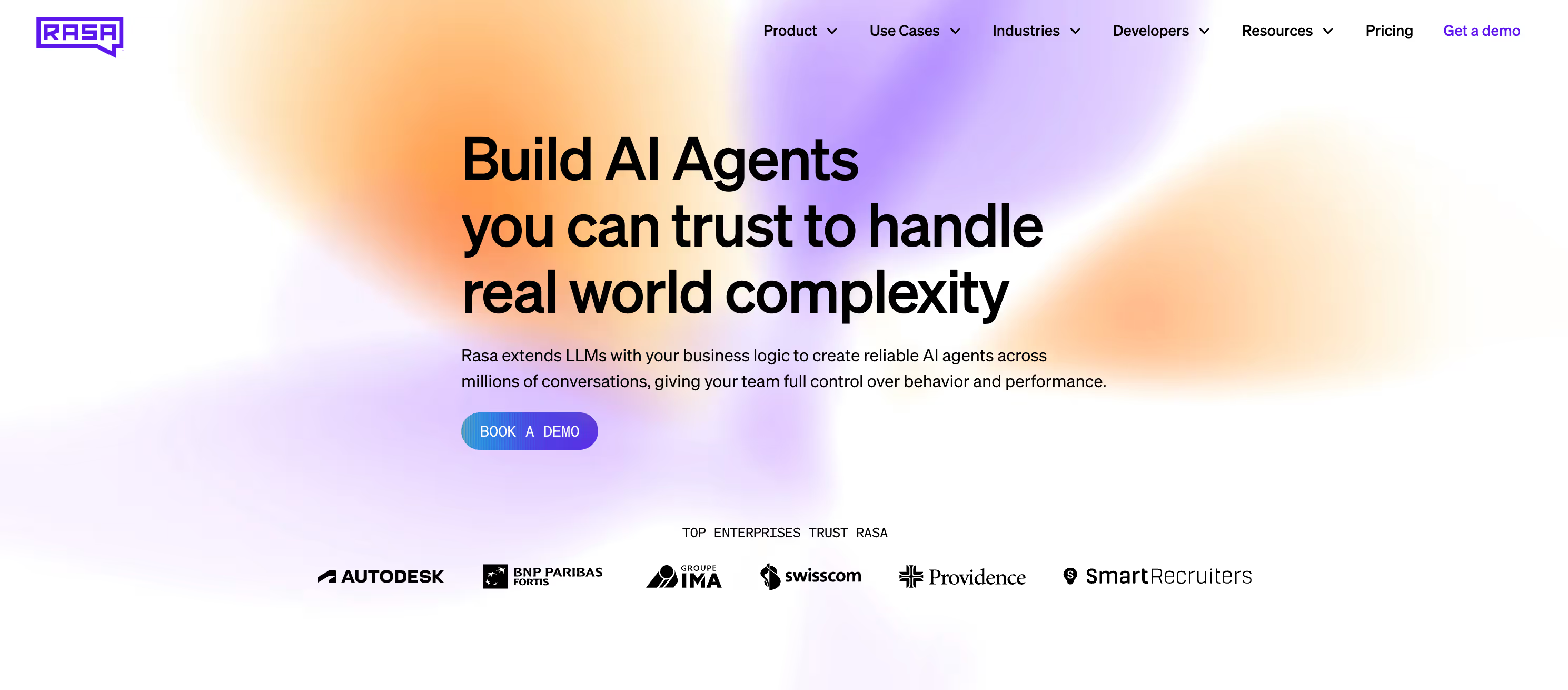
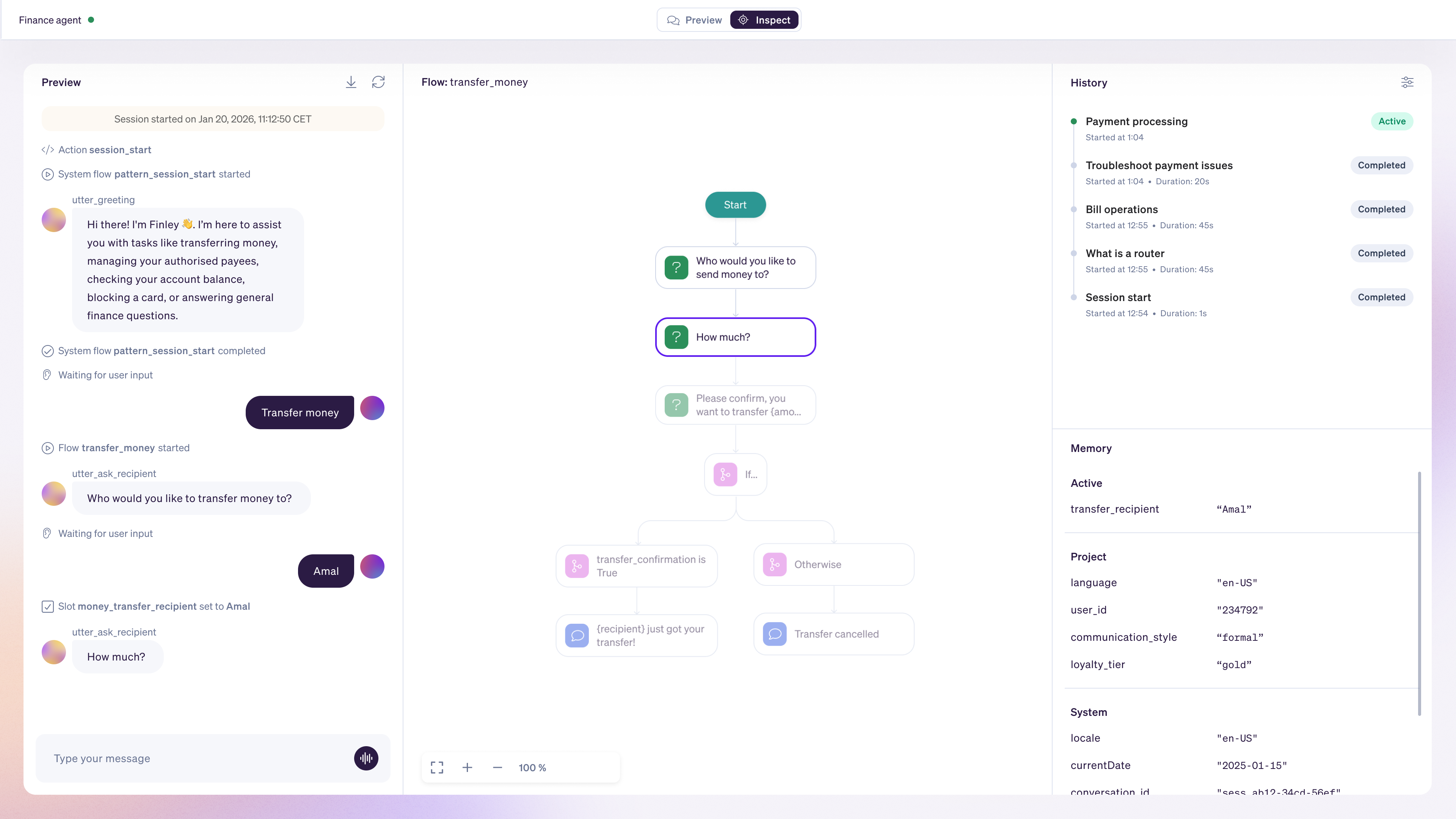
Rasa is the developer platform for enterprise AI agents. For customer service teams, Rasa combines guided conversation governance with native voice capability, giving contact centers an AI that resolves what chatbots escalate.
Best for CX and contact center leaders at 1,000+ employee enterprises in regulated industries that need the best AI agents for customer service with guided governance, self-hosted deployment, and production-grade containment across voice and chat.
Product Overview
Pain 1: AI cannot contain complex, multi-step customer queries.
First-generation chatbots deflect FAQ-level questions and escalate everything else.
Rasa orchestrates multi-turn conversations across back-end systems, tools, and channels.
Rasa's patented Orchestrator structures LLM behavior within defined business guardrails.
The LLM handles dialogue understanding: interpreting what the customer means. Guided skills control what the agent does.
The result is containment depth, not just deflection.
Pain 2: Inconsistency across voice and digital service channels.
Most platforms handle chat.
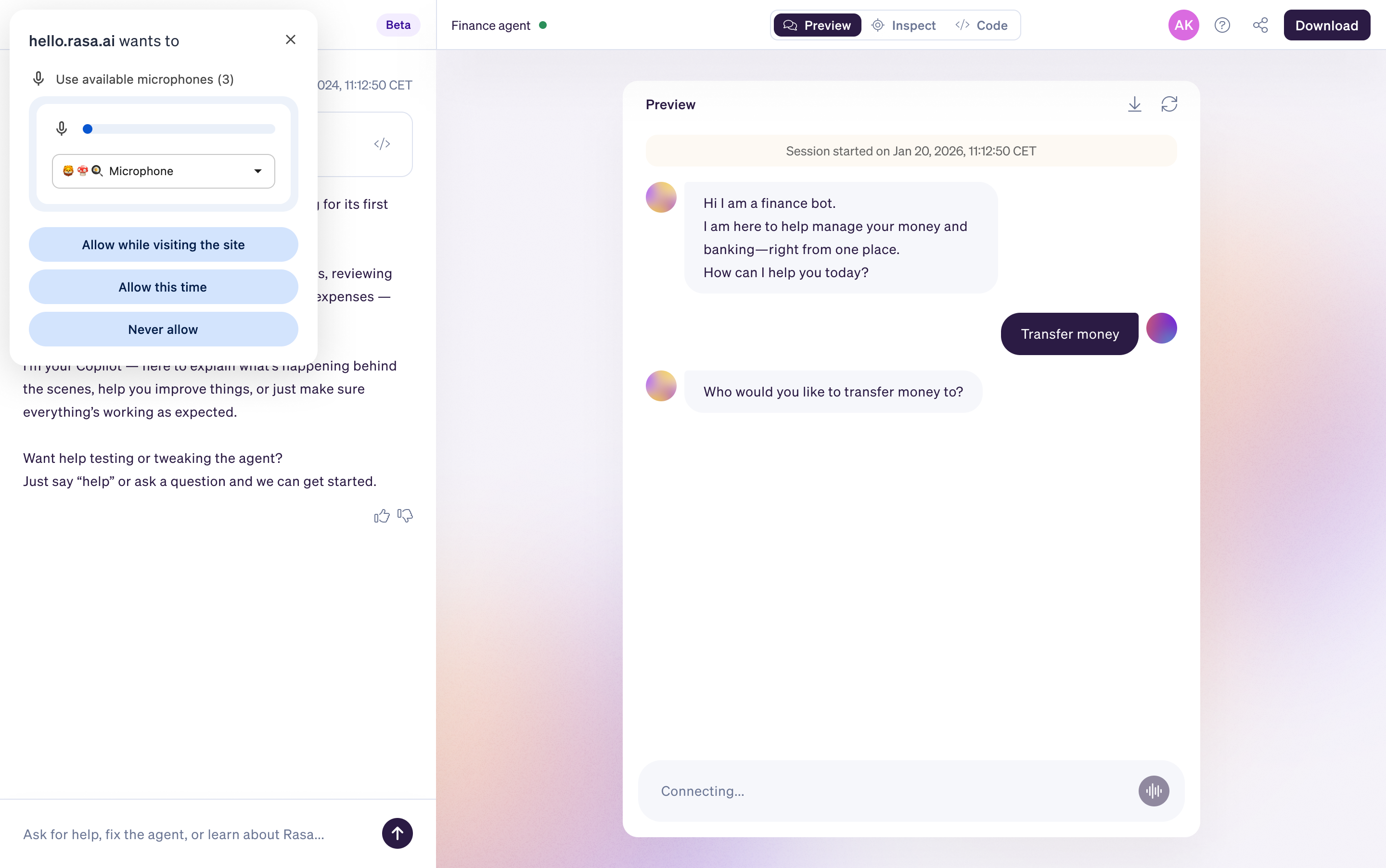
Rasa Voice extends the same conversational logic to voice channels: same policies, same integrations, same analytics.
Built-in Voice Stream connectors for Twilio Media Streams, Jambonz, AudioCodes, and Genesys Cloud. Choose your own ASR (Deepgram, Azure) and TTS (Cartesia, Deepgram, Azure, Rime) providers. No separate voice platform to maintain.
Pain 3: Governance and accountability in regulated customer service environments.
Self-hosted deployment means customer data stays in your environment.
Rasa does not host any customer data, systems, or applications.
Every AI-generated response is traceable through guided skills and orchestration. Full audit trails for compliance review. Policy enforcement at the conversation and action level.
Pricing
Developer Edition (Free): Full access to Rasa. One bot per company, up to 1,000 external conversations/month (100 for internal agents). Community support via the Rasa Forum.
Enterprise (Custom): Premium support, dedicated CSM, advanced security features, custom onboarding. Contact Rasa for a quote.
Pricing is based on annual conversation volume, not per-user or per-seat.
Integrations and Extensibility
CRM integrations (Salesforce, Zendesk), ITSM connectors (ServiceNow, Jira), order management, and authentication systems built through Action Server custom actions.
MCP server integration (beta). A2A (Agent-to-Agent) protocol (beta).
Teams extend Rasa at the engine level: replace or modify the RAG pipeline, command generator, NLU components, or rephraser.
This is the best AI agent builder for customer service teams that need code-level control.
Deployment and Setup
Self-hosted in your environment from day one. On-premise, private cloud, or hybrid deployment. The fastest path to an on-prem or private cloud deployment for enterprise AI customer service.
Swisscom went from prototype to production in 20 weeks using the Rasa Orchestrator.
Tradeoffs
Rasa requires a builder mindset and meaningful engineering investment. More platform than you need if you want a simple out-of-the-box chatbot live in two weeks. Teams need Python developers and familiarity with conversational AI architecture.
The tradeoff: steeper learning curve for production-grade governance and full ownership of your AI.
Support
- Enterprise tier includes premium support with a dedicated customer success manager.
- Community support via the Rasa Forum.
- Documentation at rasa.com/docs.
- Learning resources at learning.rasa.com.
Mini Case Study
Deutsche Telekom deployed Rasa across its IT service desk for 10,000+ employees in German and English. 50% of service desk inquiries are now resolved autonomously. Agent workload dropped 30%. Non-technical IT experts use Rasa Studio design and manage agent skills.
→Read the Deutsche Telekom case study
See How Rasa Resolves What Chatbots Escalate
#2. Zendesk AI: Best AI Customer Service Software for Knowledge Management
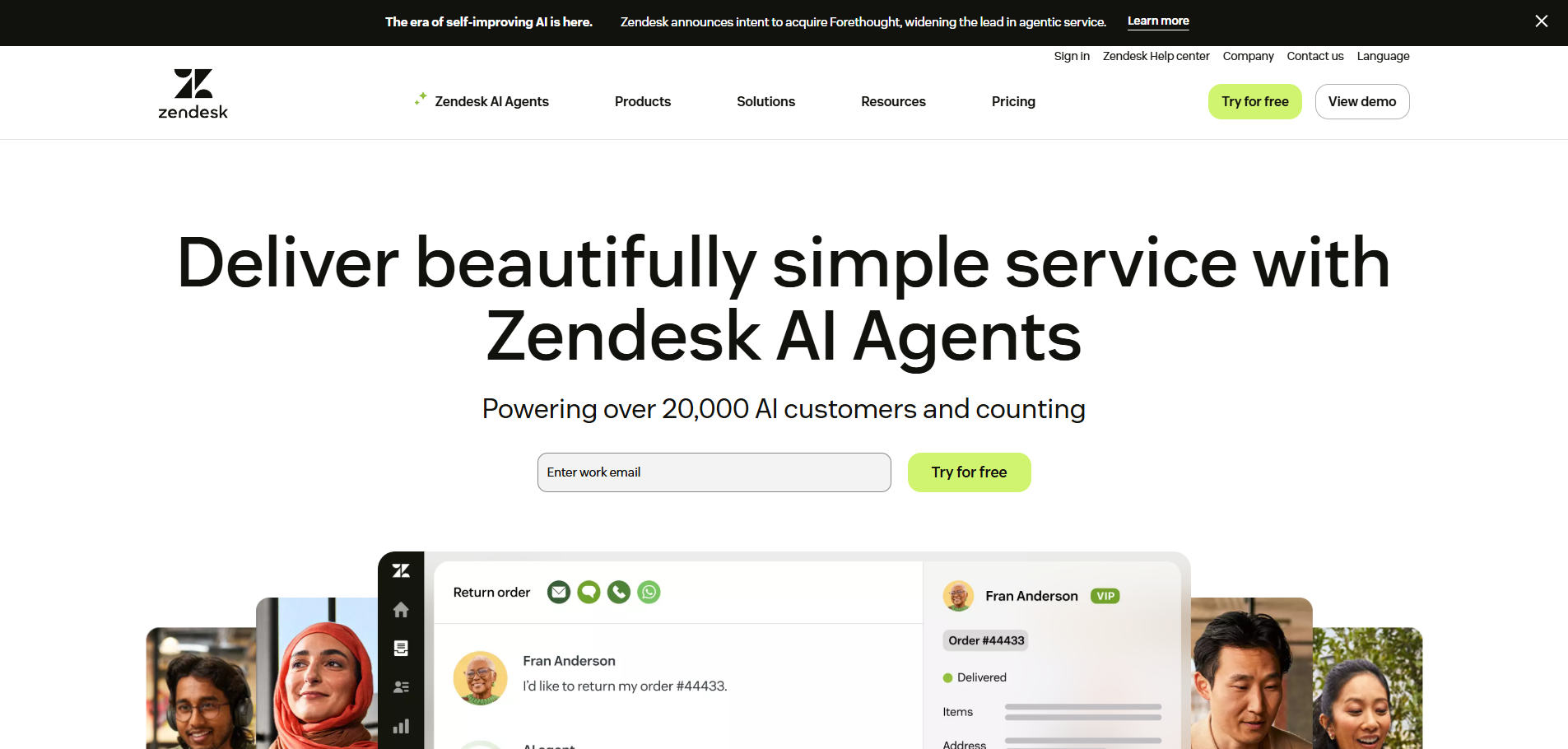
Best for mid-market and enterprise support teams already on Zendesk that need AI-powered ticket routing, knowledge surfacing, and agent productivity tools within their existing workflow.
Score: 7.4/10. Strong integration (9/10) and reviews (9/10). Scored lower on governance (4/10), deployment (3/10), and containment depth for complex queries (6/10).
Product Overview
- Zendesk AI layers on top of the Zendesk Suite to add generative AI replies, ticket summarization, tone adjustment, and intelligent routing.
- AI agents (formerly Ultimate, acquired 2024) handle autonomous resolution for straightforward queries.
- Knowledge management is where Zendesk leads: AI-powered article suggestions, content gap identification, and help center optimization.
Pricing
- Zendesk Suite starts at $19/agent/month (billed annually).
- AI add-ons priced separately.
- Advanced AI features available on Professional and Enterprise tiers.
- Total cost rises significantly with agent count and AI feature activation.
Deployment and Integrations
- Cloud-only.
- No self-hosted option.
- Zendesk Marketplace offers 1,500+ integrations.
- Native integrations with Salesforce, Slack, Jira, Shopify.
Setup
- Days for basic configuration.
- Weeks for full deployment with custom routing rules, knowledge base optimization, and AI training.
Tradeoffs
- Strongest for teams already on Zendesk that want AI layered into existing workflows.
- But AI features are spread across add-ons and higher tiers, making true cost opaque.
- Complex configuration requires dedicated admin.
- Zendesk's own support quality has drawn criticism from users.
- Cloud-only deployment disqualifies it for regulated industries with data sovereignty requirements.
4.4/5 Capterra (4,038 reviews).
#3. Intercom Fin: Best AI Customer Service Agent for Resolution Accuracy
Best for SaaS and digital-first companies that want the highest autonomous resolution rate from a managed AI agent, and are willing to pay per resolution.
Score: 7.6/10. Strongest resolution accuracy (9/10) and setup speed (9/10). Scored lower on governance (4/10), deployment (3/10), and pricing predictability (5/10).
Product Overview
- Fin is Intercom's AI agent, trained on your help center and custom content.
- Claims 86% resolution rate.
- Answers in 45 languages.
- Built-in tone customization, response guidelines, and content targeting.
- Fin AI Copilot assists human agents with suggested replies and conversation summaries.
Pricing
- $0.99 per resolution.
- Essential plan from $29/seat/month.
- Advanced from $85/seat/month.
- Expert from $132/seat/month.
- Per-resolution pricing compounds at scale.
Deployment and Integrations
- Cloud-only.
- Integrations with Salesforce, HubSpot, Stripe, Jira, Slack.
- No self-hosted option.
Setup
- Hours to days.
- Fin trains on existing help center content automatically.
Tradeoffs
- High resolution rate for content-backed queries.
- But per-resolution pricing creates unpredictable costs at contact center scale. $0.99/resolution at 50,000 monthly conversations is $49,500/month.
- No self-hosted deployment.
- No native voice capability (phone via third-party).
- Limited control over underlying AI behavior compared to framework-level platforms.
4.5/5 Capterra (1,100+ reviews).
#4. Gorgias: Best AI Customer Service Platform for E-commerce
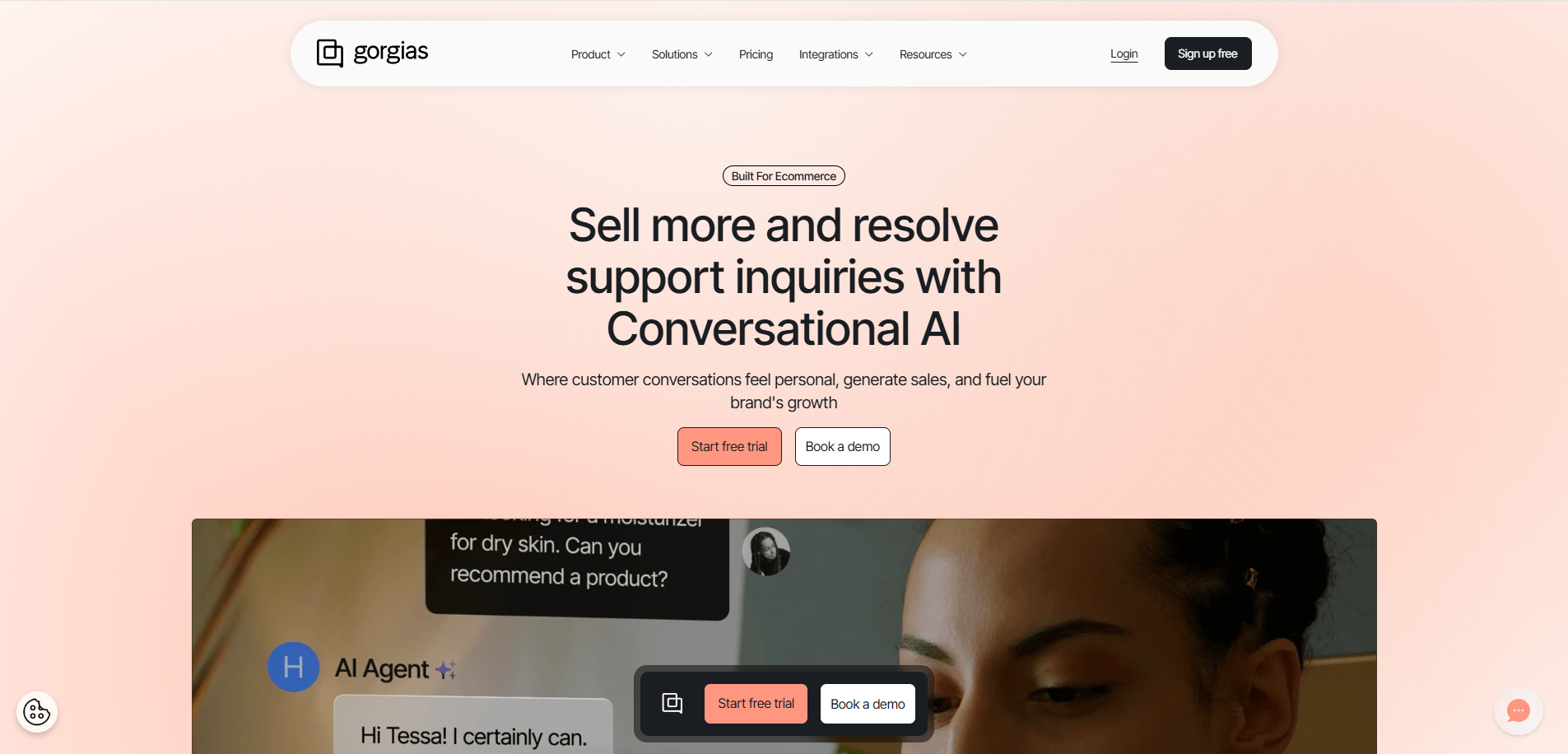
Best for Shopify, BigCommerce, and WooCommerce merchants that need AI customer service tightly integrated with order management and revenue tracking.
Score: 6.4/10. Strong ecommerce integration (9/10). Scored lower on containment depth (5/10), voice (0/10), deployment (3/10), and governance (2/10).
Product Overview
- Built specifically for e-commerce.
- Agents view, edit, and refund orders without leaving the conversation.
- AI automates common queries: shipping status, returns, exchanges.
- Revenue attribution tracks how support drives sales.
- Social media DMs and comments handled natively.
Pricing
- Starter from $300/month (50 tickets).
- Basic, Pro, Advanced, and Enterprise tiers.
- Up to $5,000/month for highest tier.
Deployment and Integrations
- Cloud-only.
- Deep native integrations with Shopify, BigCommerce, WooCommerce, Magento.
- Klaviyo, Yotpo, Recharge.
Setup
- Days for Shopify stores.
- Weeks for complex multi-store configurations.
Tradeoffs
- Strongest e-commerce-specific AI customer service platform.
- But pricing is expensive for small stores.
- Not designed for non-ecommerce use cases.
- No self-hosted deployment.
- No voice capability.
- Limited AI governance controls for regulated industries.
4.6/5 G2 (500+ reviews). No Capterra listing.
#5. Freshdesk: Best AI Customer Service Software for SMB-to-Enterprise Scaling
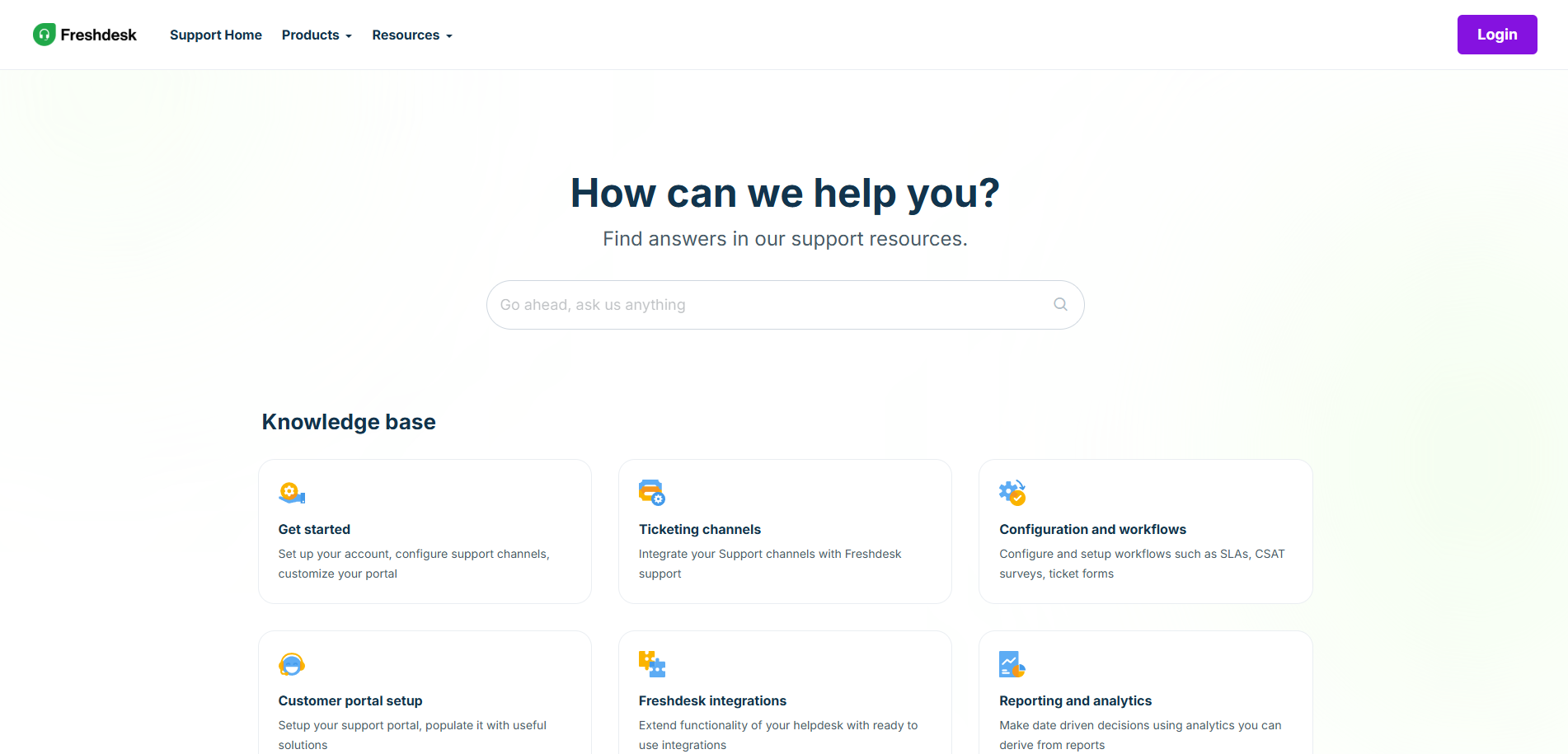
Best for growing support teams that need a full-featured helpdesk with AI capabilities at a lower price point than Zendesk, with room to scale.
Score: 7.0/10. Good value at lower tiers (8/10) and reviews (8/10). Scored lower on governance (3/10), deployment (3/10), and AI autonomy (5/10).
Product Overview
- Freshdesk offers omnichannel ticketing with Freddy AI for automation, agent assist, and self-service.
- Freddy AI handles ticket classification, routing, and suggested responses.
- Built-in knowledge base, community forums, and phone support.
- Freshdesk Omni unifies messaging, ticketing, and phone.
Pricing
- Free tier (up to 2 agents).
- Growth from $15/agent/month. Pro from $49/agent/month. Enterprise from $79/agent/month.
- AI features available on Pro and Enterprise.
Deployment and Integrations
- Cloud-only.
- Marketplace with 1,000+ integrations.
- Native connections to Slack, Salesforce, Shopify, Jira.
Setup
- Hours for basic setup.
- Days for full omnichannel deployment with automation rules.
Tradeoffs
- Strong value at lower tiers.
- But AI features are limited on free and Growth plans.
- Freddy AI is less autonomous than Intercom Fin or the Rasa Orchestrator.
- Reporting feels basic until Enterprise tier.
- No self-hosted deployment.
- Limited governance controls for regulated industries.
4.5/5 Capterra (3,300+ reviews).
#6. Salesforce Agentforce: Best AI Customer Service for CRM-Native Call Centers
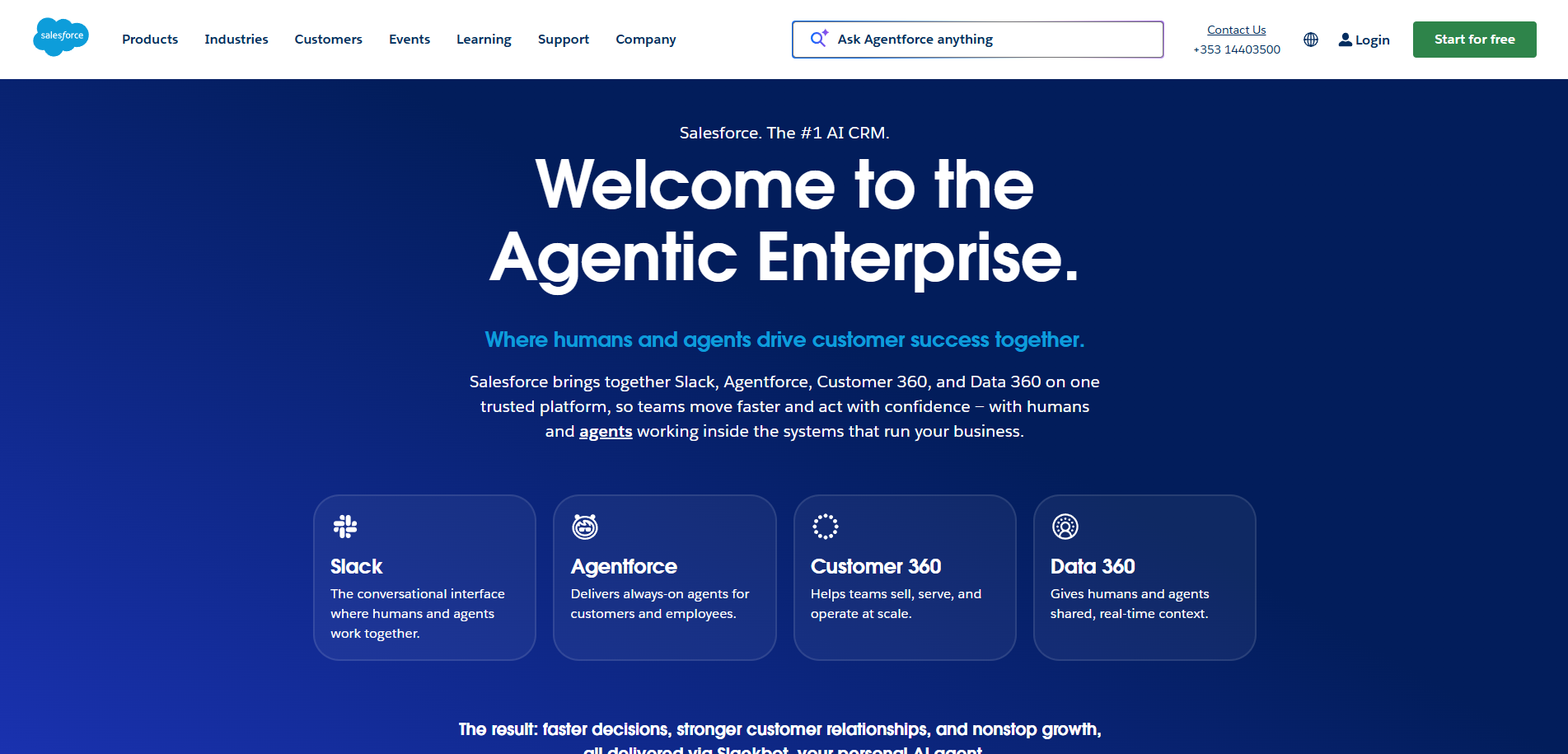
Best for enterprise contact centers already on Salesforce that need AI for customer service in call centers with full CRM context, native telephony, and Einstein GPT capabilities.
Score: 7.5/10. Deepest CRM context (10/10) and voice via SCV (7/10). Scored lower on pricing predictability (4/10), deployment flexibility (4/10), and governance independence (5/10).
Product Overview
- Agentforce deploys autonomous AI agents within Salesforce Service Cloud.
- Full CRM context: customer history, account data, case history available to every AI interaction.
- Einstein GPT generates replies, summaries, and knowledge articles.
- Native voice with Service Cloud Voice (Amazon Connect integration).
Pricing
- $2 per conversation for Agentforce.
- Service Cloud from $25/user/month.
- Enterprise and Unlimited tiers significantly higher.
- Total cost depends on Salesforce licensing stack.
Deployment and Integrations
- Salesforce Cloud. Hyperforce for data residency in specific regions.
- Native CRM, marketing, and commerce integrations.
Setup
- Weeks to months.
- Requires Salesforce admin expertise and Service Cloud configuration.
Tradeoffs
- Deepest CRM context of any platform.
- But Salesforce lock-in is real.
- Per-conversation pricing at $2 compounds at call center scale.
- Complex licensing model.
- No self-hosted option outside Hyperforce regions.
- Requires significant Salesforce ecosystem investment.
4.4/5 Capterra (800+ reviews for Service Cloud).
#7. Tidio: Best AI Customer Service Chatbot for Small Business
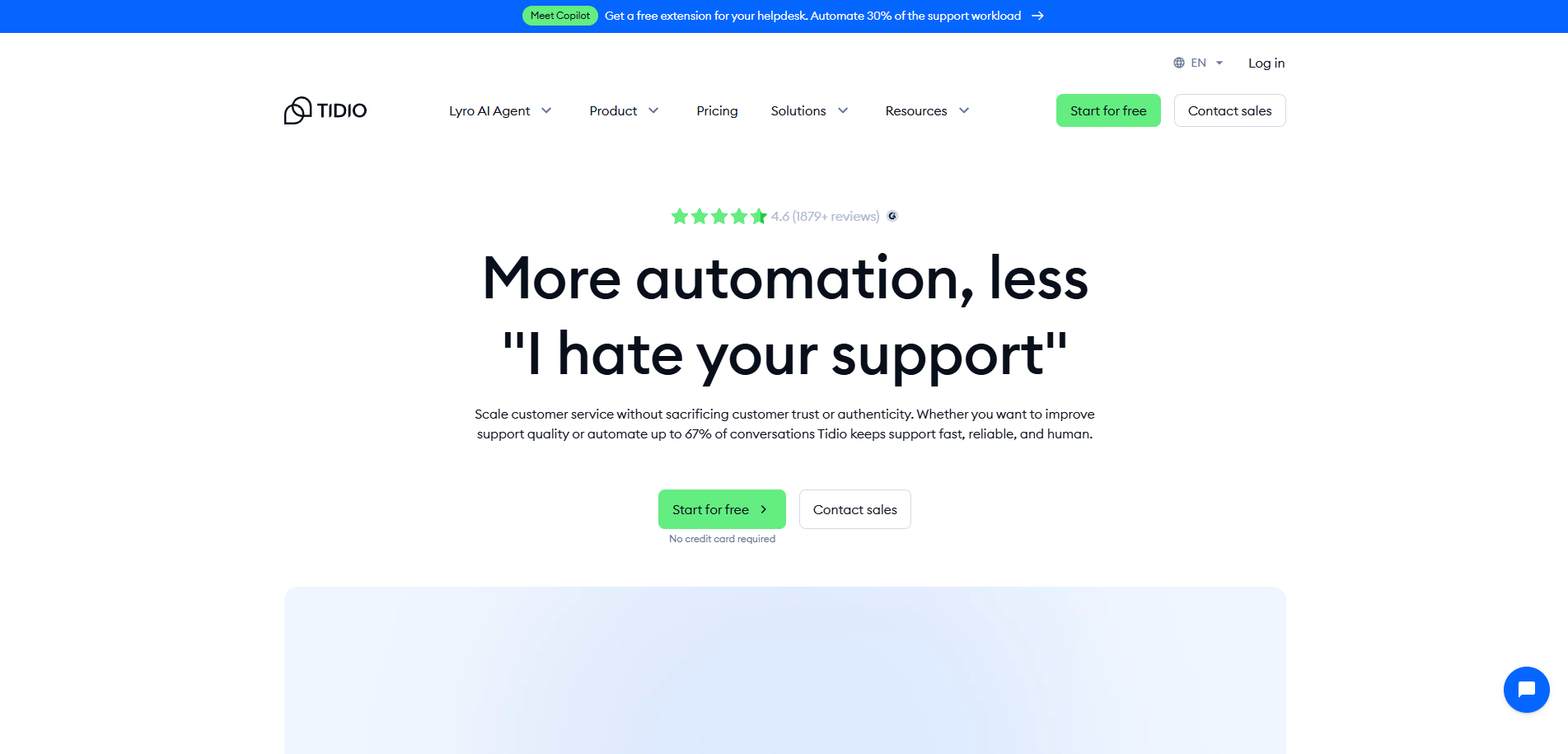
Best for small businesses and e-commerce stores that need affordable live chat with AI automation for common customer queries.
Score: 5.6/10. Fastest deployment (10/10) and value at entry (8/10). Scored lower on containment depth (3/10), governance (1/10), voice (0/10), and deployment (3/10).
Product Overview
- Tidio combines live chat, chatbot automation, and Lyro AI agent in one platform.
- Lyro handles FAQ automation and learns from your help center.
- Real-time visitor engagement with live chat widget.
- Shopify, WordPress, and WooCommerce integrations.
- 300K+ businesses use Tidio.
Pricing
- Free plan available (50 conversations/month).
- Starter $29/month (100 conversations).
- Growth $59/month (250 conversations).
- Plus from $749/month.
- Premium from $2,999/month (unlimited).
Deployment and Integrations
- Cloud-only.
- Integrations with Shopify, WordPress, WooCommerce, Messenger, Instagram, email.
Setup
- Minutes to hours.
- Chat widget embeds with a single code snippet.
Tradeoffs
- Fast to deploy and affordable at entry level.
- But Lyro AI is limited to content-backed FAQ answers. No complex multi-turn conversation handling.
- High-tier plans ($749-$2,999/month) rival enterprise pricing.
- No self-hosted deployment.
- No voice capability.
- No governance controls for regulated environments.
4.7/5 Capterra (900+ reviews).
#8. Yuma AI: Best AI Customer Service Automation for Shopify Merchants
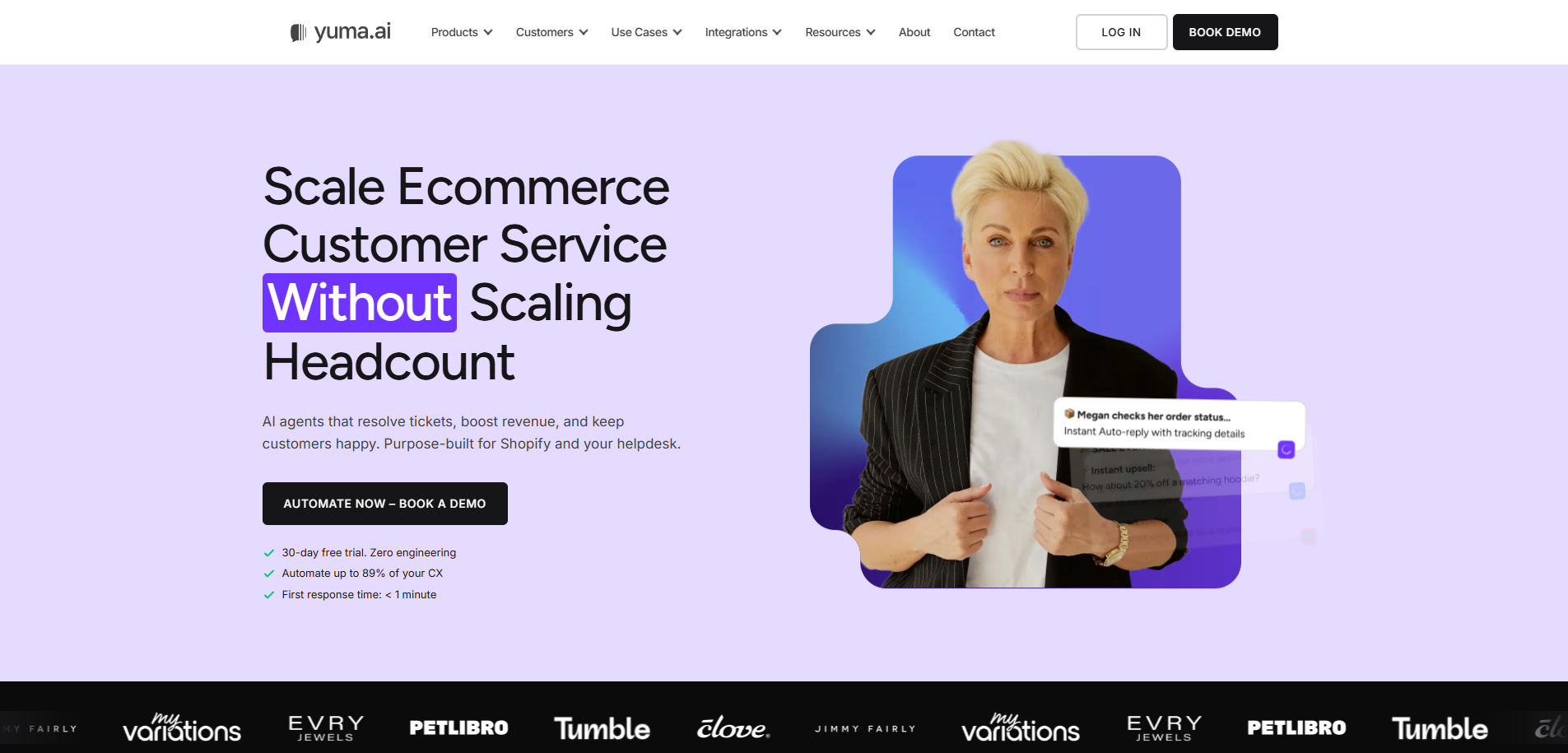
Best for high-volume Shopify merchants that need autonomous AI handling of order-related queries with deep Shopify integration.
Score: 5.8/10. Strong Shopify automation (8/10). Scored lower on voice (0/10), deployment (3/10), governance (2/10), and channel breadth (4/10).
Product Overview
- Yuma AI is built for Shopify.
- Autonomous handling of order status, returns, refunds, and cancellations.
- AI learns from your macros and past tickets.
- Pre-built actions for Shopify admin tasks.
- Integrates with Gorgias, Zendesk, and Kustomer.
Pricing
- From $299/month.
- Pricing scales with ticket volume and automation usage.
Deployment and Integrations
- Cloud-only.
- Deep Shopify integration.
- Works alongside existing helpdesk (Gorgias, Zendesk, Kustomer).
Setup
- Days.
- Learns from existing macros and ticket history.
Tradeoffs
- High autonomy for Shopify-specific queries.
- But Shopify-only: not suitable for non-e-commerce.
- Requires existing helpdesk platform (adds cost).
- Limited to text channels.
- No voice capability.
- No self-hosted deployment.
- Newer platform with limited public reviews.
No Capterra listing.
#9. Help Scout: Best AI Customer Service Software for Human-First Support
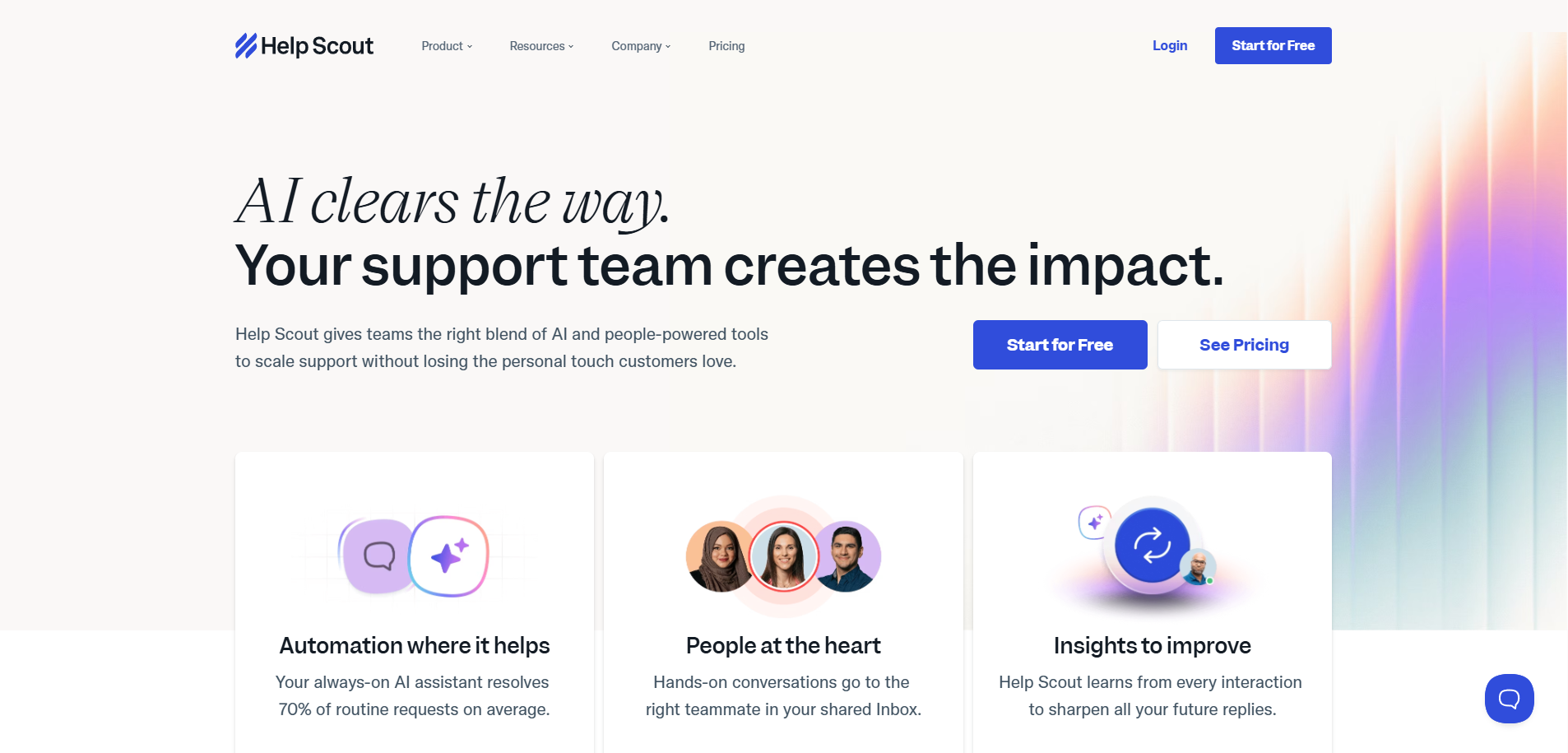
Best for SaaS and service companies that prioritize human agent experience and want AI to assist (not replace) their support team.
Score: 5.4/10. Best agent experience (9/10). Scored lower on AI autonomy (2/10), voice (0/10), governance (2/10), and containment (3/10).
Product Overview
- Help Scout's approach is human-first: shared inbox, knowledge base, and beacon (embedded help widget).
- AI Drafts generate reply suggestions based on knowledge base content.
- AI Summarize condenses long threads.
- Clean, minimal interface optimized for agent productivity.
Pricing
- Free plan (up to 50 contacts/month).
- Standard from $50/month.
- Plus from $75/month.
- Unlimited contacts on paid plans.
Deployment and Integrations
- Cloud-only.
- Integrations with HubSpot, Salesforce, Slack, Jira, Shopify.
Setup
- Hours.
- Known for fast onboarding and an intuitive interface.
Tradeoffs
- Best agent experience in this category.
- But AI features are assist-only: no autonomous resolution. No AI agent that handles conversations independently.
- No voice channel (email and chat only).
- No self-hosted deployment.
- Limited for enterprise-scale contact centers.
4.4/5 Capterra (200+ reviews).
#10. Zoho Desk: Best Budget AI Customer Service Software for Zoho Ecosystem
Best for small and mid-size businesses already using Zoho CRM that need affordable omnichannel support with basic AI capabilities.
Score: 6.2/10. Lowest per-agent cost (9/10) and ecosystem value (8/10). Scored lower on AI capability (4/10), governance (2/10), and deployment (3/10).
Product Overview
- Zoho Desk offers omnichannel ticketing with Zia AI assistant for sentiment analysis, ticket classification, and anomaly detection.
- Community forums, knowledge base, and customer portal included.
- Deepest value when combined with Zoho CRM, Zoho Analytics, and the broader Zoho ecosystem.
Pricing
- Free tier (3 agents).
- Standard from $7/agent/month.
- Professional from $12/agent/month.
- Enterprise from $25/agent/month.
- Zia AI available on Professional and Enterprise.
Deployment and Integrations
- Cloud-only.
- Native Zoho ecosystem integration.
- Third-party integrations via Zoho Marketplace.
Setup
- Hours to days.
- Fastest if already on Zoho ecosystem.
Tradeoffs
- Lowest cost per agent in this category.
- But Zia AI is basic compared to Intercom Fin, the Rasa Orchestrator, or even Freddy AI.
- Limited autonomous resolution capability.
- Value drops significantly outside the Zoho ecosystem.
- No self-hosted deployment.
- Limited governance controls.
4.5/5 Capterra (2,200+ reviews).
How to Choose the Best AI Software for Customer Service
Step 1: Define Your Deployment Model Before Evaluating Features
Does your organization have data sovereignty requirements, compliance mandates, or security policies that require the AI to run in your environment?
If yes, eliminate cloud-only SaaS vendors before comparing any other capability.
Rasa is the only platform in this evaluation with self-hosted deployment from day one.
Step 2: Measure Containment Rate on Your Most Complex Customer Queries
Simple FAQ deflection and order status checks are a solved problem. Pressure-test each vendor on your most complex customer journey: a billing dispute, a multi-step account change, a claims process.
If the demo only shows the happy path, push for exception handling and edge cases.
Step 3: Assess LLM Governance and Response Policy Controls
Every vendor claims generative AI capability. The real differentiator is governance: can you define what the AI is and isn’t allowed to say? Can you enforce topic constraints, maintain response policies, and produce audit trails for every AI-generated customer interaction?
Step 4: Evaluate Multi-Channel Architecture
Does the same conversation logic, policies, and analytics apply across voice, web chat, WhatsApp, and in-app? How is continuity maintained when a customer moves from chat to a call? How many separate platforms are needed to operate across all your channels?
Step 5: Test Integration Depth with Your Back-End Systems
Ask each vendor for a live integration demonstration with your CRM, order management system, or authentication layer. What happens when an integration fails mid-conversation?
A platform that cannot retrieve order data, check account status, or authenticate a user mid-conversation cannot resolve the queries that matter most.
Step 6: Run a Production Pilot on a High-Stakes Customer Journey
Pick one high-volume, high-complexity customer journey. Run it start to finish in a pre-production environment.
Track containment rate, escalation quality, CSAT for AI-handled conversations, and whether the system behaves predictably across edge cases.
Step 7: Evaluate Total Cost of Ownership and Pricing Model Risk
Per-resolution pricing compounds rapidly at contact center scale. Factor in implementation cost, professional services, internal engineering time, ongoing training overhead, and the cost of switching if the platform hits its capability ceiling in 24 months.
AI Customer Service Platforms Pricing Models and Costs in 2026
Four pricing models dominate AI customer service software. Each creates different economics at scale.
Per-resolution: Intercom Fin ($0.99/resolution). Predictable per-interaction cost, but compounds at volume. 50,000 monthly resolutions = $49,500/month. Creates an incentive to deflect rather than fully resolve.
Per-conversation: Salesforce Agentforce ($2/conversation). Higher per-unit cost. Volume discounts are available on enterprise agreements.
Per-agent/seat: Zendesk ($19-$115/agent/month), Freshdesk ($15-$79/agent/month), Zoho Desk ($7-$25/agent/month). Predictable monthly cost, but AI features often require add-ons or higher tiers.
Enterprise custom: Rasa Enterprise. Annual conversation-volume licensing. Contact Rasa for pricing. No per-resolution unpredictability.
Hidden costs across all models: implementation engineering, knowledge base creation, AI training, ongoing maintenance, and the cost of escalated conversations that the AI cannot resolve.
Questions to Ask Before Purchasing AI Software for Customer Service
1. Deployment model
Self-hosted, private cloud, or cloud-only? Who controls the infrastructure and customer data?
2. Data sovereignty
Where does customer conversation data go? Can you guarantee data residency in specific regions?
3. LLM governance
Can you define what the AI is and is not allowed to say in customer interactions? How are topic constraints enforced?
4. Vendor lock-in
Can you export your conversation data, training data, and configurations if you switch platforms?
5. Voice capability
Does the platform handle voice natively, or does it require assembling a separate stack?
6. Complexity ceiling
What happens when conversation complexity exceeds the platform's resolution capability? How does escalation work?
7. Total cost at scale
What does per-resolution or per-conversation pricing look like at 50,000+ monthly interactions?
AI Customer Service Software Integrations: What to Verify Before Buying
Integration depth is where AI customer service buying decisions fail in production. A platform that cannot retrieve order data, check account status, or authenticate a user mid-conversation cannot resolve the queries that matter most.
Critical handoffs to verify: CRM data pull during conversation (Salesforce, HubSpot, Zendesk), order management lookup (Shopify, WooCommerce, ERP), authentication and identity verification, payment processing, telephony routing (Twilio, Genesys, AudioCodes, Amazon Connect).
Key test: What happens when an integration fails mid-conversation? Does the AI recover, escalate with context, or freeze? Ask for a live demonstration of failure handling, not just happy-path integration.
Key Features to Look for in AI Customer Service Software
Multi-Turn Dialogue and Complex Query Resolution
FAQ deflection is table stakes. The AI must handle billing disputes, account changes, claims, and multi-system workflows across multiple conversation turns without losing context.
LLM Integration with Governance Controls
Generative AI without governance is a brand risk. Look for guided policy enforcement over agent responses. The Rasa Orchestrator provides patented architectural separation between understanding and execution.
Native Multi-Channel Support (Voice + Digital)
Rasa Voice is the only platform in this evaluation with built-in voice channel connectors and cross-channel context continuity from a single runtime.
Self-Hosted and On-Premises Deployment
Regulated industries need AI running in their environment. Every other platform in this evaluation is cloud-only.
CRM and Back-End System Integration Depth
Pre-built connectors save time. The real test is mid-conversation failure handling and the ability to write custom business logic at the code level.
Observability and Analytics
Conversation-level containment tracking, CSAT correlation, resolution quality scoring, and full audit trails for every AI-generated response.
Agent Handoff and Escalation Quality
When AI reaches its limit, context must transfer cleanly to a human agent. No customer should repeat their issue. Track escalation quality, not just escalation rate.
Extensibility and Code-Level Control
Configuration menus hit a ceiling. Look for platforms where your engineers can modify core behavior: custom actions, pipeline modules, and business logic at the code level.
Conversation Design and Testing Tooling
Simulation environments, regression testing before production deployment, and visual flow builders accelerate development. Rasa Studio (beta) provides visual design alongside code-level access.
What Is the Best AI Customer Service Platform for Regulated Industries?
Regulated industries (banking, healthcare, insurance, government) require self-hosted deployment, guided, predictable AI behavior, and full audit trails for every customer interaction. Most AI customer service platforms are cloud-only SaaS with no governance architecture.
Rasa deploys in your environment. Its patented Orchestrator separates LLM understanding from business logic execution. Every AI response is traceable. Rasa does not host any customer data, systems, or applications.
Deutsche Telekom uses Rasa for IT service desk operations across 10,000+ employees. N26 uses Rasa for regulated banking customer service.
Salesforce Agentforce offers regional data residency through Hyperforce. Zendesk provides SOC 2 and HIPAA compliance on Enterprise tier, but remains cloud-hosted.
What Is the Best AI Chatbot for Customer Service?
The question itself reveals the problem. Most buyers searching for the answer to “What is the best AI for customer service?” still think in terms of chatbots: FAQ deflection, simple routing, scripted responses. The platforms that lead in 2026 have moved beyond chatbot architecture.
Intercom Fin leads for autonomous resolution accuracy on content-backed queries (claimed 86% resolution rate). Tidio Lyro is the fastest to deploy for small business FAQ automation. But neither handles complex multi-turn conversations, voice, or self-hosted deployment.
Rasa replaces the chatbot model entirely with conversational AI agents that contain complex queries across voice and digital channels. If your current chatbot escalates more than 40% of conversations, the answer is not a better chatbot. It is a different architecture.
Best AI Tools for Customer Service Automation: What You Need to Know
LLM governance and response accuracy are the primary discussion topics in enterprise AI customer service buying decisions. Every vendor claims AI capability. The differentiator is accountability.
How does the platform prevent incorrect or non-compliant responses? The Rasa Orchestrator separates understanding (LLM) from execution (guided skills). Business logic controls what the AI says and does. Most platforms rely on prompt engineering, which can be bypassed.
Can business and compliance teams define what the AI is allowed to say? With Rasa, business rules are defined in guided skills, not prompts. Non-technical teams can design flows in Rasa Studio (beta) while developers own the integrations.
How does the platform handle sensitive customer data? Rasa: self-hosted, data stays in your environment. Cloud platforms: data governed by vendor security policies and regional data residency options.
What audit trail exists for AI-generated responses? Rasa provides conversation-level tracing through guided skills. Every action logged: what data was accessed, what tool was called, what response was generated.
What does the AI do autonomously, vs. what requires a human? In the Rasa Orchestrator, the LLM handles dialogue understanding. Guided skills handle action selection, policy enforcement, and response generation. Humans define the guardrails. The AI operates within them.
Position: AI as a governed customer service engine operating within defined business policies, resolving autonomously where permitted, escalating intelligently where required, and maintaining full accountability throughout.
Is Rasa AI for Customer Service Worth the Cost?
Three paths exist for enterprise AI customer service:
Helpdesk AI add-on (Zendesk AI, Freshdesk Freddy): Choose if you are already on Zendesk or Freshdesk, have a narrow use case (ticket routing, FAQ deflection), and want speed to deploy within your existing stack.
Conversational-AI-first platform (Intercom Fin, Gorgias): Choose if you are a SaaS or ecommerce team with chat-heavy support, a structured help center, and want high autonomous resolution rates without deep engineering investment.
Rasa: Choose if you operate in a regulated industry, need self-hosted deployment, require guided governance over AI responses, need voice + chat from one platform, and are building the best AI platform for customer service agents as a long-term owned capability.
Rasa is for enterprise teams building AI customer service as a long-term owned capability, not for teams that need a chatbot add-on live by next Friday.
Which of the Best AI Tools for Customer Service Teams Is Right for Your Business?
- Need containment depth + ownership: Rasa. Self-hosted, guided governance, native voice.
- Need knowledge management + existing Zendesk: Zendesk AI. Strongest knowledge base optimization.
- Need highest resolution accuracy: Intercom Fin. 86% claimed resolution rate.
- Need ecommerce-native support: Gorgias (multi-platform) or Yuma AI (Shopify-specific).
- Need affordable scaling: Freshdesk. Best value at lower tiers.
- Need CRM-native contact center: Salesforce Agentforce. Deepest CRM context.
- Need small business simplicity: Tidio. Fastest to deploy, lowest entry cost.
- Need human-first AI assist: Help Scout. Best agent experience.
- Need budget ecosystem play: Zoho Desk. Lowest per-agent cost.
Frequently Asked Questions
What is the best AI for customer service for enterprise?
Rasa, for enterprise teams needing self-hosted deployment, guided LLM governance, and production-grade containment across voice and chat.
Salesforce Agentforce for contact centers already on Salesforce. Zendesk AI for teams embedded in the Zendesk ecosystem.
What are the best AI tools for multilingual customer service?
Intercom Fin supports 45 languages with automatic detection. Zendesk AI provides AI-powered translation across channels.
Rasa supports any language through configurable NLU pipelines and LLM-based understanding. Deutsche Telekom runs Rasa in both German and English.
What AI for customer service gives the most control over AI responses?
The Rasa Orchestrator. Its patented dialogue manager separates LLM understanding from action execution. Guided skills define what the AI can say and do. Deterministic flows define what the AI can say and do. Policy enforcement at the conversation and action level.
No other platform provides architectural separation between understanding and execution.
What is the best self-hosted AI for customer service?
Rasa. Self-hosted from day one with on-premise and private cloud deployment. Customer data stays in your environment. Rasa does not host any customer data, systems, or applications.
Every other platform in this evaluation is cloud-only.
What is the best AI for customer service in banking and financial services?
Rasa is best for AI customer service for financial services. Self-hosted deployment for data sovereignty. Deterministic governance prevents non-compliant responses. Full audit trails. N26 uses Rasa for regulated banking customer service.
What is the best AI for customer service across voice and chat?
Rasa. The only platform in this evaluation with built-in voice channel connectors (Twilio, Jambonz, AudioCodes, Genesys) and cross-channel context continuity.
Every other platform requires third-party voice integration or has limited voice capability.
How to evaluate AI customer service platforms for enterprise?
Test against your most complex customer journey, not your simplest FAQ. Verify deployment model, LLM governance, integration failure handling, voice capability, and total cost of ownership at production scale.
A demo on happy-path queries proves nothing about production readiness.
What is the best no-code AI for customer service?
Tidio for small businesses needing fast chatbot deployment. Zendesk AI for teams that want no-code AI within their existing helpdesk.
For enterprise-scale, no-code alone is rarely sufficient. Look for platforms combining visual builders with code-level depth.
How much technical skill is needed to deploy Rasa AI for customer service?
Rasa requires Python developers and familiarity with conversational AI architecture. Non-technical teams can design flows in Rasa Studio (beta).
The investment is meaningful, but the tradeoff is full ownership, guided governance, and production-grade reliability that no-code platforms cannot match.