Legacy IVR systems were built for a world where callers tolerated menu trees. That world is now gone. Enterprise contact centers are replacing rigid IVR with voice AI that sounds human, handles multi-turn conversations, integrates with back-end systems, and resolves calls without transferring to an agent.
The best AI voice generator for enterprise isn’t the one with the most realistic demo clip. It’s the one that maintains sub-second latency under production load, handles barge-in without losing context, integrates with your telephony stack, and keeps customer voice data under your control.
We evaluated 8 voice AI platforms across latency performance, telephony integration depth, governance and compliance capability, IVR replacement readiness, and production reliability.
Each enterprise voice AI platform was assessed on its ability to replace your IVR with voice AI that acts.
Best AI Voice Generators in 2026: Quick Comparison Table
How We Evaluated These AI Voice Generators
Our team evaluated each platform across seven weighted dimensions. We’ve analyzed aggregated user reviews from G2 and Capterra, reviewed public pricing, tested deployment workflows, and consulted with enterprise engineering teams running conversational AI in production.
We prioritized platforms that enterprise buyers in regulated industries (financial services, telco, healthcare, government) would encounter during a real evaluation cycle.
Each platform was assessed on its production-readiness, not on demo-day performance.
Our Scoring Methodology
Top 8 Best AI Voice Generators for Enterprise in 2026
#1. Rasa Voice: Best Voice AI App Overall for Enterprise IVR Replacement
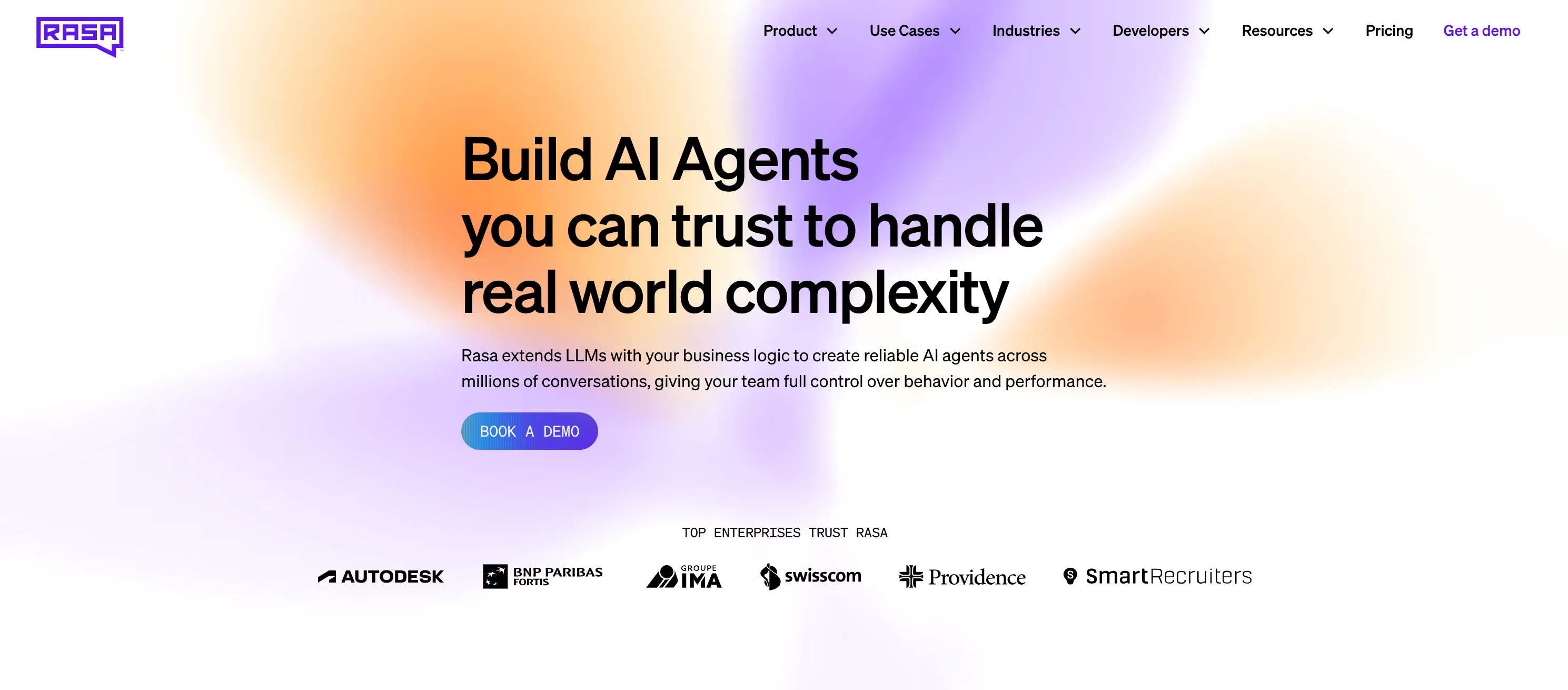
Score: 9.5/10. Highest marks for telephony integration (10/10), governance (10/10), deployment (10/10), and cross-channel context (10/10). Scored lower on TTS voice library breadth (7/10) vs. ElevenLabs.
Rasa is the developer platform for enterprise AI agents. Rasa Voice extends the same guided conversation governance to voice channels, giving contact centers a voice AI that replaces legacy IVR with multi-turn, back-end-integrated call resolution.
Best for contact center technology leaders and platform architects at enterprises in regulated industries that need the best voice AI for customer service with sub-second latency, self-hosted voice data, and native telephony integration. For example, voice AI software for financial services.
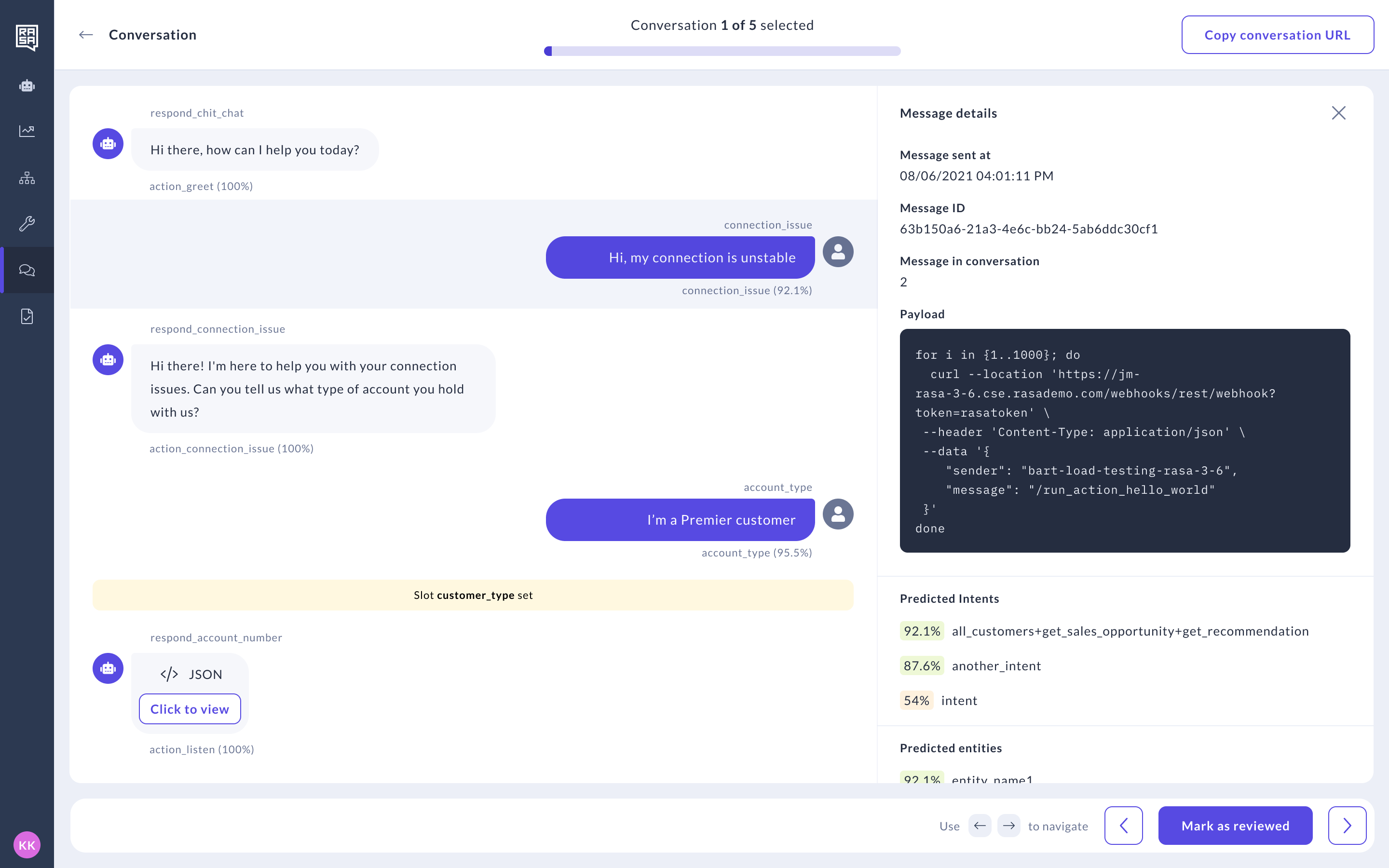
Product Overview
Pain 1: Voice AI cannot handle multi-turn complex calls with real back-end actions
Most voice generators produce audio. Rasa Voice runs conversations.
Rasa's patented CALM dialogue manager orchestrates multi-turn voice conversations across CRM, order management, authentication, and enterprise systems. The same orchestration logic that powers digital agents runs over voice without rebuilding.
The LLM handles dialogue understanding. Guided skills control what the voice agent does.
Pain 2: Voice and digital are disconnected: customers repeat themselves on every call
Rasa's unified conversation architecture carries context across voice and digital channels. Shared state, clean handoffs, and unified agent memory across channels.
Customers who switch from chat to phone retain full conversation history.
Pain 3: Cloud voice AI cannot meet regulated industry data sovereignty requirements
Rasa Voice runs fully on-premises with self-hosted ASR and TTS models. No customer voice data leaves your infrastructure. DTMF keypad input for secure PIN and account number collection with PCI DSS compliance.
Rasa does not host any customer data, systems, or applications.
Pricing
Developer Edition (Free): Full access to Rasa. One bot per company, up to 1,000 external conversations/month (100 for internal agents). Community support via the Rasa Forum.
Enterprise (Custom): Premium support, dedicated CSM, advanced security features, custom onboarding. Contact Rasa for a quote.
Pricing is based on annual conversation volume, not per-user or per-seat. More predictable at scale than per-minute or per-resolution models.
Telephony Integrations and Voice Connectors
- Built-in Voice Stream connectors: Twilio Media Streams, AudioCodes Voice Stream, Genesys Cloud AudioConnector, Jambonz Stream.
- Voice Ready connectors: Twilio Voice, AudioCodes Voice Ready, Jambonz Voice Ready.
- SIP integration for existing telephony infrastructure.
- DTMF keypad input for secure data collection.
- MCP server integration (beta).
- A2A (Agent-to-Agent) protocol (beta).
- Voice capabilities are packaged into composable skills (agents, skills, flows, memory, tools) that work across channels.
Deployment and Setup
- Self-hosted in your environment from day one.
- On-premise, private cloud, or hybrid.
- No mandatory calls to external ASR/TTS cloud providers.
- Choose your own ASR providers (Deepgram, Azure) and TTS providers (Cartesia, Deepgram, Azure, Rime).
- Custom ASR/TTS components supported.
- Browser testing with rasa inspect --voice.
Tradeoffs
- Rasa Voice requires a builder mindset and telephony engineering investment.
- Not the right choice for teams that want a managed voice AI service with minimal engineering involvement.
- Steeper initial deployment curve than cloud-managed platforms.
- Teams need Python developers, telephony infrastructure knowledge, and familiarity with conversational AI architecture.
The tradeoff: full ownership of your voice AI stack.
Support
- Enterprise tier includes premium support with a dedicated customer success manager and implementation partner support for telephony integration.
- Community support via the Rasa Forum.
- Documentation at rasa.com/docs.
- Learning resources at learning.rasa.com.
Mini Case Study
Groupe IMA, serving approximately 30 million drivers across Europe, selected Rasa Voice for roadside assistance call automation. "We're not experimenting with voice. We're deploying it," said Loic Mayet, Information Systems Director.
Rasa Voice replaces their legacy IVR with conversational AI that resolves roadside calls through back-end integration.
→ Read the Autodesk case study
Replace Your IVR with Voice AI That Acts
#2. ElevenLabs: Best AI Voice Generator for Content Creation and Voice Cloning
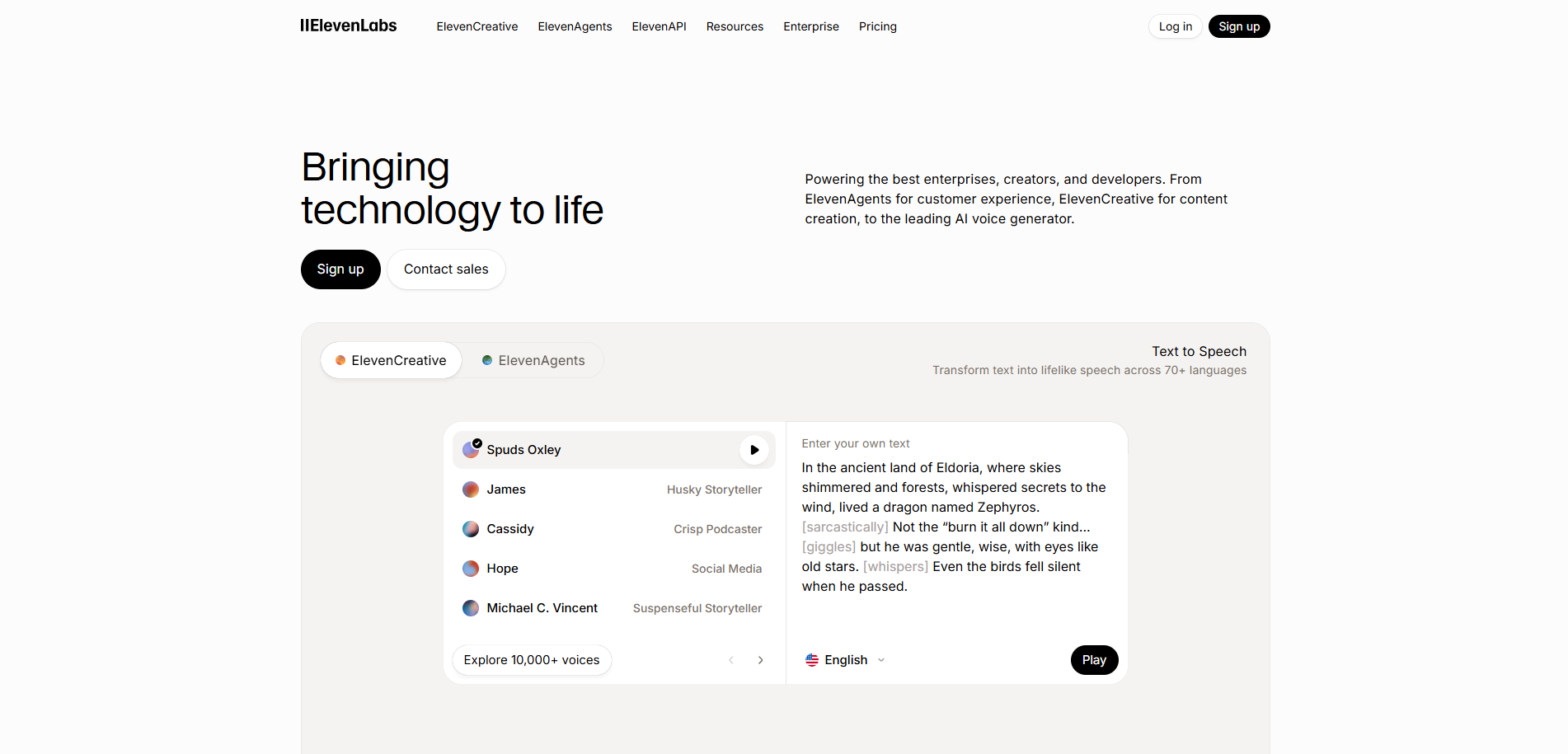
Best for content creators, audiobook producers, and media teams that need the most realistic AI voice generator with emotional range, multilingual support, and instant voice cloning.
Score: 5.8/10. Best voice quality and naturalness (10/10). Scored lower on telephony (2/10), governance (0/10), deployment (3/10), and cross-channel (2/10). Content tool, not contact center platform.
Product Overview
- ElevenLabs produces the most natural-sounding TTS currently available.
- 1,200+ voices across 29+ languages.
- Instant and professional voice cloning with consent verification.
- Emotional range that adapts to content context.
- AI dubbing for video localization.
- Conversational AI agent capability via API. 25+ million downloads.
Pricing
- Free (10,000 characters/month).
- Starter $5/month (30,000 characters).
- Creator $22/month (100,000 characters).
- Pro $99/month (500,000 characters).
- Scale $330/month (2M characters).
- Enterprise custom.
Deployment and Integrations
- Cloud-only.
- API for integration into applications, workflows, and products.
- No self-hosted deployment.
- No native telephony connectors.
Setup
- Minutes.
- Paste text, select voice, generate audio.
- API integration takes hours.
Tradeoffs
- Gold standard for TTS voice quality and content creation.
- But not built for enterprise contact center IVR replacement.
- No native telephony integration.
- No guided governance for regulated voice conversations.
- No self-hosted deployment.
- Credit-based pricing can burn fast at scale.
- No barge-in handling or multi-turn conversation orchestration.
4.5/5 Capterra (200+ reviews).
#3. Murf AI: Best AI Voice Over Software for Marketing and Video Production
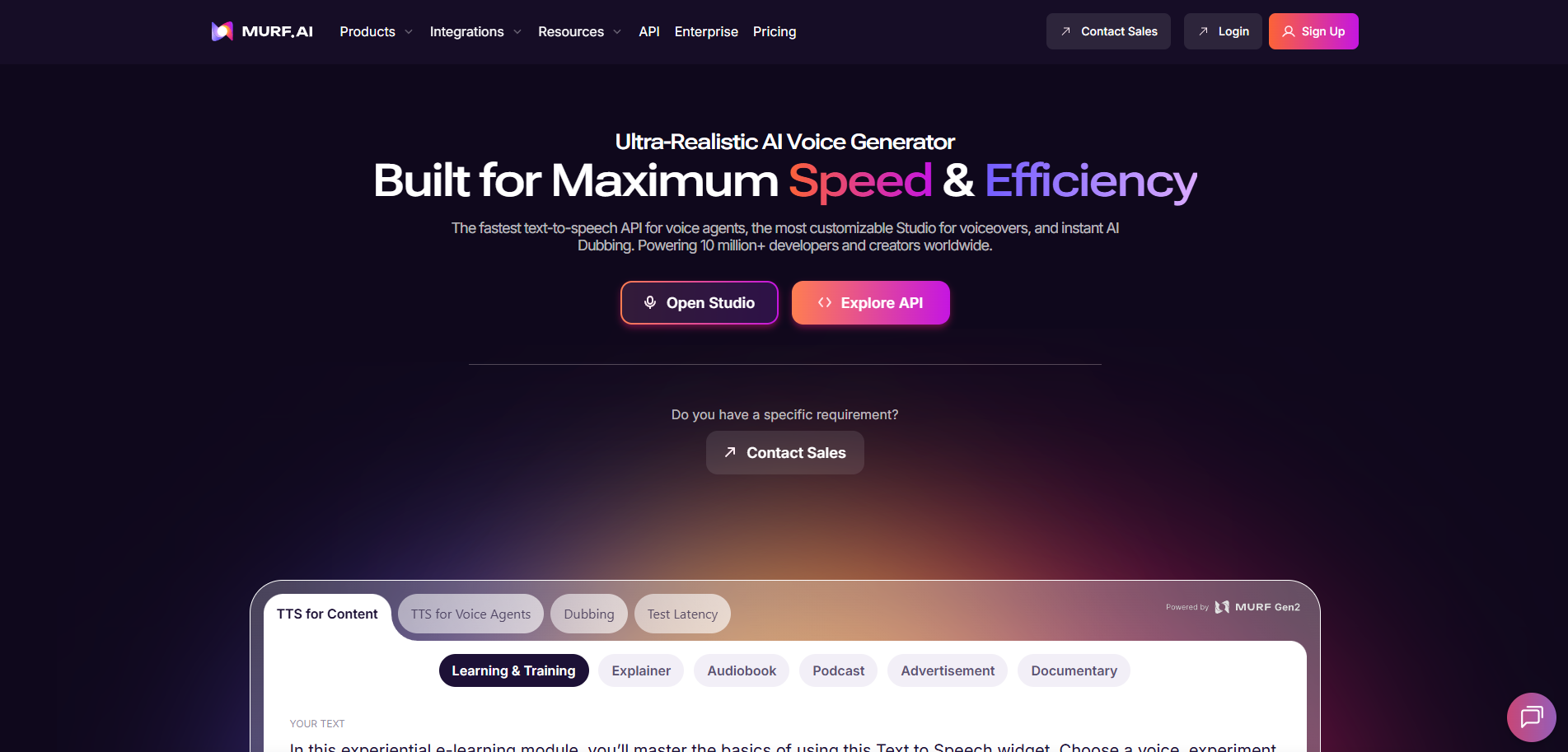
Best for SMB marketing teams and content creators that need polished voiceovers for videos, tutorials, ads, and social content with a studio-like editing interface.
Score: 4.2/10. Good studio interface (8/10) for content production. Zero telephony, governance, deployment, or cross-channel capability.
Product Overview
- Browser-based voiceover studio with 120+ voices in 20+ languages.
- Google Slides integration.
- Voice customization for pitch, speed, and tone via Open Studio.
- Professional tone that excels in business and marketing contexts.
- Timeline editor syncs audio to video.
Pricing
- Free trial.
- Creator $23/month (billed annually).
- Business $79/month.
- Enterprise custom.
Deployment and Integrations
- Cloud-only.
- API available.
- Integrations with Google Slides, Canva.
- No telephony connectors.
Setup
- Minutes.
- Web-based, no installation required.
Tradeoffs
- Strong studio interface for marketing voiceover.
- But less emotional depth than ElevenLabs.
- Not designed for conversational AI or contact center use.
- No telephony integration.
- No self-hosted deployment.
- No governance controls.
- Limited to content production, not interactive voice agents.
4.5/5 Capterra (100+ reviews).
#4. WellSaid Labs: Best AI Voice Generator for Enterprise L&D and Professional Voiceover
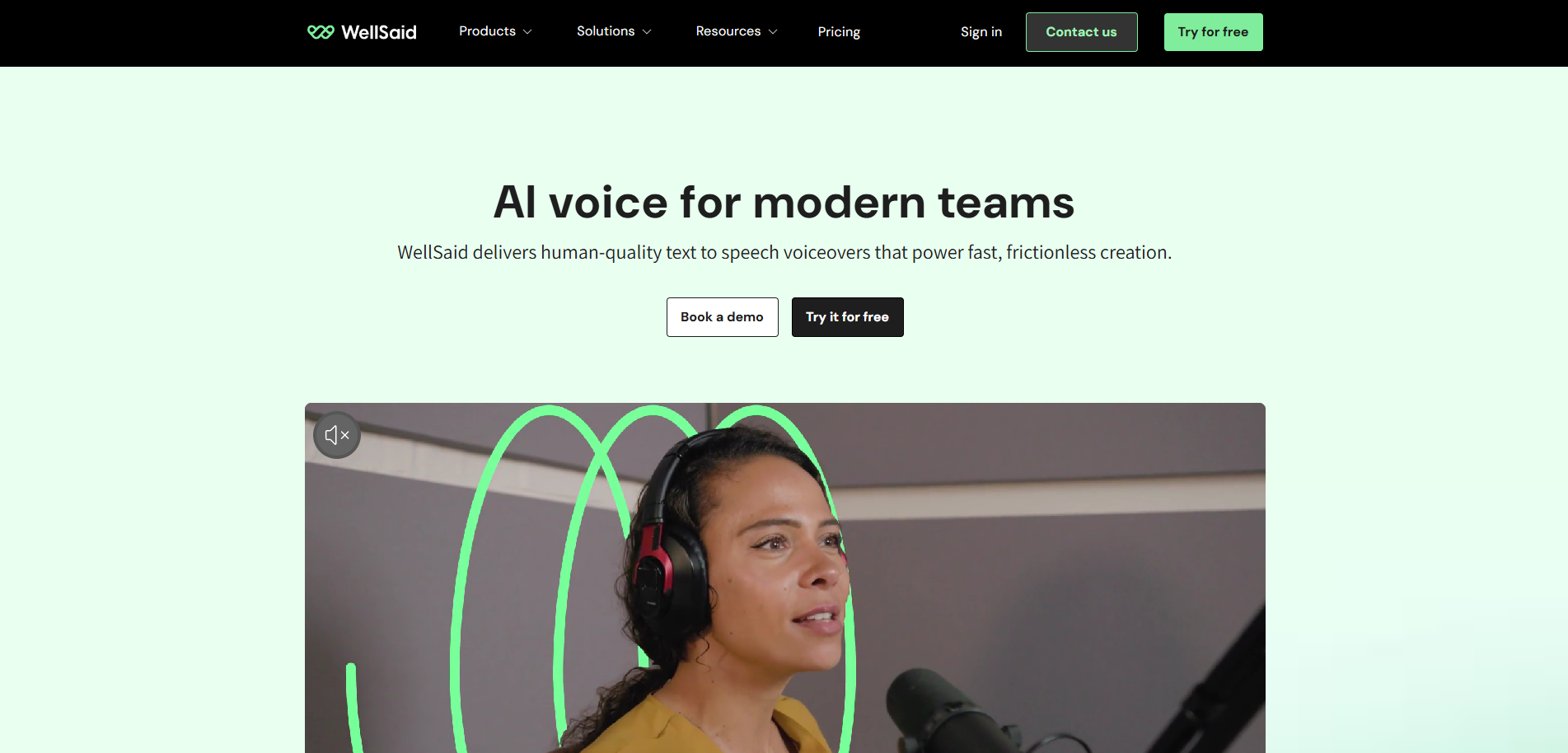
Best for enterprise learning and development teams that need ethically sourced, professional-quality voices for training content, compliance modules, and internal communications.
Score: 4.4/10. Professional voiceover quality (8/10). English-only. Zero telephony, governance, or deployment flexibility. Poor Trustpilot ratings.
Product Overview
- WellSaid Studio produces voices specifically designed for professional and enterprise contexts.
- 120+ ethically sourced voice avatars.
- Voice Actor Program ensures voices are created with consent.
- Focus on L&D, compliance training, and corporate communications.
- API for workflow integration.
Pricing
- From $49/month.
- Enterprise plans with dedicated support.
- Custom pricing for high-volume production.
Deployment and Integrations
- Cloud-only.
- API integration for LMS platforms, e-learning tools, and content workflows.
- No telephony connectors.
Setup
- Hours.
- Web-based with project management interface.
Tradeoffs
- Enterprise-grade voice quality for professional contexts.
- But English-only (major limitation for global teams).
- Pricing higher than ElevenLabs for comparable character limits.
- No free plan (trial only).
- Trustpilot rating is poor (2.4/5).
- Not designed for conversational AI or contact center use.
- No telephony integration.
- No self-hosted deployment.
4.0/5 G2 (limited reviews).
#5. Hume AI: Best AI Voice Generator for Emotionally Aware Conversational Agents
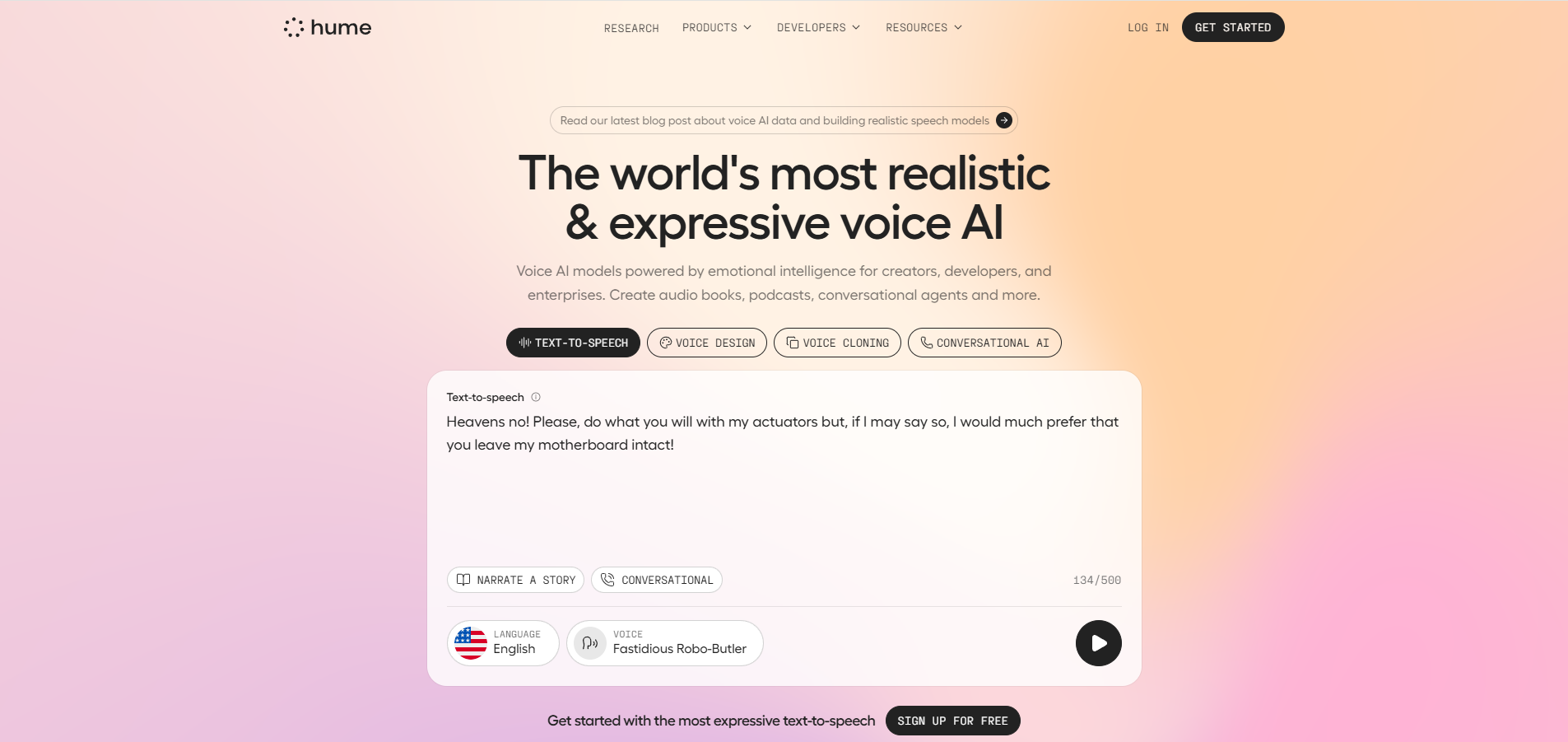
Best for research teams and developers building voice agents that respond with emotional awareness and empathic conversational style.
Score: 5.6/10. Best emotional detection (9/10). WebSocket API provides some real-time capability (5/10). Scored lower on telephony (3/10), governance (2/10), deployment (3/10).
Product Overview
- Hume AI's Empathic Voice Interface (EVI) detects and responds to caller emotion in real time.
- Octave TTS model produces expressive speech with contextual emotional adaptation.
- Voice design tools for crafting custom voices with precise accent, pitch, and style control.
- WebSocket API for real-time voice interactions.
Pricing
- Free tier (limited).
- Usage-based pricing for API calls.
- Enterprise custom.
Deployment and Integrations
- Cloud API.
- WebSocket for real-time streaming.
- No self-hosted deployment.
Setup
- Hours to days for API integration.
- SDK available.
Tradeoffs
- Most advanced emotional detection in voice AI.
- But primarily English-only, limiting multilingual contact center use.
- Newer platform with less enterprise production track record.
- No native telephony connectors (WebSocket only).
- No guided governance for regulated calls.
- No self-hosted deployment.
- Voice quality is still catching up to ElevenLabs for consistency in longer interactions.
No Capterra listing.
#6. Speechify: Best AI Voice Reader for Accessibility and Personal Productivity
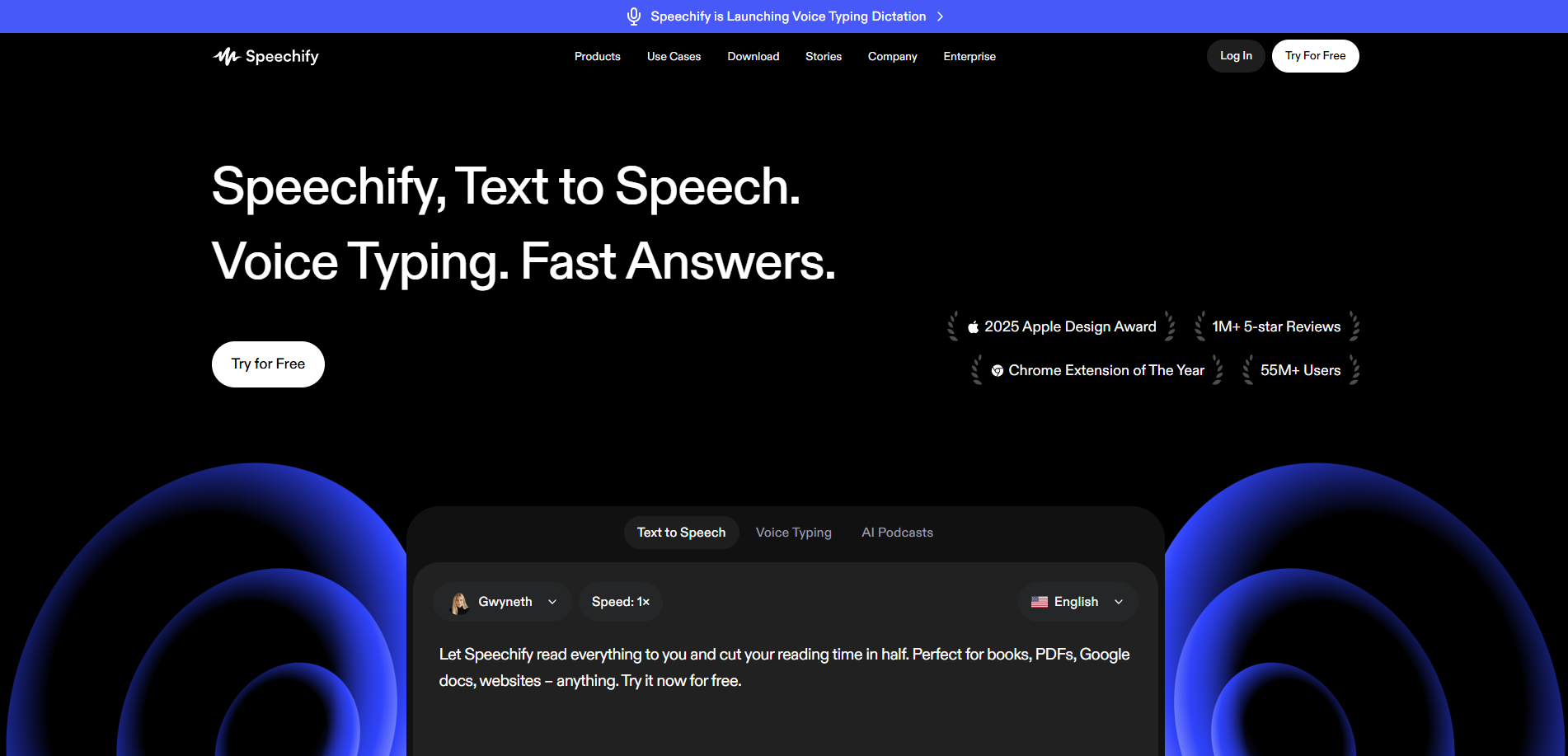
Best for individuals and organizations that need text-to-speech for reading, accessibility, and personal productivity across mobile, desktop, and browser.
Score: 3.0/10. Best personal reader (9/10). Not designed for enterprise voice AI. Zero telephony, governance, deployment, or production capability.
Product Overview
- Speechify converts written text into audio from PDFs, web pages, documents, and emails.
- 30+ languages.
- Adjustable reading speed.
- Celebrity voices available.
- Chrome extension, iOS, Android, and desktop apps.
- Over 100,000 5-star App Store reviews.
- Voice Over Studio for content production.
Pricing
- Free plan (limited).
- Premium $139/year.
- Enterprise custom.
Deployment and Integrations
- Cloud-based with native apps.
- Browser extension.
- No API for contact center use.
- No telephony integration.
Setup
Minutes. Install extension or app and start listening.
Tradeoffs
- Best personal TTS reader on the market.
- But not designed for enterprise contact center or conversational AI use.
- No telephony integration.
- No multi-turn conversation capability.
- No governance controls.
- No self-hosted deployment.
- Focused on consumption (reading aloud) rather than production (interactive voice agents).
4.6/5 App Store.
#7. Inworld AI: Best AI Voice Generator for Interactive Game Characters
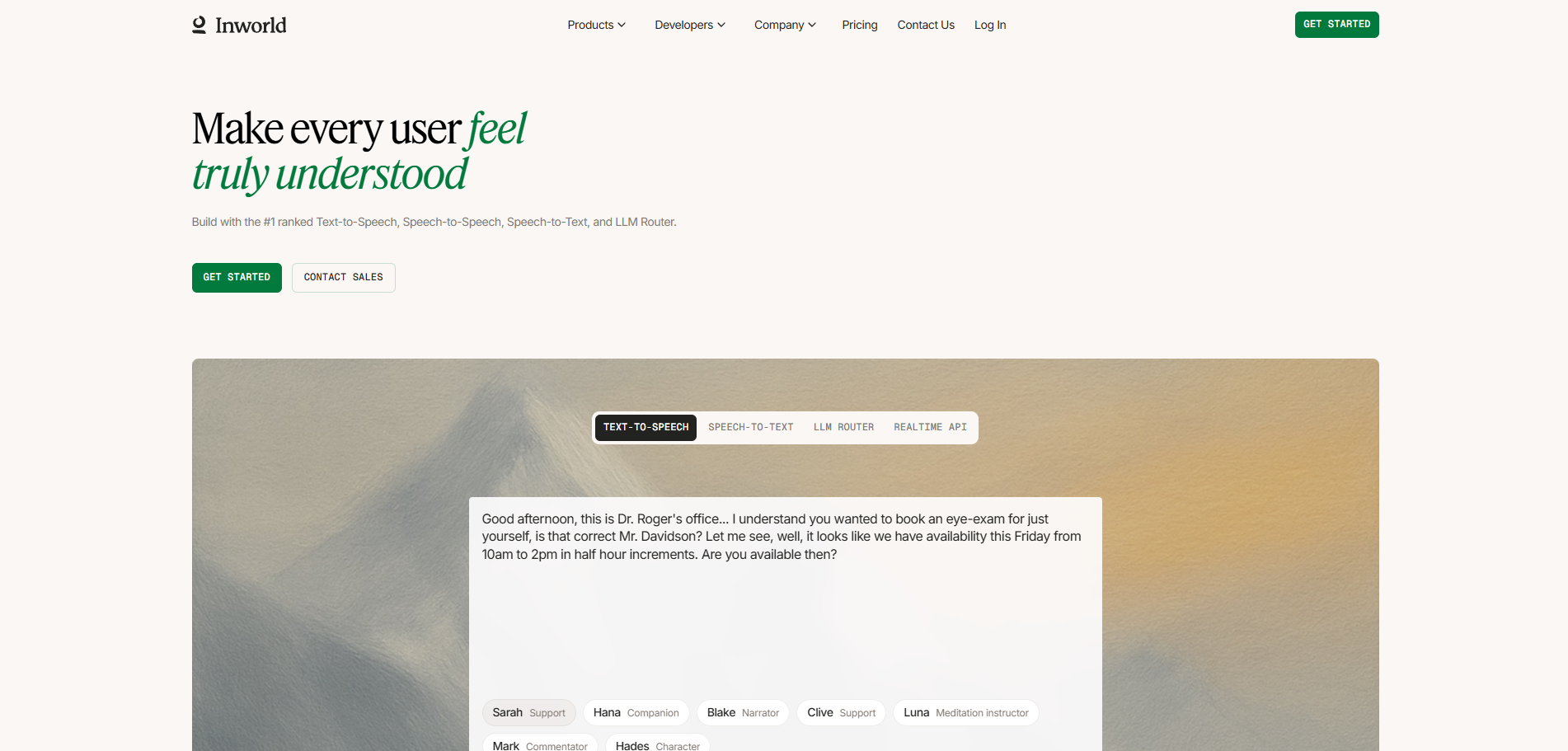
Best for game studios and interactive experience developers building NPCs and virtual characters with dynamic voice, personality, and memory.
Score: 3.4/10. Unique character AI (8/10). Gaming-focused. Zero telephony, governance, or enterprise deployment capability.
Product Overview
- Inworld creates AI characters with personality, memory, and contextual voice responses.
- Characters maintain consistent personality traits across interactions.
- Built for gaming, virtual worlds, and interactive entertainment.
- Unreal Engine and Unity SDKs.
- Character memory persists across sessions.
Pricing
- Free tier (limited interactions).
- Usage-based.
- Enterprise custom.
Deployment and Integrations
- Cloud API.
- Game engine SDKs (Unreal, Unity).
- No telephony connectors.
Setup
- Days to weeks for game integration.
- Hours for standalone character prototyping.
Tradeoffs
- Unique character AI with persistent personality.
- But not designed for enterprise contact center use.
- No telephony integration.
- No guided governance for regulated industries.
- No self-hosted deployment.
- Gaming-focused architecture limits enterprise customer service application.
No Capterra listing.
#8. PlayHT: Best AI Voice Generator for Developer API and Automated Voice Production

Best for developer-led teams building voice functionality into products and platforms via API, with automation for high-volume audio production.
Score: 5.0/10. Strong developer API (7/10). Meta acquisition may shift roadmap. Scored lower on telephony (2/10), governance (0/10), deployment (3/10).
Product Overview
- API-first AI voice platform.
- Ultra-realistic voices with emotion control.
- Voice cloning capability.
- Acquired by Meta in late 2025, shifting roadmap toward platform-scale infrastructure.
- Streaming API for real-time voice generation.
- Full commercial rights on generated audio.
Pricing
- Free tier (limited).
- Creator $31.20/month.
- Pro $99/month.
- Enterprise custom.
Deployment and Integrations
- Cloud API.
- Streaming for real-time applications.
- No native telephony connectors.
- No self-hosted deployment.
Setup
- Hours for API integration.
- Minutes for web-based generation.
Tradeoffs
- Strong API-first approach for developers.
- Meta acquisition may shift roadmap priorities.
- Less emotional depth than ElevenLabs.
- No native telephony integration for contact centers.
- No governance controls for regulated voice conversations.
- No self-hosted deployment.
- Roadmap uncertainty post-acquisition.
4.3/5 G2 (50+ reviews).
How to Choose the Best AI Voice Agent Software
Step 1: Decide Your Deployment Model Before Evaluating Any Platform
Does your compliance profile, data residency policy, or infrastructure security prevent customer voice data from being processed on third-party cloud infrastructure? If yes, eliminate cloud-only platforms.
Rasa Voice is the only platform in this evaluation with genuine on-premises deployment where no audio routes through cloud ASR/TTS providers.
Step 2: Benchmark Latency with Your Own Call Patterns
Don’t rely on vendor-provided latency numbers. Run a proof-of-concept using your own call scripts, telephony provider, and realistic noise environments.
Measure the full chain: utterance detection through ASR, LLM processing, TTS, and audio playback. Target sub-800ms for enterprise production. Anything over 1.5 seconds feels unnatural.
Step 3: Test Barge-In Handling and Interruption Recovery
Have your most assertive tester interrupt the agent mid-sentence, speak over it during a long response, and change direction mid-call.
If the platform loses context after barge-in or cannot recover from an unexpected topic change, it’s not production-ready for enterprise contact centers.
Step 4: Verify Telephony Integration Depth Against Your Existing Stack
Ask for a live demonstration with your specific SIP trunk provider, CCaaS platform, or IVR vendor.
How does handoff to a human agent work? Does the agent receive full conversation context, or does the customer start from scratch?
Step 5: Evaluate LLM Governance and Call-Level Policy Enforcement
Can you define what the voice agent is and isn’t allowed to say? Can you enforce compliance guardrails, restrict topic scope, and maintain an audit trail of every AI-generated response in a regulated call? Test with off-policy prompts.
Step 6: Test DTMF and Secure Data Collection for Authenticated Calls
If your voice AI handles authenticated interactions (account access, payment processing, PIN verification), verify DTMF keypad input alongside speech, with PCI DSS or equivalent compliance controls.
Step 7: Run a Production Pilot on Your Highest-Volume Call Type
Pick your most common inbound call. Run it in pre-production with real scripts, edge cases, and deliberate failure modes.
Track containment rate, escalation quality, CSAT, ASR accuracy on domain-specific terminology, and context survival across transferred calls.
Step 8: Calculate Total Cost of Ownership Including Telephony and ASR/TTS
Per-minute platform fees are only one component. Factor telephony costs (SIP minutes, Twilio per-minute), ASR/TTS provider charges if not included, integration engineering, and the cost of switching platforms if the architecture ceiling hits in 24 months.
Voice AI Software Pricing Models and Costs in 2026
Four pricing models dominate voice AI. Each creates different economics at contact center scale.
Per-minute (usage-based): PlayHT, Hume AI. Looks affordable at low volume. At 100,000 call minutes/month, per-minute pricing compounds rapidly. Hidden telephony and ASR/TTS costs add layers.
Per-character/credit: ElevenLabs, Murf AI, WellSaid Labs. Content production model. Not designed for interactive voice conversations.
CCaaS-bundled: Enterprise add-on modules within Genesys, NICE, or similar. Fastest deployment within existing infrastructure. Typically, six-figure annual contracts.
Enterprise volume license: Rasa Enterprise. Annual conversation-volume pricing. No per-minute unpredictability. Contact Rasa for a quote.
Always factor total cost: platform + telephony + ASR + TTS + engineering + switching cost.
Questions to Ask Before Purchasing an AI Voice Generator
1. Deployment and data sovereignty
Where is customer voice data processed? Your environment, the vendor's cloud, or a third-party ASR/TTS provider?
2. Telephony integration
SIP vs. WebSocket streaming? Does the platform connect to your existing infrastructure natively?
3. LLM governance
Can you define and enforce what the voice agent is allowed to say on every call?
4. DTMF support
Can the platform handle keypad input for PIN, account numbers, and payment data with PCI DSS compliance?
5. Barge-in handling
What happens when a caller interrupts? Does context survive?
6. Cross-channel persistence
If a customer calls about a chat conversation, does the voice agent have that context?
7. ASR accuracy
What is the recognition accuracy on your domain-specific terminology, accents, and background noise?
8. Total cost of ownership
What does year-two cost when you add all provider layers?
Voice AI Software Integrations: What to Verify Before Buying
Telephony integration depth is where voice AI buying decisions fail in production. A platform that cannot integrate cleanly with your SIP infrastructure, CCaaS platform, or existing IVR connectors will require expensive custom engineering.
Critical telephony handoffs: SIP trunk integration, CCaaS platform connectors (Twilio, Genesys, AudioCodes, Amazon Connect), human agent transfer with context, DTMF handling for secure data collection.
Key integrations to verify: CRM data pull during call (Salesforce, Zendesk), order/account lookup, authentication systems, payment processing, call recording and analytics, workforce management.
Key Features to Look for in the Best AI Voice Apps
Sub-Second Latency With SLA Guarantees
Target sub-800ms from utterance detection to audio playback. Vendor-provided benchmarks mean nothing without testing on your call patterns and telephony stack.
Rasa Voice delivers sub-second latency confirmed on rasa.com/solutions/voice.
Human-Fluent Neural TTS with Emotional Range
Voice quality determines caller trust. ElevenLabs leads for content production. For contact center use, the TTS must maintain naturalness across long, multi-turn calls, not just short demo clips.
Barge-In Detection and Interruption Handling
Production callers interrupt. The voice AI must detect partial speech, stop its response, and resume with context intact.
Rasa Voice Stream channels handle barge-in with a configurable silence timeout (default 7 seconds).
Native Telephony Connectors
Rasa Voice provides built-in connectors for Twilio, AudioCodes, Genesys, and Jambonz.
Every other platform in this evaluation either has no telephony integration or requires custom API work.
DTMF Keypad Input with PCI DSS Compliance
Authenticated voice interactions (PIN entry, account numbers, payments) require DTMF alongside speech.
Rasa confirms DTMF with PCI DSS support.
LLM Governance and Call-Level Policy Enforcement
Voice AI without governance is a compliance liability.
Rasa’s Orchestrator provides guided policy enforcement for every voice interaction. Most TTS platforms have zero governance architecture.
Self-Hosted / On-Premises Deployment
Regulated industries need voice data in their environment.
Rasa Voice is the only platform here with genuine on-premises deployment and self-hosted ASR/TTS.
Cross-Channel Context Persistence
When a customer calls about a previous chat, the voice agent should know the history.
Rasa's unified architecture means agent memory across voice and digital channels.
Human Agent Escalation with Full Context
When AI reaches its limit, context must transfer to the human agent. No customer should repeat their issue after transfer.
Track escalation quality, not just containment rate.
Conversation-Level Analytics and Call Observability
Containment rate, ASR accuracy, caller sentiment, drop-off points, and full audit trails for every AI-generated voice response.
What Is the Best Voice AI Software for Regulated Industries?
Regulated industries (banking, insurance, healthcare, telco) require on-premises voice data processing, deterministic agent behavior, DTMF with PCI DSS compliance, and full call-level audit trails. Most voice AI platforms are cloud-only with no governance architecture.
Rasa Voice deploys in your environment. Self-hosted ASR and TTS. No customer voice data leaves your infrastructure. DTMF for secure data collection. Every AI response is traceable through guided skills.
Groupe IMA (30 million European drivers) selected Rasa Voice for regulated roadside assistance voice automation.
What Is the Best Voice AI Software for Enterprise IVR Replacement?
IVR replacement requires more than better TTS. It requires multi-turn conversation handling, back-end system integration, barge-in detection, DTMF support, telephony connector compatibility, and the ability to resolve calls that the IVR could only route.
Rasa Voice is the only platform in this evaluation built specifically for IVR replacement. Native connectors for Twilio, AudioCodes, Genesys, and Jambonz. Guided conversation governance via the Orchestrator. Same orchestration logic across voice and digital. ElevenLabs, Murf AI, and WellSaid Labs are content production tools.
Hume AI, Inworld, and PlayHT are API-first but lack enterprise telephony integration and governance.
Best AI Voice Generators: What You Need to Know
LLM governance in voice AI is the most complex buying discussion in enterprise. Callers can be led into off-policy responses by voice AI that lacks proper guardrails. In regulated sectors, this creates direct compliance and legal liability.
How does the platform prevent incorrect statements on calls? Rasa’s Orchestrator separates understanding (LLM) from execution (guided skills). Business logic controls what the voice agent says. Prompt engineering alone is not governance.
Can business teams define what the voice AI is allowed to say? With Rasa, business rules are defined in guided skills. Non-technical teams refine agent behavior in Rasa Studio (beta). Developers own telephony integrations.
Where is customer voice data processed? Rasa: self-hosted, voice data stays in your environment. Cloud platforms: audio processed on vendor or third-party infrastructure.
What audit trail exists for voice responses? Rasa provides call-level tracing through the Orchestrator. Every action logged: what data was accessed, what tool was called, what response was generated.
What does the voice AI do autonomously vs. requiring a human? In Rasa’s Orchestrator, the LLM handles dialogue understanding. Guided skills handle action selection, policy enforcement, and response generation. Humans define guardrails.
How does the system handle adversarial callers? Guided skills prevent the LLM from being manipulated into off-policy responses. Topic constraints, action boundaries, and escalation triggers are architectural, not prompt-based.
Is Rasa Voice Worth the Cost?
Three paths exist for enterprise voice AI:
CCaaS-bundled voice AI (Genesys, NICE): Choose if you’re already on a CCaaS platform, have limited customization requirements, and want the fastest path to deployment within existing infrastructure.
Pure-play voice AI platform (ElevenLabs, PlayHT, Hume): Choose if you have developer-led teams, usage-based economics work for your volume, and you have no regulated data residency requirements.
Rasa Voice: Choose if you need ownership of voice AI infrastructure, operate in a regulated industry with data sovereignty requirements, need unified voice-digital conversation architecture, and require multi-system back-end integration depth beyond what CCaaS connectors provide.
Rasa Voice is for enterprise teams building voice AI as a long-term owned capability, not for teams that want a cloud-managed voice agent operational before the end of the sprint.
Which Voice AI Software Is Right for Your Contact Center?
Which is the best voice AI for enterprise contact centers? Determine what your priorities are:
- Need IVR replacement + ownership: Rasa Voice. Self-hosted, guided governance, native telephony.
- Need content creation TTS: ElevenLabs. Most realistic voices, broadest language coverage.
- Need marketing voiceover: Murf AI. Studio interface, professional tone.
- Need enterprise L&D voiceover: WellSaid Labs. Ethically sourced, professional-grade.
- Need emotionally aware agents: Hume AI. Empathic voice interface, research-grade.
- Need reading accessibility: Speechify. Best personal TTS reader.
- Need game character AI: Inworld AI. Persistent personality and memory.
- Need developer API: PlayHT. API-first, streaming, commercial rights.
Frequently Asked Questions
What is the best voice AI software for enterprise contact centers?
Rasa Voice, for enterprises needing self-hosted deployment, deterministic governance, native telephony connectors (Twilio, AudioCodes, Genesys), and multi-turn call resolution.
It’s the only platform in this evaluation built for IVR replacement rather than content production.
What is the difference between voice AI software and a traditional IVR?
Traditional IVR uses rigid menu trees and touch-tone navigation.
Voice AI understands natural speech, handles multi-turn conversations, integrates with back-end systems, and resolves calls without routing through menu options. The caller speaks naturally instead of pressing buttons.
What latency is acceptable for production enterprise voice AI software?
Target sub-800ms from utterance detection through ASR, LLM processing, TTS, and audio playback. Anything over 1.5 seconds feels unnatural.
Always benchmark with your own call patterns and telephony stack, not vendor-provided numbers.
What voice AI software can be deployed on-premises without cloud ASR or TTS providers?
Rasa Voice. Self-hosted with on-premises ASR and TTS models. No customer voice data leaves your infrastructure. No mandatory calls to external cloud providers.
Every other platform in this evaluation requires cloud processing for audio.
How does voice AI software handle barge-ins and caller interruptions?
Production voice AI detects partial speech during agent response, stops its output, processes the new input, and resumes with context intact.
Rasa Voice Stream channels support barge-in with configurable silence timeout (default 7 seconds).
Platforms without barge-in handling fail in real contact center environments.
What voice AI software gives the most control over LLM responses on calls?
Rasa Voice with the Orchestrator. Guided skills define what the voice agent can say and do on every call. Policy enforcement at the conversation and action level.
No other platform in this evaluation provides architectural separation between LLM understanding and action execution for voice.
Can voice AI software handle DTMF and secure data collection such as PINs or account numbers?
Rasa Voice supports DTMF keypad input alongside speech with PCI DSS compliance. This is critical for authenticated voice interactions: account access, payment processing, and PIN verification.
Most content-focused TTS platforms (ElevenLabs, Murf, Speechify) do not handle DTMF.
What is the difference between voice AI built on a CCaaS platform and a standalone voice AI platform?
CCaaS-bundled voice AI (Genesys, NICE) deploys fastest within existing infrastructure but limits customization.
Standalone platforms (Rasa Voice) provide full control over conversation logic, telephony integration, and deployment model.
Choose based on customization needs vs. deployment speed.
How does enterprise voice AI software maintain context when a customer calls back?
Rasa's unified agent memory architecture persists conversation state across sessions and channels. A customer who called yesterday and chats today retains full history.
Most voice-only platforms treat each call as a new interaction with no prior context.
What telephony infrastructure is required to integrate enterprise voice AI software?
At minimum: SIP trunk or CCaaS platform (Twilio, Genesys, AudioCodes).
Rasa Voice connects via Voice Stream (WebSocket-based media streaming) or Voice Ready (SIP-based).
Your existing telephony provider determines which connector type applies.
Can voice AI software handle multilingual calls and code-switching mid-conversation?
Rasa supports multiple languages through configurable NLU pipelines and LLM-based understanding. ASR provider selection (Deepgram, Azure) determines language recognition accuracy.
ElevenLabs leads for multilingual TTS quality (29+ languages).
Deutsche Telekom runs Rasa in German and English.
How do you measure ROI for enterprise voice AI software?
Track containment rate (calls resolved without human transfer), average handle time reduction, CSAT for AI-handled calls, agent workload reduction, and cost per resolution vs. human-handled calls.
Deutsche Telekom achieved 50% autonomous resolution and 30% agent workload reduction with Rasa.
Is there open-source voice AI software suitable for enterprise deployment?
Rasa offers a Developer Edition (free, 1,000 conversations/month) with full platform access. The open core model provides enterprise features on paid tiers.
Fully open-source voice-specific tools exist (Mozilla DeepSpeech, Coqui TTS) but lack orchestration, governance, and telephony integration.
Can Rasa Voice understand multiple languages?
Yes. Rasa supports multiple languages through configurable NLU and LLM-based understanding. ASR accuracy depends on provider choice (Deepgram, Azure).
Deutsche Telekom runs Rasa in German and English across 10,000+ employees.
How accurate is Rasa Voice?
Accuracy depends on three factors: ASR provider quality on your domain terminology, LLM understanding of user intent, and deterministic flow coverage.
Rasa CALM's architectural separation means the LLM handles understanding while business logic handles execution, reducing hallucination risk in voice responses, the core risk the Orchestrator is designed to contain.
Can AI voice agents replace human agents?
For routine, high-volume call types: yes. Deutsche Telekom resolves 50% of IT service desk inquiries autonomously.
For complex emotional situations, compliance-sensitive decisions, or novel edge cases: no.
The goal is containment of resolvable calls, not elimination of human agents.
Are AI-generated voices legal?
Yes, with conditions. Voice cloning of real individuals requires consent. Regulations vary by jurisdiction.
WellSaid Labs and ElevenLabs provide consent verification for cloned voices.
For enterprise contact center use, disclosure requirements may apply. Consult legal counsel for your specific jurisdiction and use case.