First-generation chatbots answered questions. Enterprise conversational AI platforms in 2026 hold conversations. The difference is context: the ability to track a customer across multiple turns, switch between systems, handle exceptions, and resolve issues that a scripted bot would escalate in the first 30 seconds.
Most enterprise teams searching for the best conversational AI chatbot have already learned this lesson the hard way. Their current chatbot handles the easy 20% and escalates everything else.
The platforms in this guide were evaluated on their ability to handle the other 80%: multi-turn complexity, voice-digital parity, governance for regulated industries, and production reliability under real traffic.
We evaluated 9 platforms across containment depth, LLM governance, multi-channel architecture, deployment flexibility, and total cost of ownership.
Best Conversational AI Software in 2026: Quick Comparison Table
How We Evaluated These Conversational AI Platforms
Our team evaluated each platform across seven weighted dimensions. We’ve analyzed aggregated user reviews from G2 and Capterra, reviewed public pricing, tested deployment workflows, and consulted with enterprise engineering teams running conversational AI in production.
We prioritized platforms that enterprise buyers in regulated industries (financial services, telco, healthcare, government) would encounter during a real evaluation cycle.
Each platform was assessed on its production-readiness, not on demo-day performance.
Our Scoring Methodology
Top 9 Best Conversational AI Tools for Businesses in 2026
#1. Rasa: Best Conversational AI Platform Overall for Enterprise
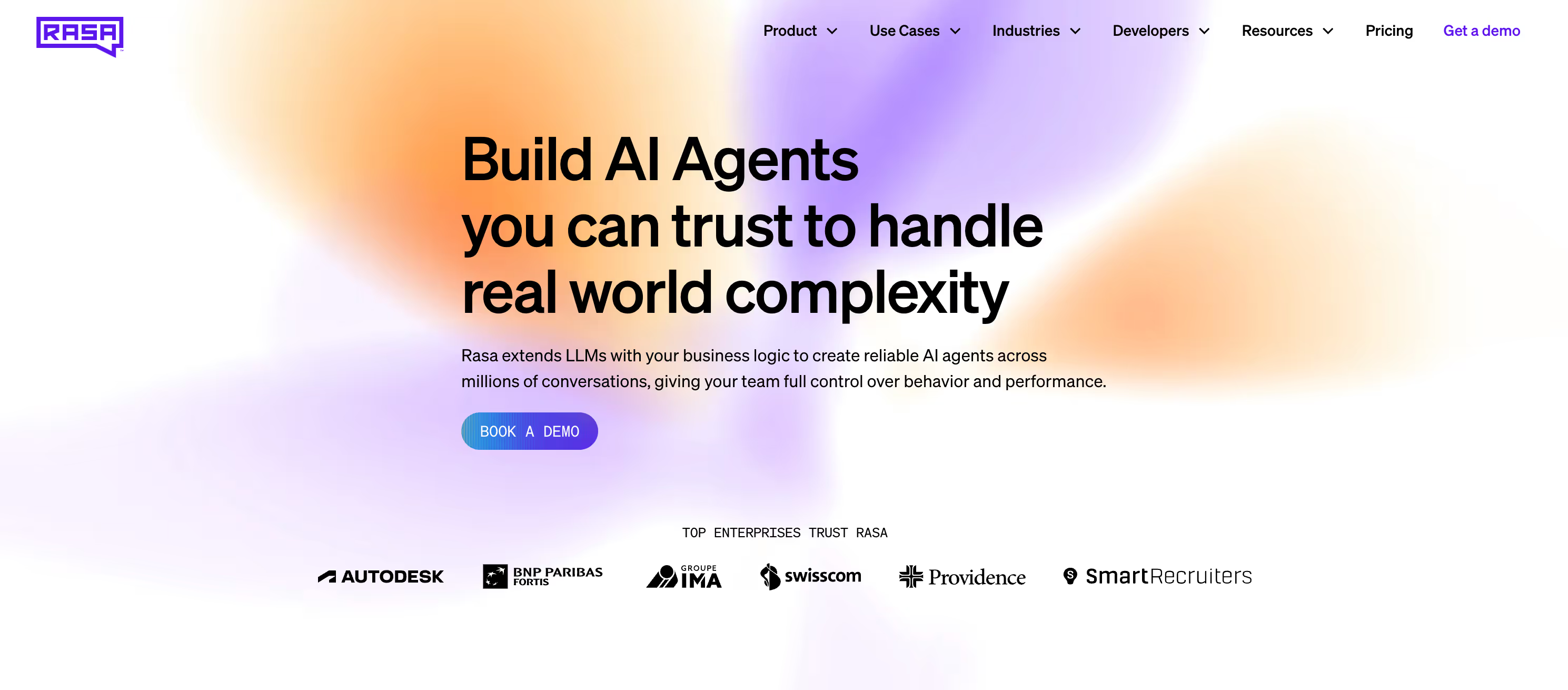
Score: 9.4/10. Highest marks for containment depth (10/10), governance (10/10), multi-channel (10/10), and deployment (10/10). Scored lower on review volume (6/10).
Rasa is the developer platform for enterprise AI agents. Where most platforms stop at chat, Rasa extends governed agent behavior across voice and digital channels from a single runtime—helping enterprises reach the first meaningful action faster.
Best for CX and IT leaders at 1,000+ employee enterprises in regulated industries that need the best conversational AI for customer interaction with production-grade governance, self-hosted deployment, and voice-digital parity.
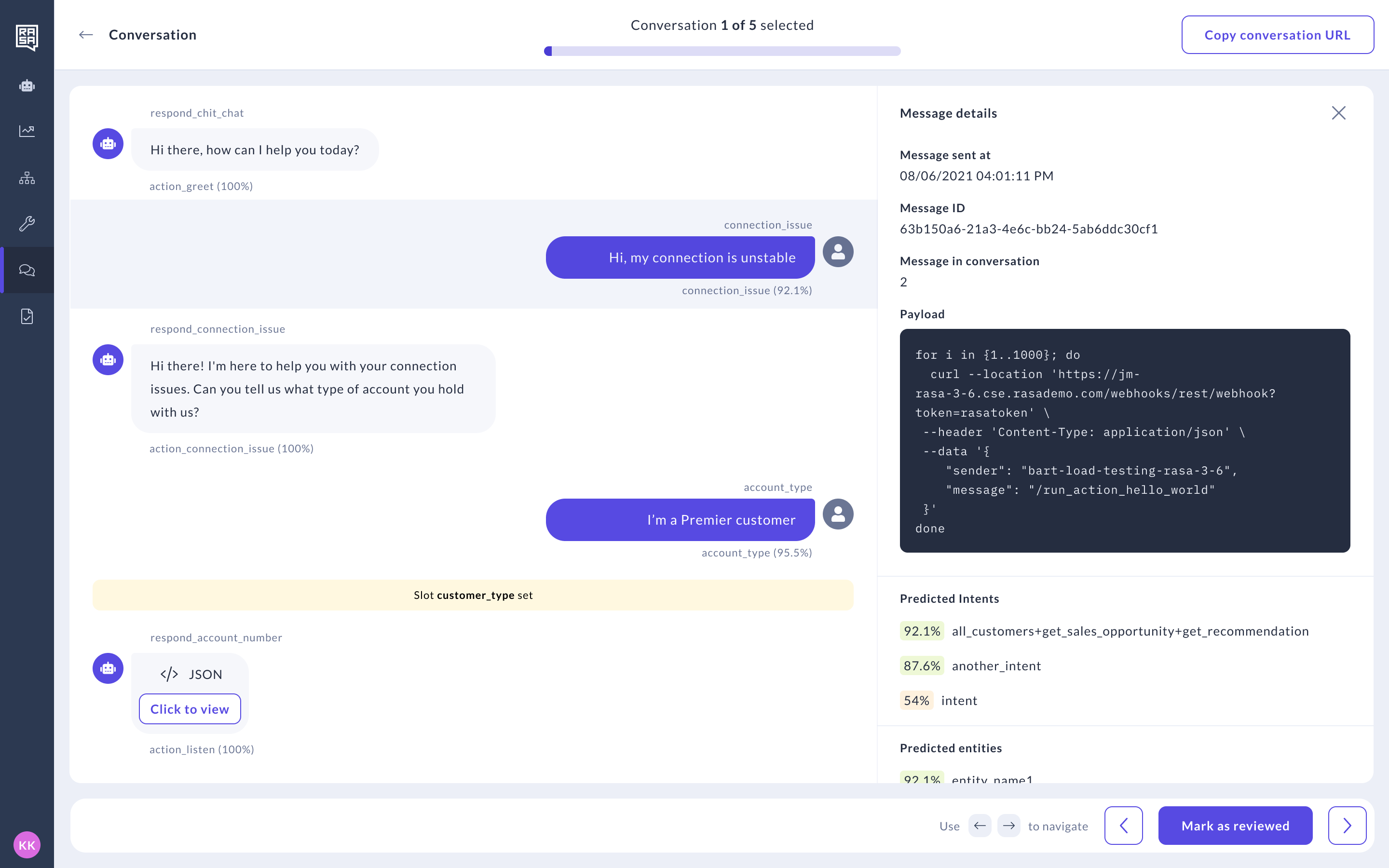
Product Overview
Pain 1: Conversation breaks when it spans multiple systems or steps
Chatbots resolve the first question. Production conversations span CRM lookups, authentication, order management, and policy checks across multiple turns.
Rasa’s patented Orchestrator coordinates these interactions through guided skills and autonomous capabilities. The LLM handles understanding.
Business logic, packaged into reusable skills, controls execution. Context switches mid-conversation without losing state.
Pain 2: Inconsistency across voice and chat
Rasa Voice brings the same conversational logic to voice channels: same policies, same integrations, same analytics.
Built-in Voice Stream connectors for Twilio Media Streams, Jambonz, AudioCodes, and Genesys Cloud. Choose your ASR (Deepgram, Azure) and TTS (Cartesia, Deepgram, Azure, Rime). No separate voice platform.
Pain 3: Governance and accountability in regulated environments
Self-hosted deployment. Rasa doesn’t host any customer data, systems, or applications.
Full audit trails through traceable orchestration. Policy enforcement at the conversation and action level. Reusable building blocks (agents, skills, memory, and tools) that work across channels.
Pricing
- Developer Edition (Free): Full access to Rasa. One bot per company, up to 1,000 external conversations/month (100 for internal agents). Community support via the Rasa Forum.
- Enterprise (Custom): Premium support, dedicated CSM, advanced security features, custom onboarding. Contact Rasa for a quote.
- Pricing is based on annual conversation volume, not per-user or per-seat.
Integrations and Extensibility
- CRM integrations (Salesforce, Zendesk), ITSM connectors (ServiceNow, Jira), Action Server for custom back-end actions.
- MCP server integration (beta).
- A2A (Agent-to-Agent) protocol (beta).
- Teams extend Rasa at the engine level: RAG pipeline, command generator, NLU pipelines, rephraser.
This is the best conversational AI agent for teams that need code-level control.
Deployment and Setup
- Self-hosted from day one.
- On-premise, private cloud, or hybrid.
The fastest path to an on-prem or private cloud deployment. Swisscom deployed Rasa from prototype to production in 20 weeks.
Tradeoffs
- Rasa requires a builder mindset.
- More platform than you need for a simple chatbot.
- Python developers and knowledge of conversational AI architecture are required.
The tradeoff: full ownership and production-grade governance that no managed platform provides.
Support
- Enterprise: premium support, dedicated CSM.
- Community support via Rasa Forum.
- Documentation at rasa.com/docs.
- Learning at learning.rasa.com.
Mini Case Study
Autodesk, the global design software company, uses Rasa to power conversational AI across its customer base. They expect to handle 200 million user conversations by 2026. Rasa's architecture supports that scale with governance and reliability.
→ Read the Autodesk case study
Replace Your Chatbot with AI That Resolves
#2. Kore.ai: Best Conversational AI Platform for Complex Enterprise Workflows
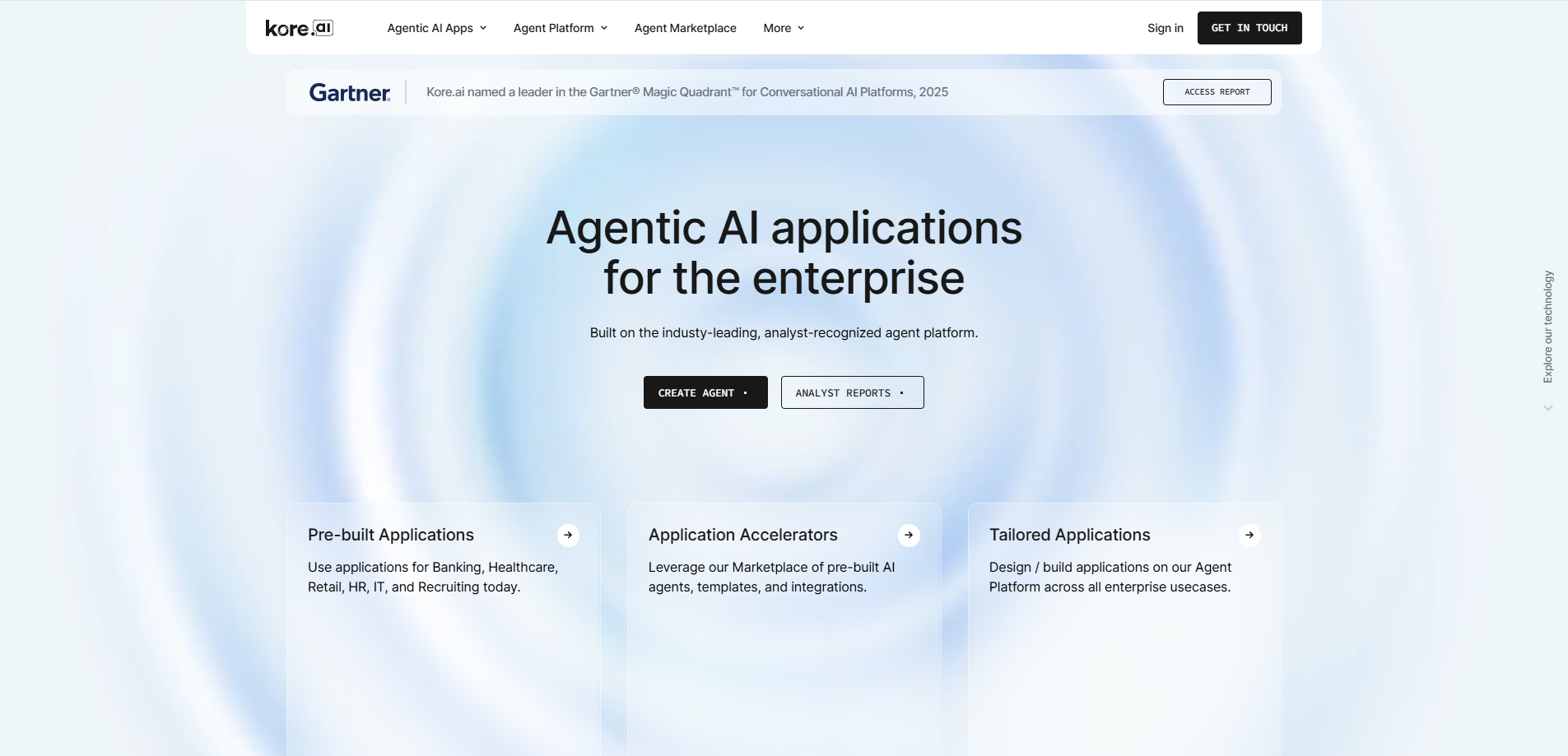
Best for large enterprises that need no-code agent building across customer service, HR, and IT with pre-built industry solutions and multi-engine NLP.
Score: 7.8/10. Strong workflow complexity (9/10), on-prem option (8/10), and industry agents (8/10). Scored lower on governance architecture (5/10) and integration reliability (6/10).
Product Overview
- Kore.ai's Experience Optimization Platform combines no-code bot building, multi-engine NLP, and pre-built industry agents for banking, healthcare, retail, and HR.
- Gartner Magic Quadrant Leader for conversational AI.
- Supports voice, chat, email, and social channels.
- Agent handoff with context.
- Built-in analytics and reporting.
Pricing
- Custom enterprise pricing.
- Contact Kore.ai for quote.
- Usage-based options available.
Deployment and Integrations
- Cloud and on-premises deployment.
- Integrations with Salesforce, Zendesk, ServiceNow, SAP, Oracle. 100+ pre-built connectors.
Setup
- Weeks for pre-built industry agents.
- Months for custom enterprise deployments with full integration.
Tradeoffs
- Strong enterprise capability with Gartner recognition.
- But integration configurations can be complex (Capterra reviewers note Zendesk integration issues).
- Enterprise pricing opaque.
- Learning curve on advanced features despite no-code positioning.
- On-premises option available, but implementation requires vendor support.
4.4/5 Capterra (17 reviews).
#3. Dialogflow CX: Best Conversational AI for Google Cloud Ecosystem
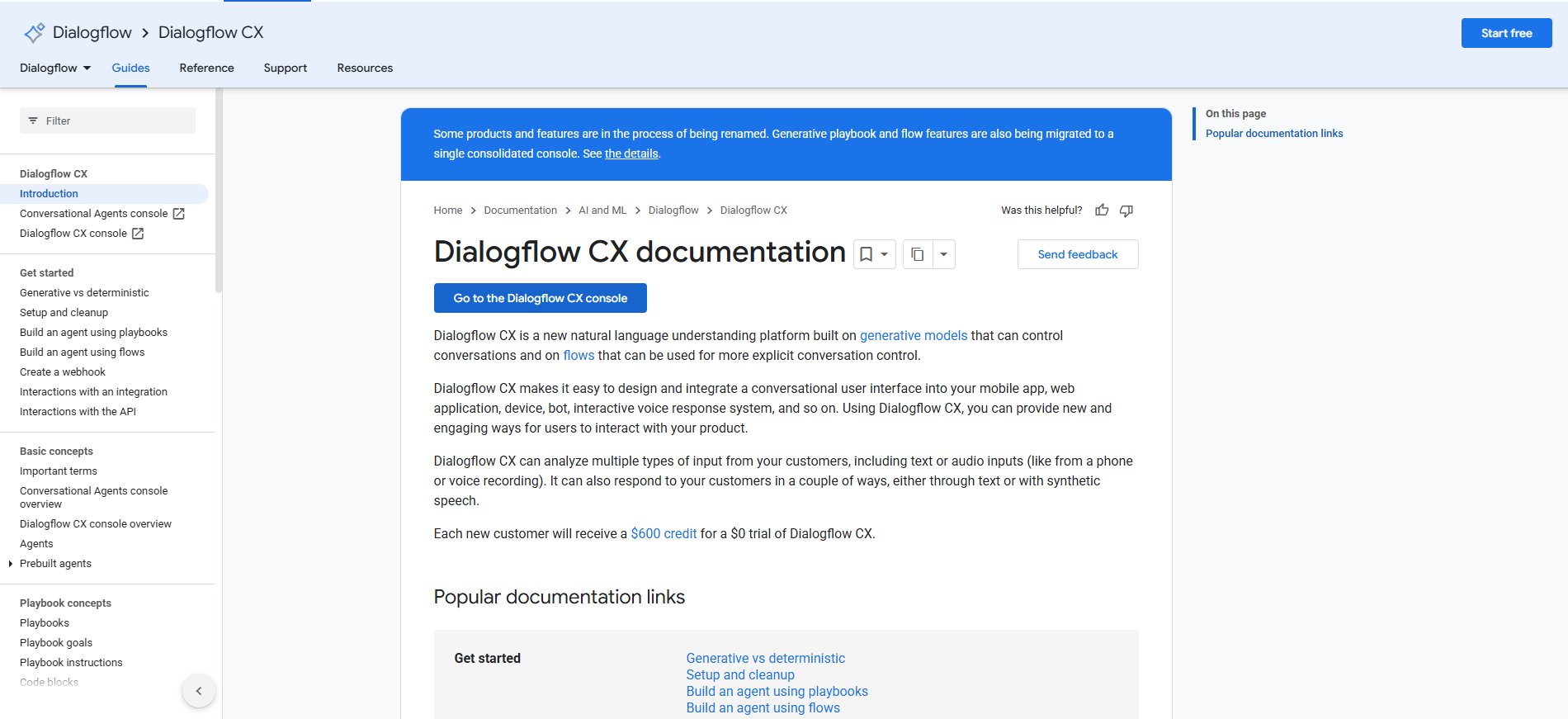
Best for enterprises on Google Cloud that need conversational AI tightly integrated with GCP services, with visual flow building for complex multi-turn dialogues.
Score: 7.0/10. Strong NLU accuracy (9/10) and Google integration (8/10). Scored lower on governance (4/10), deployment flexibility (4/10), and voice (5/10).
Product Overview
- Google's enterprise conversational AI platform.
- Visual flow builder for state-based dialogue management.
- Google NLU engine with strong intent recognition.
- Telephony integration via CCAI (Contact Center AI).
- Supports 30+ languages.
- Prebuilt agents for common use cases.
Pricing
- Pay-as-you-go.
- Free tier for text interactions.
- CX pricing based on sessions and audio minutes.
- Enterprise agreements available.
Deployment and Integrations
- Google Cloud only.
- Integrates with Google Assistant, Twilio, Genesys, Avaya via CCAI.
- Webhook-based custom integrations.
Setup
- Hours for basic bots.
- Weeks for complex multi-turn deployments with telephony integration.
Tradeoffs
- Google NLU is accurate.
- Visual flow builder is a genuine improvement over Dialogflow ES.
- But Google Cloud lock-in is real.
- UI is dense and developer-focused.
- No self-hosted deployment.
- Limited governance controls for regulated industries compared to Rasa CALM.
- 256-character query limit noted by reviewers.
4.5/5 Capterra (36+ reviews).
#4. DRUID AI: Best Conversational AI Platform for Enterprise Process Automation
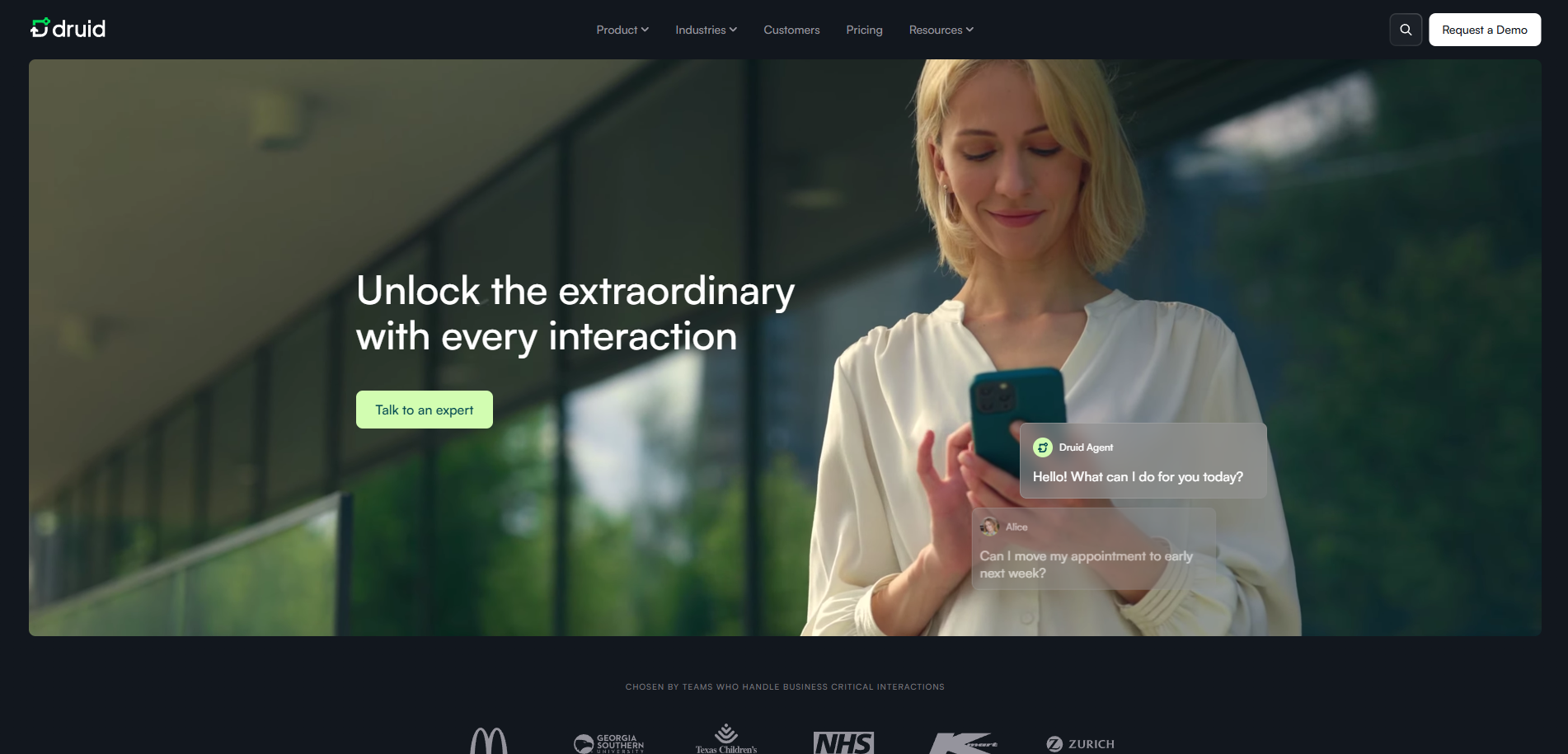
Best for enterprises automating internal processes (HR, IT, finance) alongside customer-facing conversations, with pre-built connectors for enterprise systems.
Score: 7.4/10. Strong process automation (8/10) and on-prem deployment (8/10). Scored lower on brand recognition (5/10) and conversational depth (6/10).
Product Overview
- DRUID combines conversational AI with enterprise process automation.
- Virtual assistants that handle scheduling, ticketing, knowledge management, and back-end tasks.
- Multi-LLM architecture.
- Voice and text channels.
- Integrates with SAP, Oracle, ServiceNow, and Microsoft ecosystems.
Pricing
Custom enterprise pricing. Contact DRUID for a quote.
Deployment and Integrations
- Cloud and on-premises deployment.
- Deep enterprise system integrations (SAP, Oracle, ServiceNow, Microsoft).
- API and webhook support.
Setup
- Weeks for pre-built process templates.
- Months for custom enterprise deployments.
Tradeoffs
- Strong process automation capability.
- Gartner Peer Insights rated 4.7/5 (43 reviews).
- But less recognized brand than Kore.ai or Dialogflow.
- Limited public pricing information.
- Customer-facing conversational depth less proven than Rasa or Intercom.
Capterra listing has limited reviews.
#5. Intercom: Best Conversational AI for Customer Support Chatbots
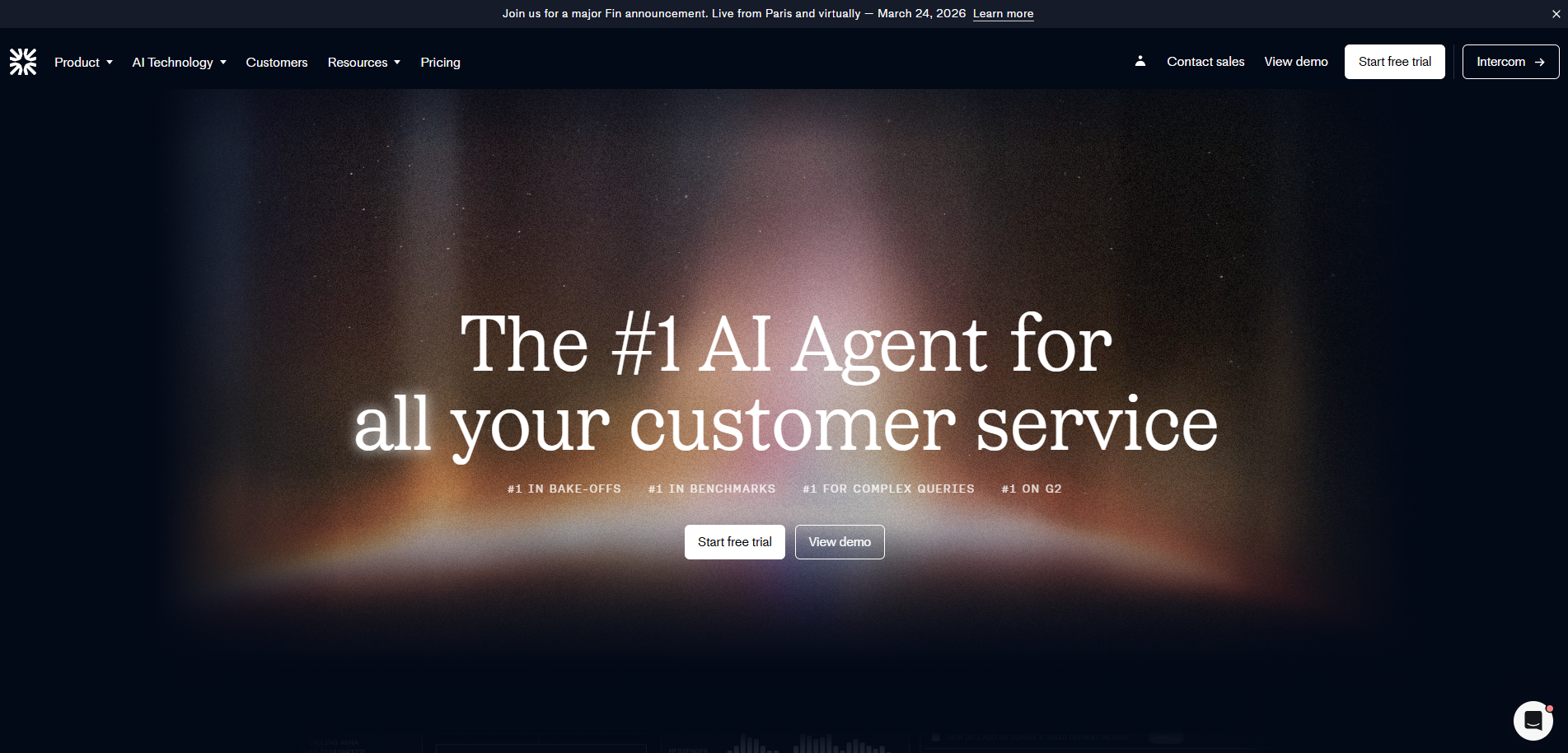
Best for SaaS and digital-first companies that want the highest autonomous resolution rate from a managed AI chatbot with minimal engineering investment.
Score: 7.2/10. Highest resolution rate (9/10) and setup speed (9/10). Scored lower on governance (3/10), deployment (3/10), and pricing predictability (5/10).
Product Overview
- Fin AI Agent resolves customer queries autonomously by training on help center content.
- Claimed 86% resolution rate.
- 45 languages.
- Fin AI Copilot assists human agents.
- Unified inbox across chat, email, WhatsApp, and phone.
- Product tours and onboarding flows.
Pricing
- $0.99/resolution for Fin AI.
- Essential $29/seat/month.
- Advanced $85/seat/month.
- Expert $132/seat/month.
Deployment and Integrations
- Cloud-only.
- Salesforce, HubSpot, Stripe, Jira, Slack integrations.
- No self-hosted option.
Setup
- Hours to days.
- Fin trains on existing help center content automatically.
Tradeoffs
- High resolution rate for help-center-backed queries.
- But $0.99/resolution compounds at scale (50K resolutions = $49,500/month).
- Cloud-only.
- No self-hosted deployment.
- Limited governance controls.
- Phone via third-party only.
- Not designed for regulated industries with data sovereignty needs.
4.5/5 Capterra (1,100+ reviews).
#6. Zendesk: Best Conversational AI for Help Desk and Knowledge Management
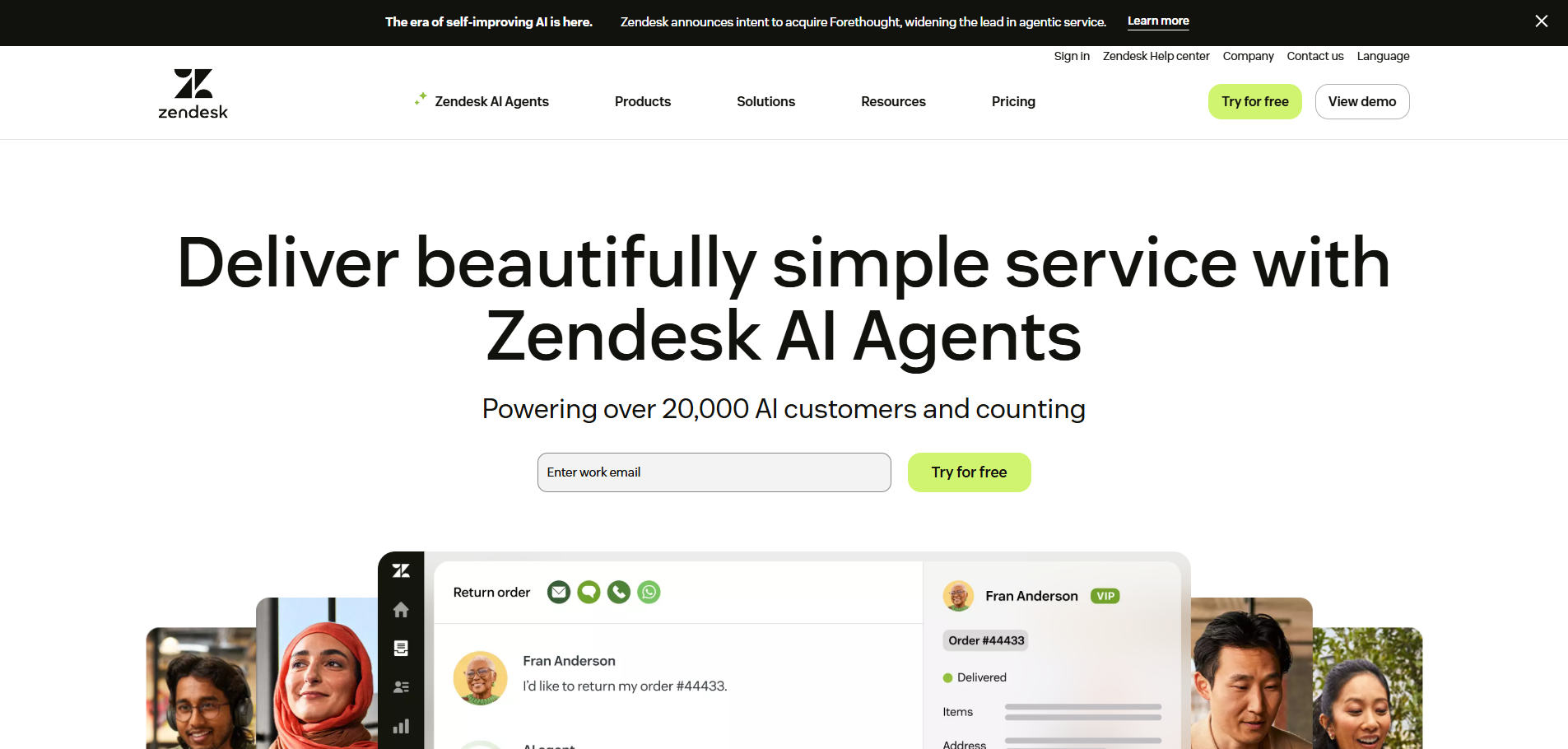
Best for support teams already on Zendesk that want AI layered into existing ticketing workflows with strong knowledge base optimization.
Score: 6.8/10. Best knowledge management (9/10) and review volume (9/10). Scored lower on governance (3/10), deployment (3/10), and AI autonomy (5/10).
Product Overview
- Zendesk AI adds generative AI replies, ticket summarization, intelligent routing, and tone adjustment to the Zendesk Suite.
- AI agents (formerly Ultimate) handle autonomous resolution.
- Knowledge management AI identifies content gaps and optimizes articles.
Pricing
- Suite from $19/agent/month.
- AI add-ons priced separately.
- Advanced features on Professional and Enterprise tiers.
Deployment and Integrations
- Cloud-only.
- 1,500+ marketplace integrations.
- Native Salesforce, Slack, Jira, Shopify.
Setup
- Days for basic configuration.
- Weeks for full deployment with custom routing and AI training.
Tradeoffs
- Strongest knowledge management AI in this category.
- But AI features spread across add-ons and tiers, making total cost opaque.
- Cloud-only.
- Complex configuration needs dedicated admin.
- Zendesk's own support quality criticized by users.
- Not suited for regulated industries with self-hosted requirements.
4.4/5 Capterra (4,038 reviews).
#7. Sesame AI: Best Conversational AI for Voice Realism Research
Best for research teams and labs exploring the frontier of human-like voice interaction, emotional expression, and conversational presence.
Score: 2.8/10. Impressive voice realism research (8/10). Not a production platform. Scored 0-2 on all enterprise criteria.
Product Overview
- Sesame AI focuses on creating conversational voice models that feel genuinely present.
- Research-stage platform exploring emotional tone, natural pacing, and contextual awareness in voice interactions.
- Not a production enterprise platform.
- Demonstrates what the next generation of voice AI may sound like.
Pricing
- Not commercially available.
- Research access.
Deployment and Integrations
- Research API.
- Not designed for enterprise production deployment.
Setup
N/A for enterprise production.
Tradeoffs
- Impressive voice realism for research contexts.
- But not a production platform.
- No enterprise deployment, no CRM integrations, no governance, no telephony connectors.
- Included in this evaluation because searchers ask about Sesame, but it is not ready for enterprise conversational AI deployment.
No Capterra listing.
#8. Hume AI: Best Conversational AI for Emotionally Aware Voice Interaction
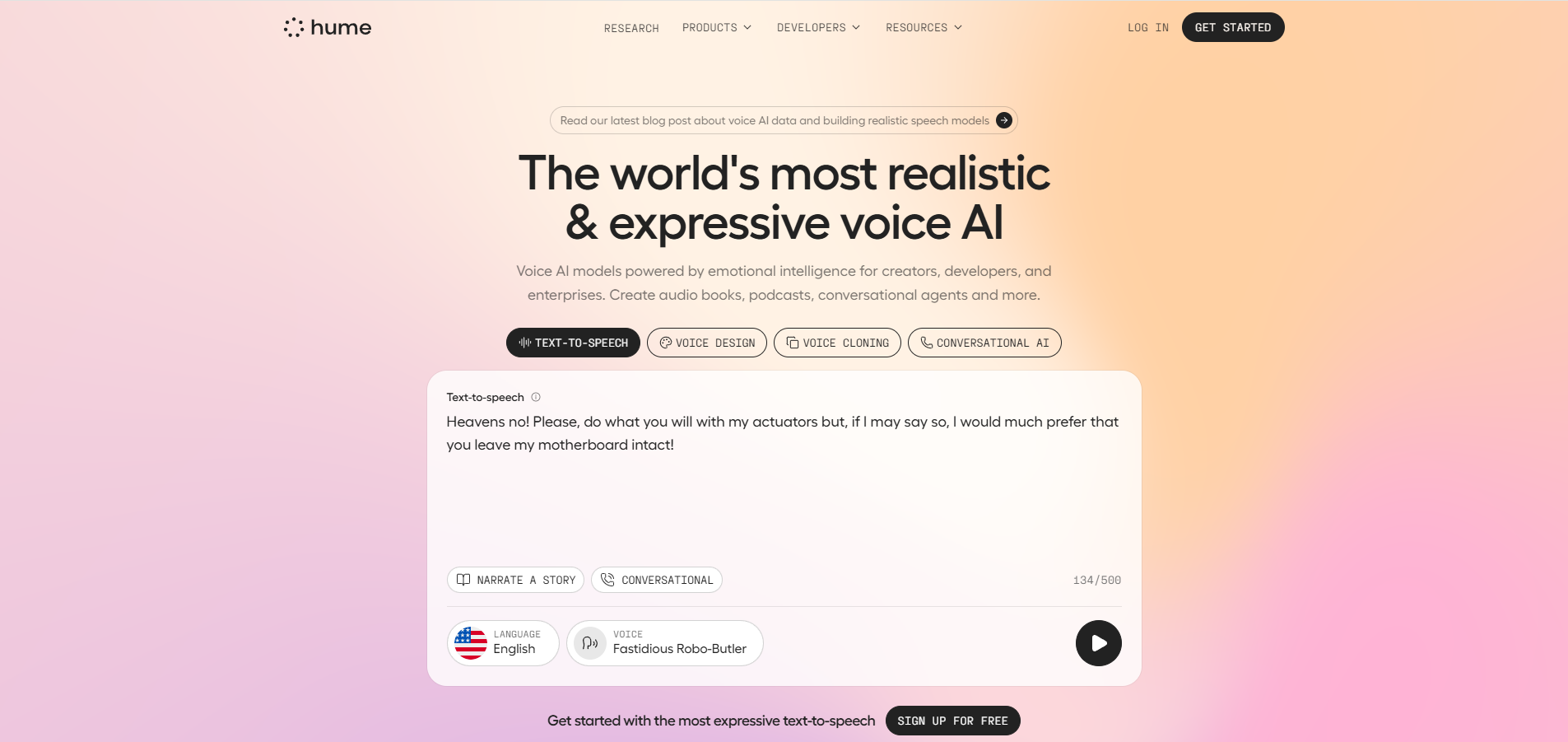
Best for developers building voice agents that detect and respond to caller emotion with empathic conversational style.
Score: 5.4/10. Best emotional detection (9/10). Scored lower on governance (2/10), deployment (3/10), telephony (3/10), and multi-channel (4/10).
Product Overview
- Empathic Voice Interface (EVI) detects caller emotion in real time.
- Octave TTS model produces expressive, contextually adaptive speech.
- Voice design tools for custom voice creation with accent, pitch, and style control.
- WebSocket API for real-time voice interactions.
Pricing
- Free tier.
- Usage-based API pricing.
- Enterprise custom.
Deployment and Integrations
- Cloud API.
- WebSocket streaming.
- No self-hosted deployment.
Setup
Hours to days for API integration.
Tradeoffs
- Most advanced emotional detection in conversational AI. But primarily English-only.
- Newer platform with limited enterprise track record.
- No native telephony connectors.
- No deterministic governance for regulated calls.
- Cloud-only.
- Still catching up to established TTS providers for consistency in long interactions.
No Capterra listing.
#9. ManyChat: Best Conversational AI for Social Media Marketing and Lead Generation
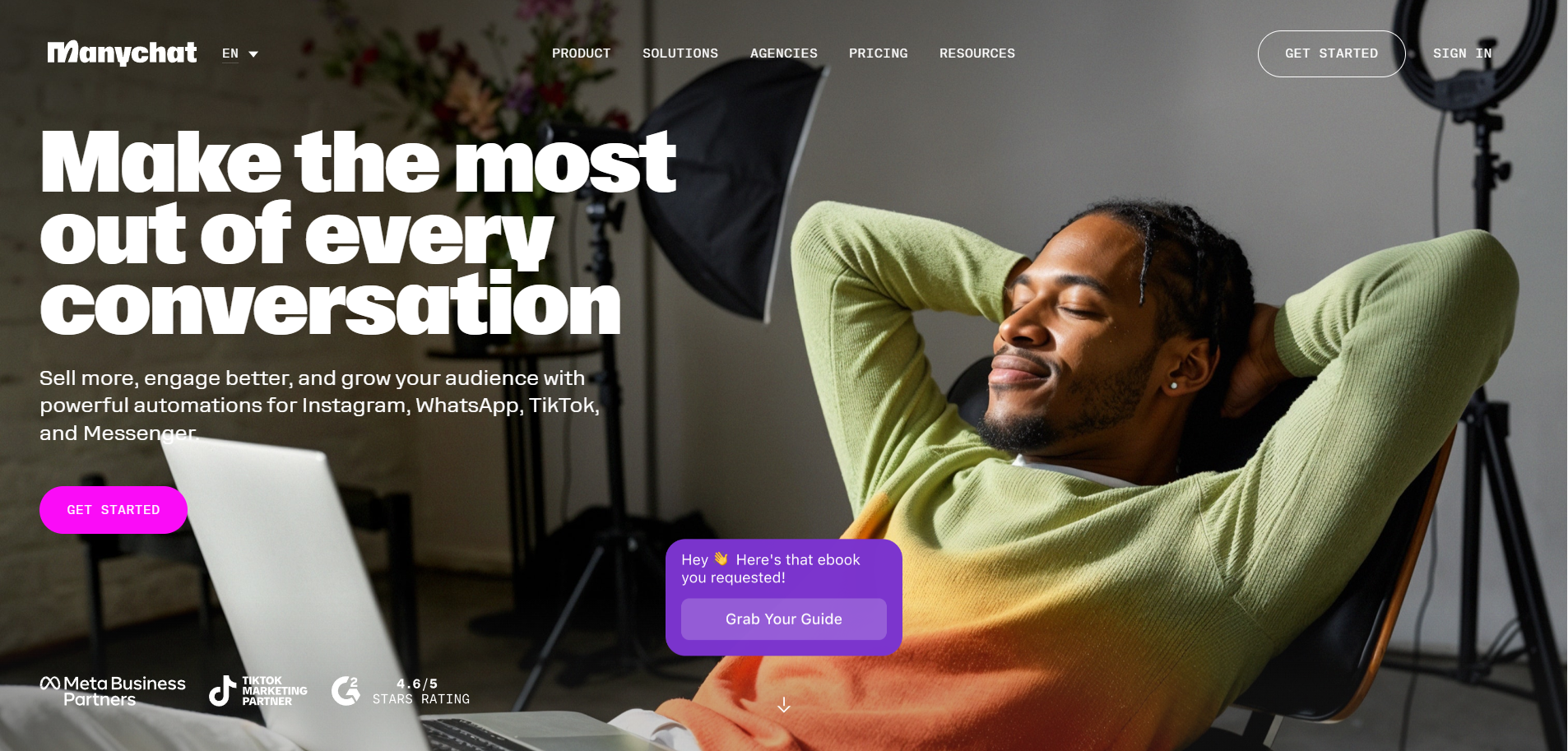
Best for small businesses and creators that generate leads through Instagram, Facebook, WhatsApp, and SMS and need automated conversation flows for marketing funnels.
Score: 4.6/10. Best social media automation (10/10). Scored lower on containment depth (2/10), governance (1/10), voice (0/10), and deployment (3/10).
Product Overview
- ManyChat automates DM conversations on Instagram, Facebook Messenger, WhatsApp, and SMS.
- Visual Flow Builder for creating marketing automation sequences.
- Comment automation triggers conversations from post engagement.
- Pre-built templates for lead generation, appointment booking, and sales funnels.
Pricing
- Free plan (limited features).
- Pro $15/month.
- Elite $99/month.
- Enterprise custom.
Deployment and Integrations
- Cloud-only.
- Native Instagram, Facebook, WhatsApp, Telegram, SMS.
- Integrations with Shopify, HubSpot, Mailchimp, Google Sheets.
Setup
- Minutes. First automation live in under 10 minutes.
- No coding required.
Tradeoffs
- Best social media automation in this category.
- But not designed for enterprise customer service or complex multi-turn conversations.
- Rule-based automation with limited AI. No voice capability.
- No self-hosted deployment.
- No governance for regulated industries.
- Marketing-focused, not support-focused.
4.6/5 Capterra (72 reviews).
How to Choose the Best Conversational AI Solutions for Your Enterprise
Step 1: Define Your Deployment Model First
Does your organization have data sovereignty requirements or compliance mandates that require the platform in your environment? If yes, eliminate cloud-only SaaS vendors.
Rasa and DRUID AI offer on-premises deployment. Kore.ai provides on-prem options with vendor support.
Step 2: Map Your Conversation Complexity
FAQ deflection is solved. Pressure-test each vendor on your most complex customer journey: billing disputes, multi-step account changes, and claims processing.
If the demo only shows happy paths, push for exception handling.
Step 3: Evaluate Multi-Channel Architecture
Does the same logic, integrations, and analytics apply across voice, chat, WhatsApp, and in-app? How is continuity maintained when a customer moves from chat to a call?
Rasa is the only platform with native voice-digital parity from a single runtime.
Step 4: Assess LLM Governance and Control
Can you define what the AI is and is not allowed to do? Can you enforce policies, constrain topics, and maintain audit trails?
Rasa’s Orchestrator provides patented architectural separation between understanding and execution. Most platforms rely on prompt engineering.
Step 5: Test Extensibility Against Your Real Tech Stack
Ask for a live integration demonstration with your CRM, ITSM, or authentication system.
What happens when an integration fails mid-conversation? How are custom business rules added: through a vendor UI, or at the code level?
Step 6: Run a Production Pilot, Not Just a Demo
Pick one high-stakes customer journey. Run it in a pre-production environment.
Track containment rate, escalation quality, and whether the system behaves predictably across edge cases.
Step 7: Evaluate Total Cost of Ownership
Compare beyond license: implementation cost, professional services, engineering time, ongoing training, and the cost of switching if the platform ceiling hits in 24 months.
Per-session pricing compounds at scale.
Conversational AI Platform Pricing Models and Costs in 2026
Per-resolution/session: Intercom ($0.99/resolution). Predictable per-interaction but compounds at volume. Creates an incentive to deflect rather than resolve.
Per-agent/seat: Zendesk ($19-$115/agent/month), Intercom ($29-$132/seat/month). Predictable monthly cost, but AI features require add-ons.
Per-subscriber: ManyChat ($15/month Pro). Scales with contact list size.
Enterprise custom: Rasa, Kore.ai, DRUID AI, Dialogflow CX enterprise. Annual volume-based licensing. Contact the vendor.
Hidden costs across all models: implementation, knowledge base creation, AI training, and the cost of conversations the AI cannot resolve.
Questions to Ask Before Purchasing Conversational AI Software
1. Deployment
Self-hosted, private cloud, or cloud-only? Who controls infrastructure and conversation data?
2. Data sovereignty
Where does conversation data go? Can you guarantee regional data residency?
3. Vendor lock-in
Can you export data, training configurations, and conversation flows if you switch?
4. Extensibility
Can engineers modify core behavior at the code level, or are you limited to configuration menus?
5. Voice capability
Native voice from the same runtime, or separate platform required?
6. Governance
Deterministic policy enforcement or prompt engineering? Audit trails for every AI response?
7. Growth ceiling
What happens when conversation complexity exceeds the platform's capability? How does the platform scale?
Conversational AI Integrations: What to Verify Before Buying
Integration depth is where conversational AI buying decisions fail. A platform that cannot authenticate users, pull CRM data, or check order status mid-conversation cannot resolve the queries that matter.
Critical handoffs: CRM data pull (Salesforce, HubSpot), ITSM ticketing (ServiceNow, Jira), authentication/identity verification, payment processing, telephony routing.
Key test: What happens when an integration fails mid-conversation? Does the AI recover, escalate with context, or freeze?
Key Features to Look for in Conversational AI Software
Multi-Turn Dialogue Management
The AI must track context across multiple turns, handle topic switches, and recover from interruptions. Single-turn Q&A is not conversational AI.
LLM Integration with Governance Controls
Generative AI without governance is brand and compliance risk. Rasa’s Orchestrator provides patented architectural separation between understanding and execution.
Native Multi-Channel Capability (Voice + Chat)
Rasa is the only platform with built-in voice and chat from a single runtime. Every other platform requires a separate voice infrastructure or third-party integration.
Self-Hosted and On-Premises Deployment
Regulated industries need the platform in their environment. Cloud-only vendors are disqualified for banking, healthcare, and government.
CRM and Backend Integration Depth
Pre-built connectors save time. The real test is mid-conversation failure handling and code-level customization.
Observability and Analytics
Conversation-level containment tracking, audit trails, CSAT correlation, and resolution quality scoring.
Extensibility and Code-Level Control
Configuration menus hit a ceiling. Engine-level extensibility (Rasa Action Server, custom pipeline modules) provides long-term flexibility.
Conversation Design and Testing Tooling
Visual flow builders, simulation, and regression testing before production. Rasa Studio (beta) provides visual design alongside code access.
What Is the Best Conversational AI for Regulated Industries?
Regulated industries require self-hosted deployment, governed AI behavior, and full audit trails. Most enterprise conversational AI platforms are cloud-only SaaS with no governance architecture.
Rasa deploys in your environment. Its patented Orchestrator separates LLM understanding from business logic execution. Every AI response is traceable. Rasa does not host any customer data, systems, or applications.
Autodesk expects 200 million conversations by 2026 on Rasa. N26 uses Rasa for regulated banking. Deutsche Telekom resolves 50% of IT inquiries autonomously.
Kore.ai and DRUID AI offer on-premises options. Dialogflow CX provides regional data residency through Google Cloud. Zendesk offers SOC 2 and HIPAA on Enterprise tier, but remains cloud-hosted.
What Is the Best Conversational AI for Enterprise Voice and Chat?
Most platforms handle chat. Few handle voice. Almost none handle both from the same conversation runtime.
Rasa is the only enterprise voice AI platform in this evaluation with built-in voice connectors (Twilio, Jambonz, AudioCodes, Genesys) and cross-channel context continuity. The same orchestration logic, policies, and analytics apply to both voice and chat.
Kore.ai provides voice capability through CCaaS integrations. Dialogflow CX connects voice via CCAI. Every other platform in this list is primarily chat-only or voice-only.
AI in Conversational AI Software: What You Need to Know
How is the LLM validated for enterprise use? Rasa’s Orchestrator constrains LLM output through guided skills and architectural policy enforcement. The LLM handles understanding, while business logic, packaged into skills, handles execution. No unconstrained generation in customer-facing responses.
Can business teams define constraints? With Rasa, constraints are architectural (flows, policies, action boundaries), not prompt-based. Non-technical teams design in Rasa Studio (beta).
How does the platform handle fairness? Rasa's LLM-agnostic architecture lets teams select models that meet their fairness and bias requirements. Deterministic flows prevent unpredictable output.
What audit trail exists? Rasa: conversation-level tracing through guided skills and orchestration. Every action logged.
What does AI do vs. humans? In Rasa: the Orchestrator coordinates dialogue. The LLM handles understanding. Guided skills handle action selection, policy enforcement, and safe execution. Humans define guardrails.
Position: AI as a structured tool within defined guardrails, not an unconstrained agent. This matches Rasa’s Orchestrator architecture.
Is Rasa Conversational AI Worth the Cost?
Vendor-packaged (Intercom, Zendesk, ManyChat): Choose for narrow scope, speed to deploy, and minimal engineering. Chat-focused. Cloud-only.
DIY (Dialogflow CX, open-source frameworks): Choose for maximum control with unlimited engineering capacity. Build governance and voice yourself.
Rasa: Choose if you need ownership, operate in regulated industries, require voice + chat from one platform, and are building conversational AI as a long-term system.
Rasa is for teams building an agent experience as a durable system, not for teams that need a chatbot live by next Friday.
Which Conversational AI Agent Is Right for Your Business?
- Need enterprise governance + voice + ownership: Rasa. Self-hosted, governed, voice-native.
- Need complex workflow automation: Kore.ai. Pre-built industry agents, Gartner Leader.
- Need Google Cloud native: Dialogflow CX. Strong NLU, visual flows.
- Need enterprise process automation: DRUID AI. Internal + customer-facing.
- Need customer support chatbot: Intercom. Highest resolution rate.
- Need help desk AI layer: Zendesk. Best knowledge management.
- Need voice realism research: Sesame AI. Not production-ready.
- Need empathic voice agents: Hume AI. Emotion detection.
- Need social media marketing: ManyChat. DM automation.
Frequently Asked Questions
What is the best conversational AI platform for enterprise?
Rasa, for teams needing self-hosted deployment, production-grade LLM governance, and voice-digital parity.
Kore.ai for complex enterprise workflow automation with pre-built industry agents. Dialogflow CX for Google Cloud-native deployments.
What is the best conversational AI for customer service?
Rasa for enterprise containment depth and regulated industries. Intercom Fin for the highest autonomous resolution rate in SaaS and digital-first companies. Zendesk AI for teams already embedded in Zendesk workflows.
What is the best conversational AI platform for self-hosted deployment?
Rasa. Self-hosted from day one with on-premise and private cloud deployment. Conversation data stays in your environment. Rasa does not host any customer data.
Kore.ai and DRUID AI also offer on-premises options.
Which conversational AI platform gives the most control over AI behavior?
Rasa. Its patented Orchestrator separates LLM understanding from action execution. Guided skills control what the AI does, with policy enforcement at the conversation and action level. No other platform provides this architectural separation.
What's the difference between a chatbot and conversational AI?
A chatbot follows scripted rules and handles simple queries. Conversational AI understands natural language, manages multi-turn context, integrates with back-end systems, and resolves complex queries across channels.
The gap is containment depth: chatbots deflect, conversational AI resolves.
What are the best voice-native conversational AI tools?
Rasa Voice is the best voice AI for enterprise contact centers with native telephony connectors (Twilio, AudioCodes, Genesys). Hume AI for emotionally aware voice interactions. Kore.ai for voice through CCaaS integrations.
Every other platform in this evaluation is primarily text-based.
What's the best conversational AI for banking and financial services?
Rasa provides the best voice AI software for financial services. Self-hosted deployment for data sovereignty. Deterministic governance prevents non-compliant responses. Full audit trails. N26 uses Rasa for regulated banking customer service.
How to evaluate conversational AI platforms for enterprise?
Test against your most complex journey, not your simplest.
Verify deployment model, LLM governance, integration failure handling, voice capability, and TCO at production scale.
A demo on happy-path scenarios proves nothing.
Can conversational AI handle both voice and chat from one platform?
Rasa is the only platform in this evaluation with built-in voice and chat from a single runtime.
Same orchestration logic, same policies, same analytics across channels. Context persists when customers switch from chat to voice.
What is the best no-code conversational AI platform?
ManyChat for social media marketing (no coding, live in 10 minutes). Kore.ai for enterprise no-code bot building with pre-built agents.
For production enterprise scale, no-code alone hits a ceiling.
Is there a free conversational AI?
Yes. Rasa Developer Edition (free, 1,000 conversations/month). ManyChat (free plan, limited features). Dialogflow CX (free tier for text). Zendesk and Intercom have no free plans. LLM API costs apply regardless of platform.
How much technical skill is needed to deploy conversational AI platforms?
Rasa requires Python developers and conversational AI architecture knowledge. Kore.ai and ManyChat lower the barrier with no-code builders.
All production enterprise deployments need engineering investment. No-code is viable for prototyping but insufficient for regulated, multi-system deployments.
What are the top conversational AI companies in 2026?
Rasa (enterprise AI agents), Kore.ai (enterprise workflow automation), Google Dialogflow (cloud conversational AI), Intercom (customer support AI), and Zendesk (help desk AI).
Each serves different enterprise segments and buyer needs.