.png)

Pydantic AI is a Python agent framework from the team behind Pydantic. It brings FastAPI-like ergonomics to agent development: typed agents, dependency injection, structured outputs backed by Pydantic models, tool use, model-provider choice, MCP support, durable execution integrations, and optional Logfire observability.
For Python teams building agentic behavior inside an application, Pydantic AI is a strong option. It is especially well suited to typed outputs, tested tool calls, and agent logic that belongs close to the application code.
The limitation is scope, not quality.
Pydantic AI does not try to be a full conversational agent platform. It gives developers clean framework primitives for agents, tools, structured outputs, evals, and tracing. Teams still need to design the surrounding operating layer: conversation orchestration, memory policy, channel integration, voice infrastructure, release governance, human review workflows, and portfolio-level management across agents.
For voice or contact center use cases, Pydantic AI can sit inside a custom architecture, but teams still need to connect telephony, ASR, TTS, streaming behavior, handoff, monitoring, and production support themselves.
For regulated enterprise journeys, teams also need to decide which paths require fixed sequencing, auditable approvals, exact wording, backend authorization, or controlled release processes.
This guide compares 10 Pydantic AI alternatives for production AI agent development across deployment flexibility, deterministic dialogue management, voice readiness, governance, total cost of ownership, and vertical fit.
Each platform is scored on the same weighted criteria so AI engineering leads, platform engineers, and engineering directors can match their actual production constraints to the right alternative.
A separate note at the end addresses the smaller subset of Pydantic validation library alternatives (msgspec, attrs, marshmallow), since that’s a different question.
What Pydantic Alternatives Are There? Competitor Comparison and Ratings Chart
10 Best Pydantic Alternatives for Production AI Agent Development in 2026
The alternatives below are grouped by primary use case so engineering teams can move directly to the platforms that match their production requirements: regulated enterprise conversational AI, stateful production workflows, general LLM frameworks, hyperscaler-native SDKs, or specialized niches.
#1. Rasa: Best Pydantic AI Alternative for Enterprise Conversational Agents
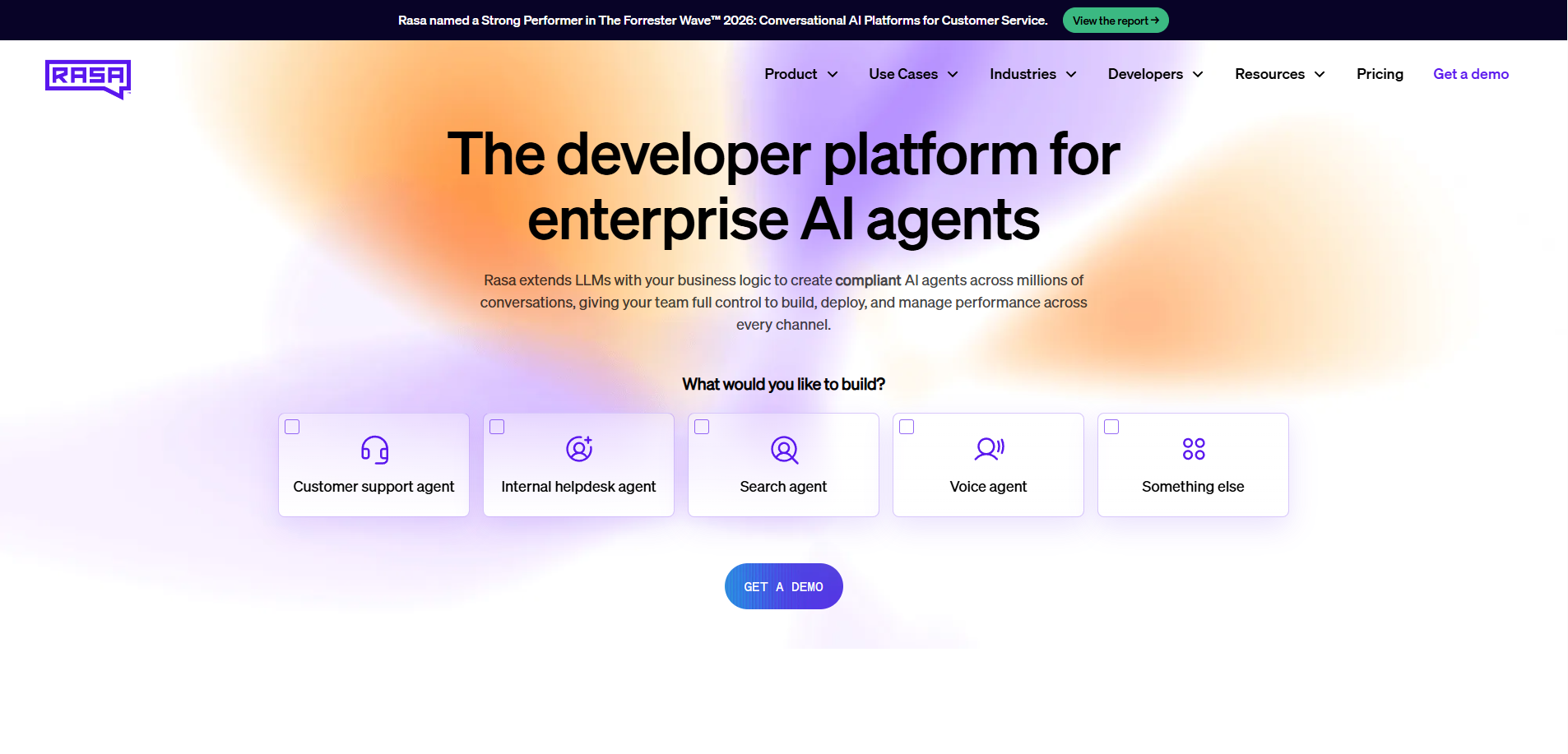
Rasa is the developer platform for enterprise AI agents.
Pydantic AI gives Python teams a clean SDK for typed agents, structured outputs, and tool calls. Rasa gives technical enterprise teams the platform layer around the agent: conversation orchestration, guided and autonomous skills, voice and digital channel support, backend integration, customer-controlled deployment, Studio, and production release workflows.
Deutsche Telekom, Autodesk, Swisscom, and Groupe IMA run Rasa in production across complex service environments.
Best for engineering organizations building customer-facing or employee-facing agents in regulated industries, including financial services, healthcare, government, insurance, and telco, where the agent needs to work across systems, channels, teams, and controlled release processes.
Score: 9.4/10. Highest marks for deterministic dialogue management (10/10), deployment flexibility (10/10), voice (10/10), and enterprise governance (9/10).
Scored lower on Python-only typed-agent ergonomics (6/10) vs. Pydantic AI's BaseModel-first design.
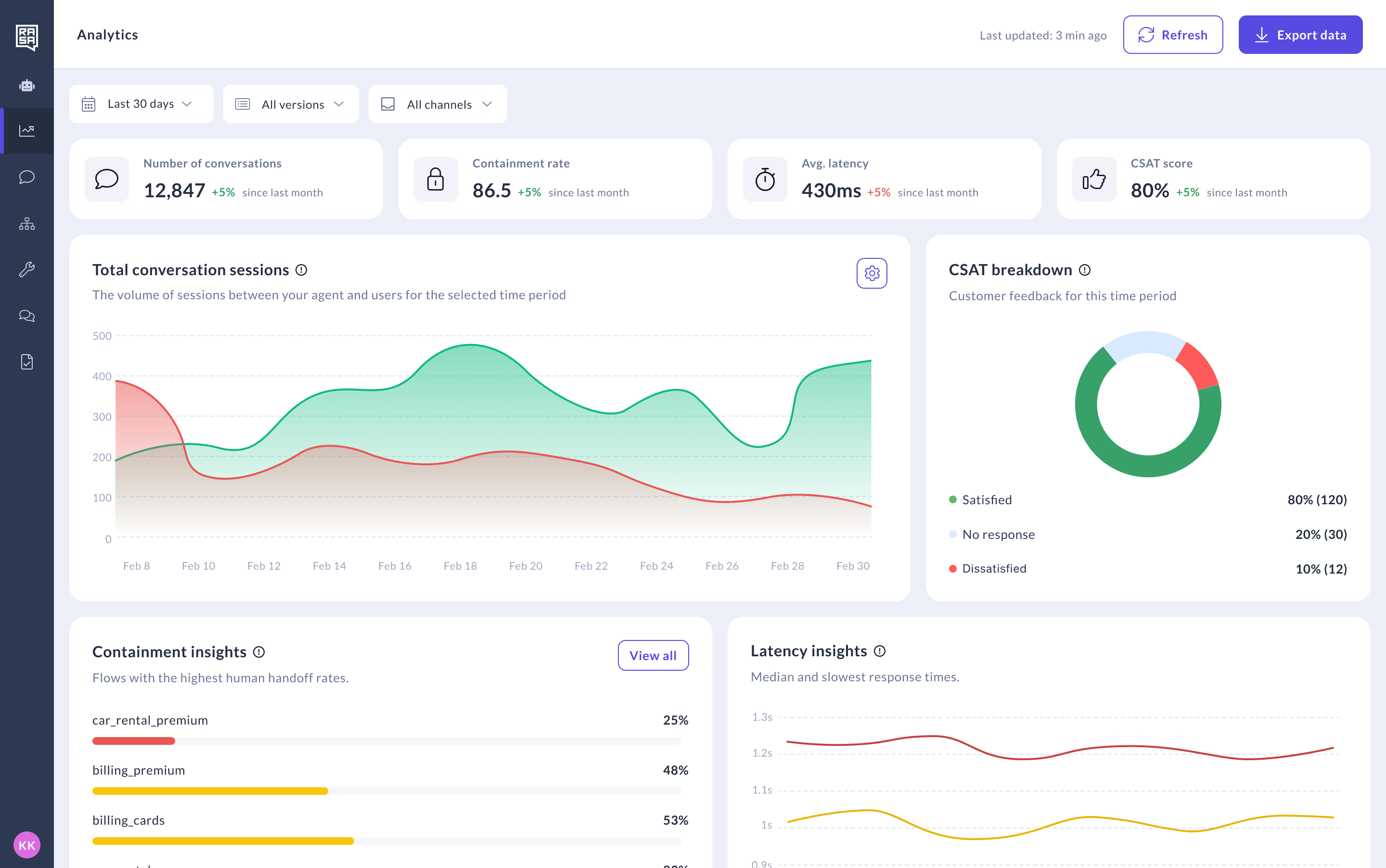
Product Overview
Pydantic AI is a strong fit when the agent lives inside a Python application and the core requirement is typed agent logic, tool calling, structured outputs, and observability.
Rasa is built for a different production problem: agents that operate as part of an enterprise service system.
The Rasa Platform includes the Framework, Orchestrator, and Studio. The Framework gives developers a code-first way to build skills, connect backend systems, configure models, and manage releases. The Orchestrator manages the conversation at runtime, including context, memory, skill routing, interruptions, and the handoff between guided and more autonomous behavior. Studio gives non-technical teams a place to review conversations, manage responses, inspect behavior, and help improve the agent without owning the codebase.
That matters when a customer journey cannot be reduced to one typed agent call. A user might start in chat, switch to voice, correct something from earlier in the conversation, trigger a billing workflow, ask a policy question, and need escalation with context preserved. Rasa is designed for that operating model.
For regulated or high-risk journeys, teams can define guided skills where the sequence, wording, backend calls, or approvals need tighter control. For open-ended tasks, they can use more autonomous skills where flexibility is valuable. The point is not choosing between rigid scripts and unconstrained agents. The point is matching the level of control to the business risk of each skill.
Rasa also supports voice as part of the same enterprise agent platform. Teams can connect telephony and speech providers through voice channel connectors and integrations, including Twilio, AudioCodes, Genesys Cloud, Jambonz, Deepgram, Azure, Cartesia, and Rime. Pydantic AI can be used inside a custom voice architecture, but teams still need to assemble telephony, streaming behavior, ASR, TTS, handoff, monitoring, and production support themselves.
Pricing
Developer Edition (Free): Full access to Rasa. One bot per company, up to 1,000 external conversations/month (100 for internal agents). Community support via the Rasa Forum.
Enterprise (Custom): Premium support, dedicated CSM, advanced security features, custom onboarding, Rasa Studio for refining design and review. Contact Rasa for a quote.
Pricing is based on annual conversation volume, not per-token LLM consumption.
Pydantic AI itself is free open-source software, but production deployments stack LLM token costs, validation retries that re-run failed validations, structured output token bloat, and the surrounding Pydantic Logfire observability platform billing.
Rasa licensing is predictable and decoupled from per-token consumption.
Integrations
Rasa connects to enterprise systems through custom actions, APIs, MCP, channel connectors, and backend integrations.
Voice and channel integrations include Twilio, AudioCodes, Genesys Cloud, and Jambonz. Speech-provider integrations include providers such as Deepgram, Azure, Cartesia, and Rime.
Engineering teams can keep their existing development workflow: codebase, version control, CI/CD, tests, review, and controlled releases.
Setup
Self-hosted in your environment from day one. On-premises, private cloud, and air-gapped deployment options. Rasa does not host any customer data, systems, or applications.
Swisscom went from prototype to production in 20 weeks, doubling automation rates and cutting operational costs by 50 percent.
For teams already using Pydantic AI, Rasa is not a drop-in SDK replacement. It is the platform choice when the agent needs to move from application-level logic into a broader enterprise operating model.
Pros and Cons
Pros:
- Developer platform for enterprise conversational agents, not just a Python agent SDK.
- Patented Orchestrator for managing conversation state, skill routing, interruptions, and guided or autonomous behavior.
- Voice and digital channels in one operating model.
- Self-hosted, private-cloud, and air-gapped deployment options.
- Fits enterprise engineering workflows: codebase, version control, CI/CD, testing, review, and release control.
- Studio gives conversation designers, analysts, and SMEs a way to review and improve agent behavior without owning the code.
- Built for complex service journeys across backend systems, policies, approvals, and escalation paths.
Cons:
- More platform than a team needs for a single typed Python agent inside a backend service.
- Requires technical ownership and an enterprise builder team.
- Not the best fit for research agents, coding agents, batch workflows, or lightweight prototypes.
Tradeoffs
Choose Pydantic AI if you want a Python SDK for typed agent logic inside an application.
Choose Rasa if the agent needs to become part of your enterprise service operation across channels, backend systems, governed workflows, and release processes.
Pydantic AI is cleaner for well-scoped Python agent work. Rasa is stronger when the problem is no longer just building the agent, but operating it: who can change it, how changes are tested, where it runs, which systems it can act on, how behavior is reviewed, and how teams keep improving it after launch.
Support
Enterprise tier includes premium support with a dedicated customer success manager.
Community support via the Rasa Forum. Documentation at rasa.com/docs. Learning resources at learning.rasa.com.
Mini Case Study
Deutsche Telekom deployed Rasa for internal IT support across 10,000+ employees in German and English. 50 percent of service desk inquiries resolved autonomously. 30 percent reduction in agent workload. Non-technical IT experts use Rasa Studio to design conversation flows.
See How Rasa Compares to a Python Agent SDK
#2. LangGraph: Best Pydantic AI Alternative for Stateful Agent Workflows
Best for engineering teams building agents with branching workflows, persistent state, checkpointing, human-in-the-loop review, and multi-agent coordination.
Score: 8.4/10. Strongest stateful workflow modeling (10/10), durable execution (10/10), and a large-scale enterprise deployment list (9/10).
Scored lower on type-safety ergonomics vs. Pydantic AI (7/10), learning curve (5/10), and code volume per agent (6/10).
Product Overview
LangGraph is the stateful orchestration framework from the LangChain team. It models agent behavior as a graph of nodes, edges, state, and checkpoints, which makes it a strong fit for long-running or branching agent workflows.
Compared with Pydantic AI, LangGraph gives teams more structure for multi-step workflows that need persistence, recovery, human approval, or coordination across multiple agents. Where Pydantic AI is cleanest for typed agent logic inside a Python service, LangGraph is better when the agent’s path needs to be modeled, resumed, inspected, and changed over time.
LangGraph also fits teams already using the LangChain ecosystem. LangSmith adds tracing, evals, debugging, and observability around agent behavior.
Pros and Cons
Pros:
- Strong abstraction for stateful, branching agent workflows.
- Checkpointing and durable execution for long-running tasks.
- Human-in-the-loop patterns are part of the framework model.
- Good fit for multi-agent coordination patterns.
- LangSmith provides tracing, evals, debugging, and time-travel style inspection.
- Large LangChain ecosystem around models, tools, retrievers, and integrations.
Cons:
- More complex than Pydantic AI for simple typed-agent use cases.
- Requires teams to design more of the production operating layer themselves.
- More code and architecture decisions than higher-level agent platforms.
- Does not ship a complete contact center or voice operating model.
- Governance, release workflows, channel strategy, and portfolio-level management still need to be built around it.
Pricing
LangGraph open-source (MIT license) is free. LangGraph Platform for managed deployment is custom enterprise pricing. LangSmith observability from $39/user/month.
Setup
Days for prototype graphs. Weeks for production deployments with checkpointing and durable execution.
Tradeoffs
Choose LangGraph if you need a flexible framework for stateful agent workflows and your team wants to own the architecture around it.
Choose Pydantic AI if your main requirement is typed Python agent logic, structured outputs, and tool calls inside an application.
LangGraph is stronger than Pydantic AI for explicit workflow state, checkpointing, and multi-agent coordination. Pydantic AI is simpler when the job is a well-scoped typed agent inside a Python service.
#3. LangChain: Best Pydantic AI Alternative for Broad LLM App Development
Best for engineering teams that want the widest ecosystem of LLM application primitives, integrations, examples, and community knowledge.
Score: 7.6/10. Strong ecosystem breadth (10/10) and integration count (10/10).
Scored lower on code clarity vs. Pydantic AI (6/10), deprecated-pattern friction (5/10), and production type safety (6/10).
Product Overview
LangChain is a general-purpose framework for building LLM applications. It provides primitives for models, prompts, tools, retrievers, vector stores, agents, output parsing, and application pipelines.
Its biggest advantage is ecosystem reach. Teams can usually find an existing integration, example, tutorial, or community pattern for the model, tool, data source, or vector database they want to connect.
Compared with Pydantic AI, LangChain is broader and more flexible. Pydantic AI is cleaner when the core need is typed Python agent logic with structured outputs. LangChain is stronger when the project depends on a wide range of integrations, retrieval components, tool patterns, and existing LLM application building blocks.
For stateful production agents, LangGraph is now the clearer path inside the LangChain ecosystem.
Pros and Cons
Pros:
- Broad ecosystem for LLM application development.
- Large library of integrations across models, tools, retrievers, vector stores, and data sources.
- Strong community knowledge base and example coverage.
- Useful for RAG, tool use, prototypes, and general LLM app patterns.
- Works naturally with LangGraph and LangSmith for more advanced agent engineering.
Cons:
- Can feel heavy for teams that only need a typed agent SDK.
- Multiple patterns and legacy abstractions can make architecture choices harder.
- Type-safe agent ergonomics are not as focused as Pydantic AI.
- Stateful production agents usually belong in LangGraph rather than LangChain alone.
- Teams still need to design the production operating layer around the framework.
Pricing
LangChain open-source is free. LangSmith observability from $39/user/month.
Setup
Hours for prototypes. Days to weeks for production with custom integrations.
Tradeoffs
Choose LangChain if you need the broadest LLM application ecosystem and want maximum flexibility across tools, models, retrieval, and integrations.
Choose Pydantic AI if you want a cleaner Python-first SDK for typed agents, structured outputs, and application-level agent logic.
Choose LangGraph if the agent needs explicit state, checkpointing, durable execution, or multi-agent coordination.
#4. CrewAI: Best Pydantic AI Alternative for Role-Based Multi-Agent Workflows
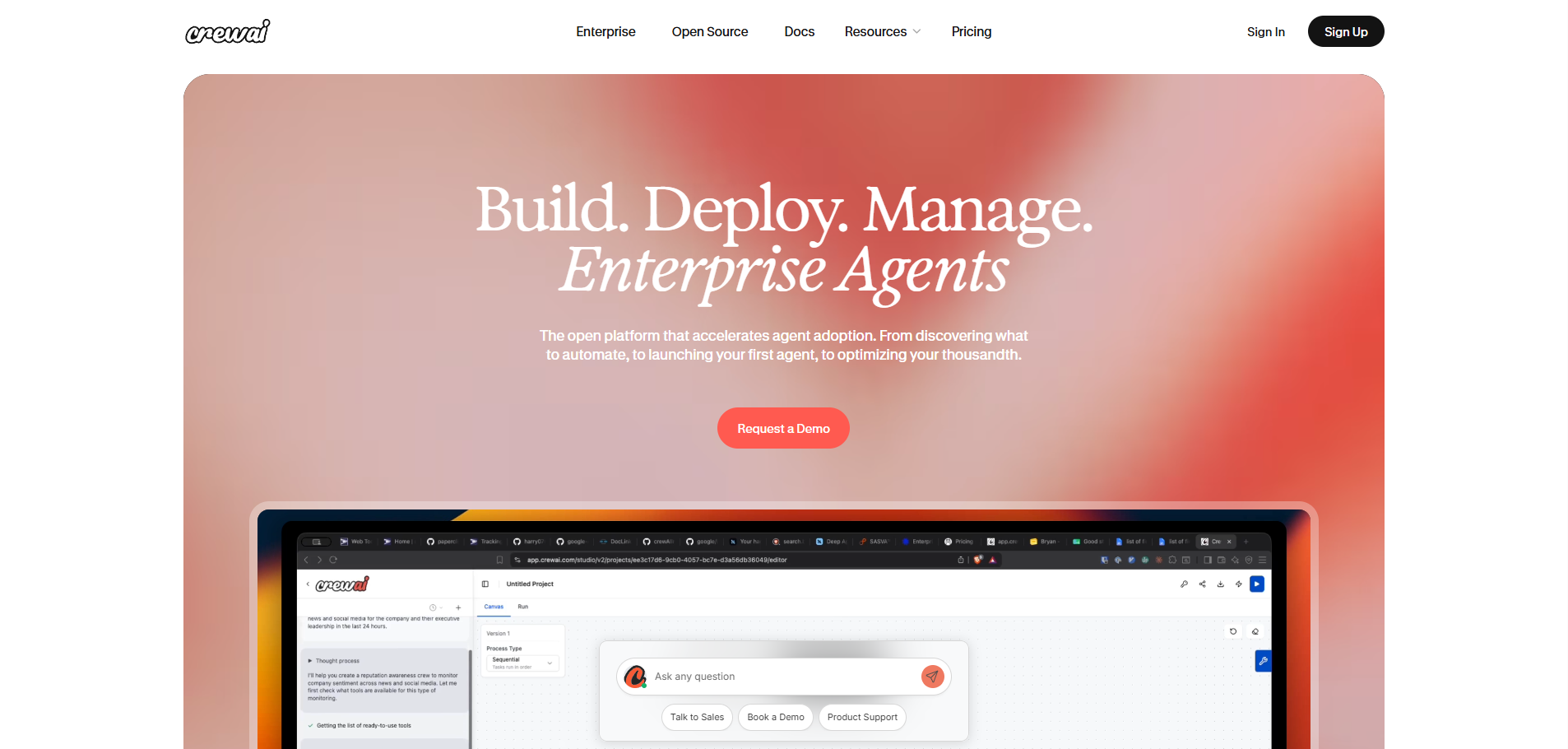
Best for teams building research, content, analysis, and back-office workflows where multiple agents need to collaborate through roles, goals, tasks, and handoffs.
Score: 7.4/10. Fastest multi-agent prototyping (10/10) and role-based delegation primitives (9/10).
Scored lower on debugging inside the abstraction (5/10), production-grade observability (6/10), and type safety vs. Pydantic AI (6/10).
Product Overview
CrewAI is a Python framework for building multi-agent systems around crews, agents, tasks, tools, and processes.
Its main strength is the mental model. Instead of starting with typed agent objects or graph state, teams define specialized agents with roles and goals, assign tasks, and let those agents collaborate through a sequential or hierarchical process.
That makes CrewAI useful for workflows like market research, report generation, lead enrichment, content operations, competitive analysis, and internal knowledge work. Teams can move quickly from idea to working multi-agent workflow without designing a full graph or orchestration layer up front.
Compared with Pydantic AI, CrewAI is better for quick role-based collaboration across multiple agents. Pydantic AI is cleaner when the core requirement is typed Python agent logic, structured outputs, dependency injection, and tighter application-level control.
Pros and Cons
Pros:
- Simple role, goal, and task model for multi-agent workflows.
- Fast path from prototype to working crew.
- Good fit for research, content, analysis, and operational workflows.
- Built-in delegation patterns.
- Python-native and easy for agent teams to understand.
Cons:
- Less precise than Pydantic AI for typed outputs and strict application logic.
- Less explicit than LangGraph for stateful branching, checkpointing, and durable workflows.
- The abstraction can make failures harder to diagnose once workflows become complex.
- Less suited to high-risk transactional systems that need tight sequencing, auditability, and release control.
- Teams still need to build the production operating layer around the crew.
Pricing
CrewAI open-source is free. CrewAI AMP enterprise custom pricing.
Setup
Hours for a working multi-agent crew. Days for production deployments.
Tradeoffs
Choose CrewAI if you want a fast, intuitive way to build role-based multi-agent workflows.
Choose Pydantic AI if you need typed Python agents with structured outputs and tighter control inside an application.
Choose LangGraph if the workflow needs explicit state, branching, checkpointing, and durable execution.
#5. OpenAI Agents SDK: Best Pydantic AI Alternative for OpenAI-First Agent Development
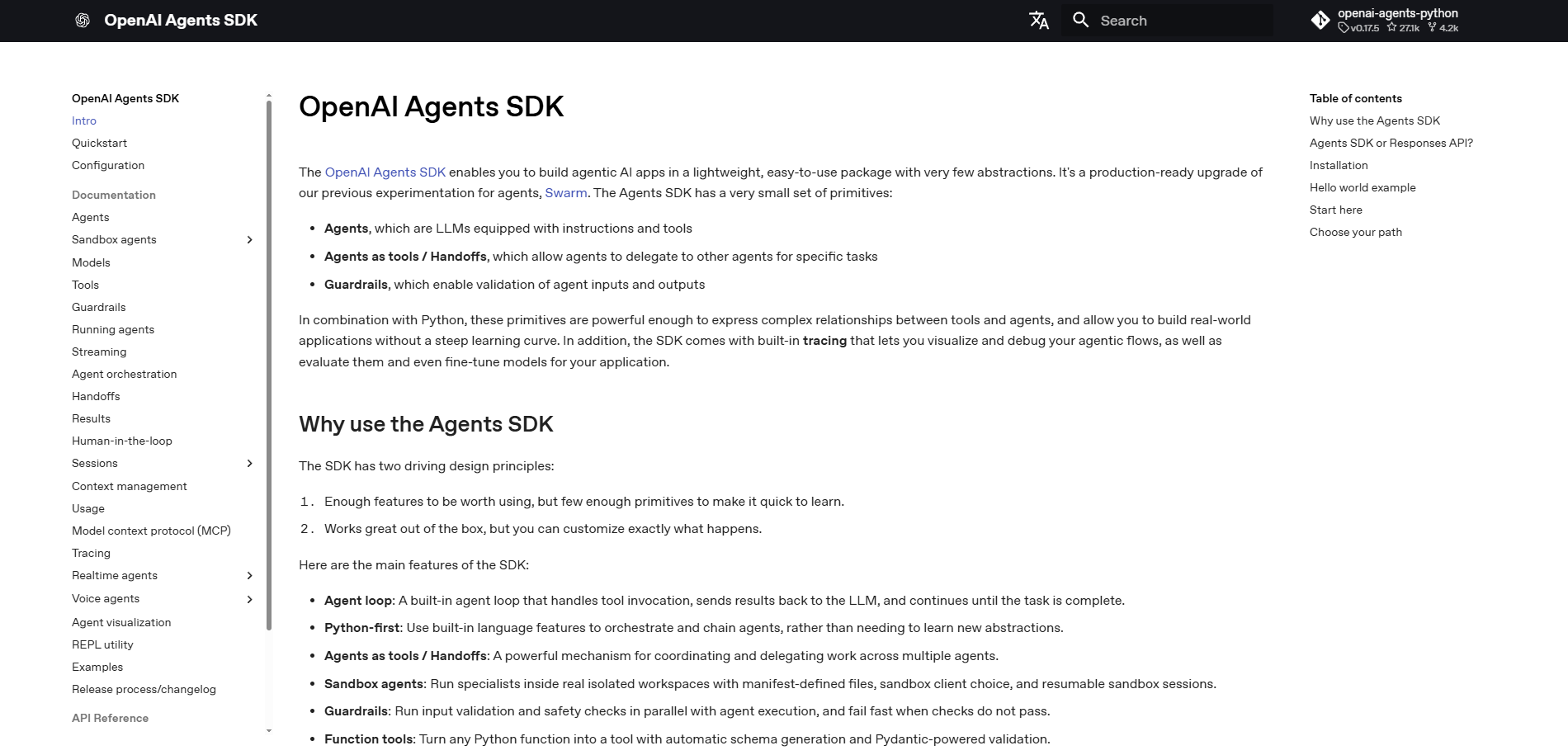
Best for engineering teams building on OpenAI models that want a lightweight first-party SDK for agents, tools, handoffs, guardrails, tracing, and multi-step agent workflows.
Score: 7.6/10. Strong OpenAI ecosystem integration (10/10), built-in tooling (8/10), and sandbox environments (9/10).
Scored lower on multi-provider portability (4/10), deployment flexibility (4/10), and deterministic dialogue management (3/10).
Product Overview
The OpenAI Agents SDK is a first-party framework for building agentic applications on OpenAI. Its core primitives are agents, tools, handoffs, and guardrails, with built-in tracing for visualizing and debugging agent runs.
Compared with Pydantic AI, the OpenAI Agents SDK is more tightly aligned with the OpenAI platform. It is a better fit when the team wants OpenAI’s agent runtime to manage turns, tools, sessions, guardrails, and handoffs. Pydantic AI is cleaner when the team wants a Python-first, model-flexible SDK with typed outputs and application-level control.
The SDK also supports MCP, tracing, and human-in-the-loop patterns. Handoffs allow one agent to delegate to another specialized agent, while traces capture model calls, tool calls, handoffs, guardrails, and other workflow events.
OpenAI also has Realtime Agents for voice agent use cases. That gives OpenAI-first teams a strong path for real-time audio experiences, but it is not the same as a full enterprise contact center operating model with customer-controlled deployment, cross-channel journey management, backend release governance, and long-term service ownership.
Pros and Cons
Pros:
- First-party SDK for OpenAI agent development.
- Small set of primitives: agents, tools, handoffs, and guardrails.
- Built-in tracing for debugging, monitoring, and evaluating agent workflows.
- Strong fit for OpenAI-first teams using the Responses API and OpenAI tools.
- Handoff patterns for coordinating specialized agents.
- Realtime Agents support voice agent use cases.
Cons:
- Best fit is OpenAI-first architectures.
- Less provider-neutral than Pydantic AI.
- Not a complete enterprise conversational agent platform.
- Teams still need to design deployment, release governance, backend integration patterns, and operational workflows around the SDK.
- Not the strongest fit for organizations that need customer-controlled deployment independent of OpenAI-hosted model infrastructure.
Pricing
Pay-as-you-go OpenAI token pricing. SDK is free.
Setup
Minutes for the first agent. Days for production with sub-agents and tool wiring.
Tradeoffs
Choose OpenAI Agents SDK if your team is committed to OpenAI and wants a first-party way to build agents with tools, handoffs, guardrails, tracing, and real-time voice options.
Choose Pydantic AI if you want a cleaner Python-first SDK with stronger typed-output ergonomics and more model-provider flexibility.
Choose a broader enterprise agent platform if the problem is no longer just agent logic, but operating agents across channels, teams, backend systems, governed workflows, and controlled releases.
#6. Claude Agent SDK: Best Pydantic AI Alternative for Claude Code-Style Agents
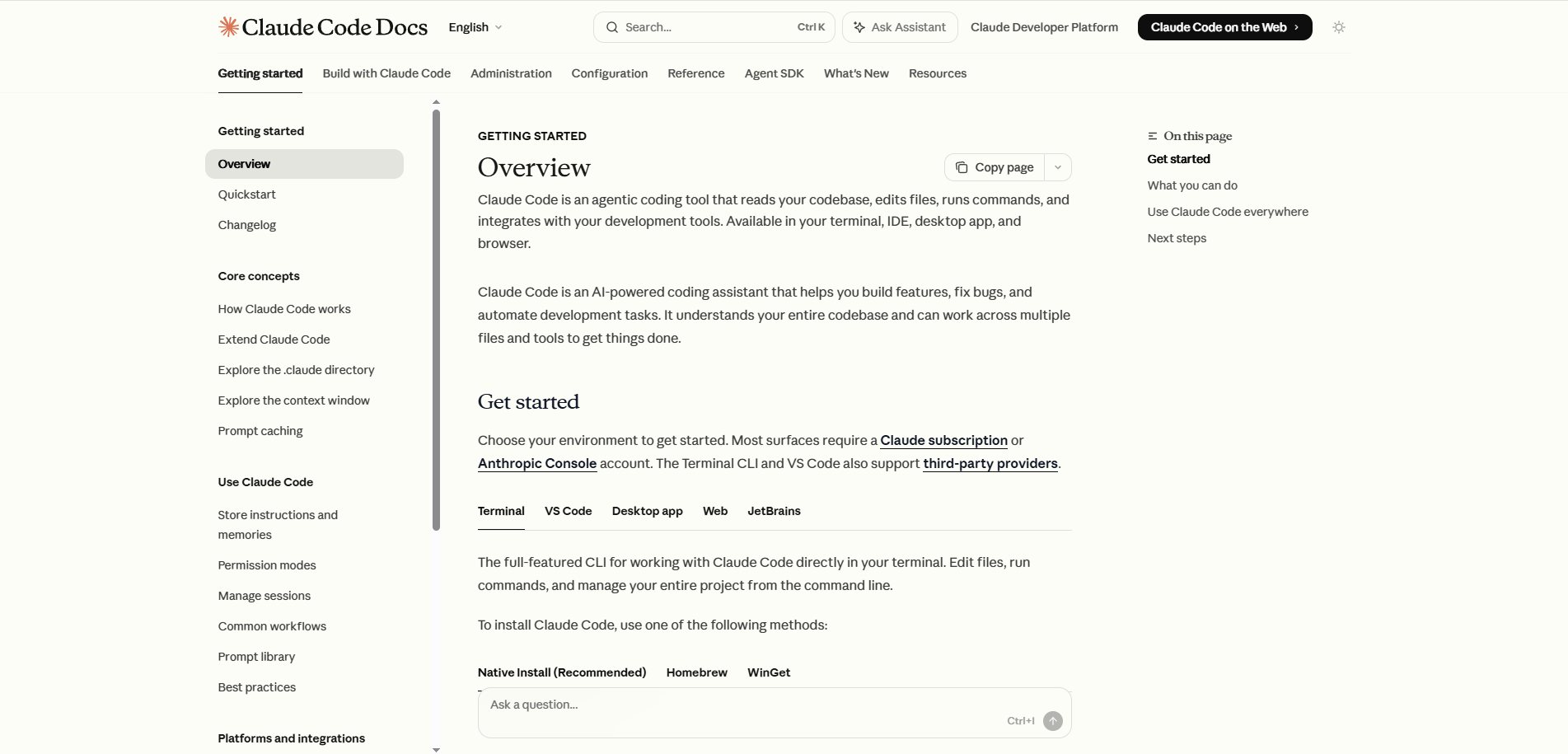
Best for engineering teams building coding, research, and tool-using agents around Claude, especially when file access, shell commands, code editing, web search, MCP tools, and subagents are central to the workflow.
Score: 7.4/10. Strongest built-in tooling for coding agents (10/10), Anthropic reasoning quality (9/10), and same agent loop as Claude Code (9/10).
Scored lower on multi-provider portability (3/10), deployment flexibility (4/10), and deterministic dialogue management (3/10).
Product Overview
Claude Agent SDK lets teams use Claude Code as a programmable agent library. It gives developers the same tools, agent loop, and context management that power Claude Code, available in Python and TypeScript.
Its strongest fit is autonomous coding and research work. Agents can read files, run commands, search the web, edit code, and connect to external tools through MCP.
Compared with Pydantic AI, Claude Agent SDK is more opinionated around Claude Code-style workflows. It is better when the agent needs to inspect a codebase, run commands, edit files, use MCP tools, and work through a task over multiple steps. Pydantic AI is cleaner when the requirement is typed Python agent logic, structured outputs, dependency injection, and model-provider flexibility inside an application.
Claude Agent SDK also supports subagents, which let a main agent delegate focused tasks to specialized agents with separate context and instructions.
Pros and Cons
Pros:
- Strong fit for Claude-first coding and research agents.
- Same agent loop and context-management model as Claude Code.
- Built-in support for file reading, command execution, code editing, and web search.
- MCP support for connecting external tools and data sources.
- Subagents for specialized tasks and parallel analysis.
- Python and TypeScript support.
Cons:
- Best fit is Anthropic-first architectures.
- Less model-neutral than Pydantic AI.
- Less focused on typed structured outputs and application-level validation.
- Not a complete enterprise conversational agent platform.
- Teams still need to design the surrounding deployment, monitoring, governance, backend integration, and release workflow.
Pricing
Pay-as-you-go Anthropic token pricing. SDK is free.
Setup
30 minutes for the first agent. Days for production deployments.
Tradeoffs
Choose Claude Agent SDK if your team wants Claude Code-style agents that can inspect files, run commands, edit code, use MCP tools, and delegate work to subagents.
Choose Pydantic AI if you want a Python-first SDK with typed agents, structured outputs, dependency injection, and broader model-provider flexibility.
Claude Agent SDK is stronger for coding and research agents. Pydantic AI is cleaner for typed agent logic inside an application.
#7. Microsoft Agent Framework (MAF): Best Pydantic AI Alternative for Microsoft and Azure Enterprise Stacks
Best for enterprise teams building agent workflows inside the Microsoft ecosystem, especially when Azure Foundry, .NET or Python, Microsoft 365, Azure Functions, Durable Task, telemetry, and enterprise identity patterns are already part of the architecture.
Score: 7.2/10. Strong Azure integration (9/10), AutoGen migration path (8/10), and enterprise compliance (8/10).
Scored lower on cross-Azure deployment (4/10), framework API stability (5/10), and learning curve outside the Microsoft stack (5/10).
Product Overview
Microsoft Agent Framework is Microsoft’s code-first framework for building agents and multi-agent workflows. It combines ideas from AutoGen and Semantic Kernel into one framework, with support for Python and .NET, tools, conversations, memory and persistence, workflows, hosting, A2A, Azure Functions, Durable Task, and DevUI.
Compared with Pydantic AI, Microsoft Agent Framework is stronger when the team is already building inside Microsoft’s agent and cloud ecosystem. It gives teams a more structured path for workflow orchestration, state, hosted agents, Azure deployment, and enterprise integration. Pydantic AI is cleaner when the requirement is a lightweight Python-first SDK for typed agents, structured outputs, and application-level control.
The main caveat is maturity. Microsoft Agent Framework is still in public preview, so teams should expect faster product movement, API changes, and a learning curve while the framework settles.
Pros and Cons
Pros:
- First-party Microsoft framework for agent and multi-agent development.
- Python and .NET support.
- Strong fit with Azure Foundry, Azure Functions, Durable Task, and Microsoft enterprise environments.
- Workflows for sequential, concurrent, branching, and human-in-the-loop agent patterns.
- Migration path from AutoGen and Semantic Kernel.
- Built-in support for memory, persistence, tools, telemetry, and hosting.
Cons:
- Still in public preview.
- Best fit is Microsoft and Azure-centered architectures.
- Heavier than Pydantic AI for simple typed-agent use cases.
- Less neutral than framework choices that are not tied to a hyperscaler ecosystem.
- Teams outside Microsoft environments may not get enough benefit to justify the added platform assumptions.
Pricing
Azure consumption-based pricing. Framework is free.
Setup
Days for prototypes within Azure tenants. Weeks for production with compliance and monitoring.
Tradeoffs
Choose Microsoft Agent Framework if your enterprise is already committed to Azure, Microsoft 365, .NET or Python, and Microsoft’s agent infrastructure.
Choose Pydantic AI if you want a cleaner Python-first SDK for typed agents, structured outputs, and tool calls inside an application.
Microsoft Agent Framework is stronger for Azure-centered enterprise agent workflows. Pydantic AI is simpler and more portable for typed Python agent development.
#8. Google ADK / Vertex AI r: Best Pydantic AI Alternative for Google Cloud Agent Development
Best for engineering teams already building on Google Cloud that want a code-first agent framework with managed deployment, Gemini integration, Google Cloud services, evaluation, and observability.
Score: 7.2/10. Strong GCP integration (9/10), Gemini-native development (9/10), and multi-framework support (8/10).
Scored lower on deployment outside GCP (3/10), pricing predictability (5/10), and deterministic dialogue management (5/10).
Product Overview
Google Agent Development Kit is Google’s open-source, code-first framework for building AI agents. It supports agent definitions, tools, multi-agent patterns, evaluation, and deployment into Google’s managed Agent Runtime through the ADK CLI.
Compared with Pydantic AI, Google ADK is stronger when the agent is part of a broader Google Cloud architecture. Pydantic AI is cleaner when the team wants a Python-first SDK for typed agents, structured outputs, and application-level control. Google ADK is a better fit when the team wants to build with Gemini, deploy through Google Cloud, and connect agent behavior to cloud services such as BigQuery, Firestore, Cloud Run, and Vertex AI.
Vertex AI Agent Runtime gives teams a managed environment for deploying and querying ADK agents, with monitoring through the Google Cloud Console.
Pros and Cons
Pros:
- Strong fit for Google Cloud and Gemini-centered teams.
- Code-first framework for building agents.
- Managed deployment through Agent Runtime.
- Good fit for agents that need Google Cloud data, infrastructure, and security services.
- Evaluation and observability fit naturally into the Google Cloud workflow.
- Useful path for teams that want agent development inside an existing GCP operating model.
Cons:
- Best fit is Google Cloud-centered architecture.
- Less neutral than Pydantic AI for teams that want provider flexibility.
- Usage-based cloud pricing can be harder to forecast across models, tools, hosting, and data services.
- Not a complete enterprise conversational agent platform by itself.
- Teams still need to design release governance, channel strategy, human review, backend authorization, and operational workflows around the agent.
Pricing
GCP consumption pricing. No standalone free tier for the agent builder.
Setup
Days for managed agent deployments within Vertex AI. Weeks for production with BigQuery integration.
Tradeoffs
Choose Google ADK and Vertex AI if your team is already committed to Google Cloud and wants a code-first path to building, deploying, evaluating, and monitoring agents inside that environment.
Choose Pydantic AI if you want a lighter Python-first SDK for typed agent logic, structured outputs, and model-provider flexibility.
Google ADK is stronger for GCP-centered agent development. Pydantic AI is simpler and more portable for application-level Python agents.
#9. LlamaIndex Agents: Best Pydantic AI Alternative for RAG-Heavy Agent Workloads
Best for engineering teams whose agent work depends heavily on retrieval, private knowledge, document pipelines, and enterprise search.
Score: 7.0/10. Strongest RAG primitives (10/10), 100+ data loader integrations (9/10), and retrieval-native agent patterns (9/10).
Scored lower on general agent framework features (6/10), deterministic dialogue management (4/10), and multi-channel orchestration (3/10).
Product Overview
LlamaIndex is a data and agent framework built around connecting LLMs to private and enterprise knowledge. Its core strengths are indexing, retrieval, document processing, data connectors, query engines, and RAG workflows.
Compared with Pydantic AI, LlamaIndex is stronger when the agent’s main job is finding, ranking, synthesizing, and acting on knowledge from documents, databases, APIs, and other internal sources. Pydantic AI is cleaner when the core requirement is typed Python agent logic, structured outputs, dependency injection, and application-level control.
LlamaIndex also includes agent and workflow primitives, but its center of gravity remains retrieval. It is best for teams where the hardest problem is knowledge access, not conversation orchestration or multi-channel service automation.
LlamaCloud adds managed infrastructure for parsing, indexing, retrieval, and production knowledge workflows.
Pros and Cons
Pros:
- Strong fit for RAG-heavy agent workloads.
- Deep retrieval, indexing, and document-processing primitives.
- Broad connector ecosystem for enterprise data sources.
- Useful for private knowledge assistants, search, research, and document-heavy workflows.
- LlamaCloud provides managed infrastructure for production RAG pipelines.
Cons:
- Less focused than Pydantic AI on typed agent objects and structured application logic.
- Less explicit than LangGraph for stateful branching, checkpointing, and durable multi-step workflows.
- Most useful when retrieval is the main problem.
- Not a complete enterprise conversational agent platform.
- Teams still need to design channel strategy, release governance, monitoring, backend authorization, and operational workflows around it.
Pricing
LlamaIndex open-source is free. LlamaCloud custom enterprise pricing.
Setup
Hours for RAG prototypes. Days for production with custom retrieval pipelines.
Tradeoffs
Choose LlamaIndex if the agent’s main job is working with private knowledge and retrieval-heavy workflows.
Choose Pydantic AI if you want typed Python agents, structured outputs, and tighter application-level control.
Choose LangGraph if the agent needs explicit state, branching, checkpointing, and durable execution.
#10. Agno (formerly Phidata): Best Pydantic AI Alternative for Lightweight Python Agents
Best for engineering teams that want a lightweight Python framework for agents, multi-agent teams, tools, memory, knowledge, and multimodal workflows.
Score: 7.0/10. Strong lightweight design (8/10), multimodal support (8/10), and AgentOS stateless runtime (8/10).
Scored lower on enterprise governance (5/10), deterministic dialogue management (4/10), and production maturity (6/10).
Product Overview
Agno, formerly Phidata, is an open-source Python framework for building agents and multi-agent systems. It focuses on a simple developer experience with agents, tools, memory, knowledge, workflows, and multimodal inputs.
Compared with Pydantic AI, Agno is broader at the agent-system level. It gives teams more built-in structure for multi-agent teams, knowledge access, tool use, and agent apps. Pydantic AI is cleaner when the core requirement is typed Python agents, structured outputs, dependency injection, and application-level validation.
Agno’s center of gravity is fast agent development without a heavy framework model. It is a good fit for prototypes, internal tools, multi-agent experiments, and Python teams that want more agent-system primitives than Pydantic AI provides out of the box.
Pros and Cons
Pros:
- Lightweight Python framework for agents and multi-agent systems.
- Good fit for fast prototypes and internal agent tools.
- Supports tools, memory, knowledge, workflows, and multimodal use cases.
- Provider-flexible.
- Less architectural overhead than heavier frameworks.
Cons:
- Less focused than Pydantic AI on typed structured outputs and validation-first agent design.
- Less mature than LangGraph for stateful branching, checkpointing, and durable execution.
- Not a complete enterprise conversational agent platform.
- Teams still need to design deployment, monitoring, governance, security, release workflows, and production support around it.
Pricing
Agno open-source is free. Agno Cloud custom enterprise pricing.
Setup
Hours for multi-agent prototypes. Days for production AgentOS deployments.
Tradeoffs
Choose Agno if you want a lightweight Python framework for agent and multi-agent development with practical building blocks.
Choose Pydantic AI if you want a typed Python SDK for structured outputs, dependency injection, and validation-first agent logic.
Choose LangGraph if the agent needs explicit state, branching, checkpointing, and durable execution.
Why Choose Pydantic AI Alternatives
Pydantic AI is a strong Python SDK for typed agents, structured outputs, tool calls, and application-level agent logic.
Teams usually look at alternatives when the agent needs more than a clean developer framework.
Production Conversation Orchestration
Pydantic AI gives developers agent primitives. It does not try to provide a full operating model for production conversational agents.
For enterprise service journeys, teams often need conversation state, memory policy, interruptions, backend actions, escalation, review workflows, release control, and support across voice and digital channels. Those requirements usually sit around the agent, not inside the agent loop itself.
Rasa is built for that broader operating model. The Rasa Platform gives technical teams a way to build, run, review, and improve agents as part of their own enterprise service architecture.
Guided Control Where the Business Requires It
Pydantic AI agents are flexible, but the team still needs to define how high-risk actions are controlled.
In regulated journeys, some steps need stricter handling: KYC, claims intake, account changes, healthcare triage, refunds, prescription refills, or payment-related workflows. Teams need to decide when the system can respond flexibly and when it must follow a defined path, use approved wording, call the right backend system, or wait for approval.
Rasa supports that mixed model through guided and autonomous skills. Teams can match the level of control to the risk of the skill instead of choosing one global level of autonomy for the whole agent.
Voice and Digital Channels in One Operating Model
Pydantic AI does not provide a voice or contact center layer. Teams can use it inside a custom voice architecture, but they still need to connect telephony, ASR, TTS, streaming behavior, handoff, monitoring, and production support.
Rasa supports voice through channel connectors and speech-provider integrations, while keeping voice and digital journeys in the same agent operating model. That matters when voice is not a standalone project, but one channel in a broader customer or employee service journey.
Cost and Ownership at Production Scale
Pydantic AI is open source, but production cost depends on the architecture around it: model usage, validation retries, tool calls, context size, observability, hosting, and the engineering effort required to operate the system.
For enterprise teams, the bigger question is often not the SDK cost. It is the cost of building and maintaining the platform layer around the agent.
Rasa pricing is based on annual conversation volume, not per-seat licensing. Model usage and infrastructure still need to be managed, but the platform gives teams a clearer operating model for running agents at scale.
Customer-Controlled Deployment
Pydantic AI can run wherever the Python application runs. That makes it flexible at the application layer.
The difference is that Pydantic AI is not a full enterprise agent platform with deployment patterns, channel infrastructure, governance workflows, and operational tooling included. Teams still need to assemble those pieces themselves.
Rasa supports self-hosted, private-cloud, and air-gapped deployment for teams that need customer-controlled infrastructure, data residency, security review, and release ownership.
Governance Across Teams and Agents
Pydantic AI gives developers code-level control. It does not provide a full enterprise control plane for multiple teams operating agent portfolios.
As agent programs expand, teams need clear ownership of who can change behavior, how changes are reviewed, what was released, which conversations failed, which backend actions were taken, and what evidence supports the next improvement.
That is where broader platforms matter. Rasa gives engineering teams the platform layer for governed agent work: codebase ownership, CI/CD, tests, review, Studio, conversation inspection, and controlled releases.
How to Choose the Right Pydantic Alternative
Step 1: Start with the job
If you need typed agent logic inside a Python service, choose an SDK or framework like Pydantic AI, OpenAI Agents SDK, Claude Agent SDK, Agno, LangChain, or LangGraph.
If the agent needs to run across channels, backend systems, policies, and release workflows, you are choosing a platform. That is where Rasa becomes more relevant.
Step 2: Map the channels
List where the agent will run: web, mobile, voice, IVR, WhatsApp, Slack, Teams, or internal tools.
Frameworks can connect to these channels, but your team owns the integration work. Rasa is stronger when voice and digital channels need to share context, backend actions, and the same release process.
Step 3: Match control to risk
Not every skill needs the same level of control.
Knowledge answers and triage can be more autonomous. KYC, payments, refunds, account changes, and regulated disclosures need stricter handling.
Choose a tool that lets you apply more control where the business risk is higher.
Step 4: Compare the operating layer
Do not evaluate only the agent API.
Compare deployment, governance, observability, channel support, cost model, release process, and who owns improvements after launch.
The best framework for a prototype is not always the best system for production.
Step 5: Run a real pilot
Pick one real journey with backend integration, edge cases, policy constraints, and measurable value.
Track completion, escalation quality, latency, cost, failed turns, and how quickly the team can diagnose and improve behavior.
Key Features to Look for When Exploring Pydantic Competitors
Conversation orchestration
If the agent is part of a customer or employee service journey, look beyond the agent loop.
You need state, memory, interruptions, backend actions, escalation, review workflows, and release control. Pydantic AI gives you agent primitives. A platform like Rasa gives you the operating layer around the agent.
Voice and digital channel support
Voice is not just another text box.
If your agent needs to work across chat, voice, IVR, mobile, or messaging channels, check how context, handoff, latency, monitoring, and backend actions are handled across those surfaces.
Rasa supports voice through channel connectors and speech-provider integrations. Pydantic AI can be used inside a custom voice stack, but your team owns the channel architecture.
Control where the business risk is higher
Look for a way to apply different levels of control to different skills.
Knowledge answers and triage can be more flexible. KYC, refunds, account changes, payments, healthcare workflows, and regulated disclosures usually need stricter paths, approved wording, backend authorization, or human review.
Deployment fit
Check where the system can run and who owns the infrastructure.
For regulated teams, customer-controlled deployment, private cloud, or air-gapped options may matter more than SDK ergonomics. For cloud-first teams, managed runtime and provider-native services may be the faster path.
Governance across teams
Once multiple teams are building agents, the question changes.
Who can change behavior? Who approves releases? Who reviews failed conversations? How are changes tested? How do you know which version produced which outcome?
A framework gives developers control in code. A platform should also support team workflows, review, auditability, and controlled releases.
Cost visibility
Do not compare only license cost.
Track model usage, tool calls, retries, context size, hosting, observability, human fallback, and the engineering effort required to operate the system. The cheapest SDK can become expensive if your team has to build the operating layer around it.
Observability and auditability
Teams need to see what happened in production.
Look for traces, tool-call records, conversation history, evaluation results, latency, cost signals, and review workflows. Pydantic Logfire, LangSmith, and platform-native observability tools can all help, but make sure the visibility matches your compliance and operating needs.
Engineering workflow fit
For technical enterprise teams, agent work should fit the software delivery process.
Look for version control, CI/CD, tests, code review, staging, rollout, and rollback. Rasa, Pydantic AI, LangGraph, and Agno all support code-first development patterns, but they cover different amounts of the surrounding production workflow.
Extensibility
Agent requirements change quickly.
Choose a tool that lets your team connect models, tools, APIs, channels, memory, storage, and observability in the way your architecture requires. Configuration is useful early. Extensibility matters once the agent becomes part of your own software operation.
Cost Comparison: Pydantic vs. Competitors
Pydantic AI itself is free open-source. The total cost picture stacks LLM tokens, validation retries, structured-output bloat, and the surrounding Pydantic Logfire observability platform. The billing model matters as much as the framework price.
- Rasa: Developer Edition free (1,000 conversations/month). Enterprise custom based on annual conversation volume.
- Pydantic AI: Free OSS. LLM tokens, validation retries, and Pydantic Logfire observability billed separately.
- LangGraph: Free OSS. LangGraph Platform custom enterprise. LangSmith observability from $39/user/month.
- LangChain: Free OSS. LangSmith observability from $39/user/month.
- CrewAI: Free OSS. CrewAI AMP enterprise custom pricing.
- OpenAI Agents SDK: Free SDK. Pay-as-you-go OpenAI token pricing.
- Claude Agent SDK: Free SDK. Pay-as-you-go Anthropic token pricing.
- Microsoft Agent Framework: Free framework. Azure consumption-based pricing.
- Google ADK / Vertex AI Agent Builder: GCP consumption-based pricing.
- LlamaIndex Agents: Free OSS. LlamaCloud custom enterprise pricing.
- Agno: Free OSS. Agno Cloud custom enterprise pricing.
Which of the Pydantic Alternatives Is Right for Your Business?
- Need enterprise conversational AI with deterministic flows, voice + chat, and self-hosted: Rasa. The patented Orchestrator for architectural governance over agent behavior, native Voice Stream connectors, on-premises and air-gapped deployment.
- Need stateful production workflows with durable execution and checkpointing: LangGraph. Graph state machines, time-travel debugging, Klarna/Uber/LinkedIn/JPMorgan production references.
- Need the largest pre-built integration ecosystem: LangChain. 700+ integrations, biggest community knowledge base.
- Need multi-agent role-based collaboration for content/research: CrewAI. Fastest prototyping, role/goal/task primitives, 47K+ stars.
- Need OpenAI-first agent development: OpenAI Agents SDK. First-party SDK, sub-agents, sandbox environments.
- Need Anthropic-first coding and research agents: Claude Agent SDK. Built-in file/bash/edit/computer-use tools.
- Need Azure enterprise multi-agent: Microsoft Agent Framework. AutoGen successor, Azure AI Foundry integration.
- Need Google Cloud-native agents with multi-framework support: Google ADK / Vertex AI Agent Builder. BigQuery integration, managed runtime.
- Need RAG-heavy agent workloads: LlamaIndex Agents. RAG-first primitives, 100+ data loaders, LlamaCloud.
- Need lightweight Python multi-agent with multimodal: Agno. AgentOS runtime, 23+ LLM providers, 100+ tools.
FAQs
What are the main limitations of Pydantic AI?
Pydantic AI is a Python agent framework, not a full enterprise conversational agent platform. It is strong for typed agents, structured outputs, tool calls, and application-level agent logic. Teams usually evaluate alternatives when they need channel orchestration, voice support, governed workflows, release control, multi-team operations, or a broader platform layer around the agent.
Pydantic AI vs. LangChain: which is better for production agents?
Choose Pydantic AI for clean Python ergonomics, typed outputs, dependency injection, and well-scoped agent logic. Choose LangChain when you need the broadest ecosystem of LLM app components, integrations, retrievers, tools, and examples. For stateful production agents inside the LangChain ecosystem, LangGraph is usually the better fit than LangChain alone.
Pydantic AI vs. LangGraph: when should you pick one?
Choose Pydantic AI when the agent belongs inside a Python service and typed outputs are central to the design. Choose LangGraph when the workflow needs explicit state, branching, checkpointing, human review, durable execution, or multi-agent coordination.
Is Pydantic AI ready for production?
Yes, for the right workload. Pydantic AI is a good production fit for well-scoped Python agents with typed outputs, tool calls, and clear application boundaries. It is less complete when the requirement is a full conversational agent platform with voice and digital channels, governed release workflows, enterprise deployment patterns, and multi-team operating controls.
Does Pydantic AI support on-premises deployment?
Pydantic AI is a Python framework, so it can run wherever the application runs. The larger question is what else your production agent needs around it: observability, channels, voice infrastructure, security controls, review workflows, deployment patterns, and governance. Those pieces are not included as a complete enterprise platform.
Which Pydantic AI alternatives support customer-controlled deployment?
Rasa supports self-hosted, private-cloud, and air-gapped deployment for teams that need customer-controlled infrastructure. Open-source frameworks such as LangGraph, LangChain, LlamaIndex, CrewAI, and Agno can also be run in customer environments, though teams own more of the surrounding platform work. Hyperscaler SDKs and managed runtimes are usually strongest when the team is already committed to that provider’s cloud environment.
Which Pydantic AI alternative is best for enterprise voice agents?
Rasa is the strongest fit on this list when voice is part of a broader enterprise agent platform across digital channels, backend systems, governed workflows, and customer-controlled deployment. Rasa supports voice through channel connectors and speech-provider integrations. Pydantic AI and most agent frameworks can be used in voice architectures, but teams usually need to assemble telephony, ASR, TTS, streaming behavior, handoff, and production monitoring themselves.
Is Pydantic AI the same as Pydantic the validation library?
No. Pydantic is the Python data validation library. Pydantic AI is an agent framework from the same team. They share a typed Python design philosophy, but they solve different problems. Pydantic validates data. Pydantic AI helps developers build agents.
Are there Pydantic validation alternatives if I do not need an agent framework?
Yes. If your problem is data validation rather than agent development, common alternatives include msgspec, attrs, marshmallow, apischema, Cerberus, Voluptuous, Beartype, dataclasses, and TypedDict. These are not AI agent frameworks.
Rasa vs. Pydantic AI: which should we choose?
Choose Pydantic AI if you need typed agent logic inside a Python application. Choose Rasa if you are building a production conversational agent that needs to operate across channels, backend systems, business policies, release workflows, and enterprise teams. They are different categories of tool.
How does Rasa compare to Pydantic AI for regulated industries?
Rasa is stronger when regulated teams need customer-controlled deployment, governed workflows, backend integration, review processes, audit-friendly behavior, and controlled releases. Pydantic AI can run in regulated environments as part of a Python application, but the surrounding operating model needs to be designed and maintained by the team.
Can you use Pydantic AI for chatbots?
Yes. Pydantic AI can power chat experiences, especially embedded or single-channel agents inside a Python application. The caveat is that your team owns the channel integration, conversation state, escalation handling, monitoring, and production support. For multi-channel service agents, a conversational agent platform is usually a better fit.
How do Pydantic AI’s structured outputs compare to alternatives?
Pydantic AI is one of the strongest options for Python teams that care about typed structured outputs. Its BaseModel-first design is the main reason teams choose it. OpenAI Agents SDK and Claude Agent SDK offer structured output patterns inside their own ecosystems. LangChain and LangGraph can also use Pydantic models, but Pydantic AI is more focused on this workflow.
How do teams migrate from Pydantic AI to a broader agent platform?
Start by inventorying the current agents, tools, schemas, and integration points. Then decide which parts should remain as application-level agent logic and which parts need to move into the platform layer: channels, guided skills, backend actions, escalation, review workflows, and release control. The migration is usually less about replacing Python code one-to-one and more about moving from an SDK-centered architecture to an operating model for production agents.
Does Pydantic AI support TypeScript?
Pydantic AI is Python-first. TypeScript teams usually evaluate alternatives such as Vercel AI SDK, Mastra, LangGraph.js, Claude Agent SDK for TypeScript, or provider-native SDKs. Rasa is not a TypeScript framework, but it can connect to TypeScript front ends and services through APIs, webhooks, and channel integrations.
Is there an open-source alternative to Pydantic AI?
Pydantic AI is open source. Other open-source alternatives include LangGraph, LangChain, CrewAI, Agno, LlamaIndex, Haystack, AutoGen or AG2, SmolAgents, and Mastra. Rasa has open-source roots and a free Developer Edition, but its main fit here is as an enterprise platform for production conversational agents rather than a lightweight SDK replacement.
.png)
.png)
.png)