Decagon is a managed AI support platform with agent authoring, QA, simulations, observability, and voice/chat/email support in one SaaS product. It can be a good fit when teams want the vendor to package and operate more of the agent lifecycle.
The tradeoff is ownership. Teams that need self-hosted deployment, deeper architectural control, model/provider flexibility, or lower exposure to outcome-based pricing may need a different platform model.
We evaluated 10 Decagon alternatives across deployment flexibility, agent control, voice capability, orchestration architecture, and total cost of ownership. Each platform was assessed on production readiness, not demo performance.
What Are the Alternatives to Decagon AI? Top Decagon Competitor Comparison and Ratings Chart
11 Best Alternatives to Decagon for 2026
Alternatives for Enterprise AI Agent Ownership
#1. Rasa: Best Decagon Alternative for Enterprise Ownership and Self-Hosted Deployment
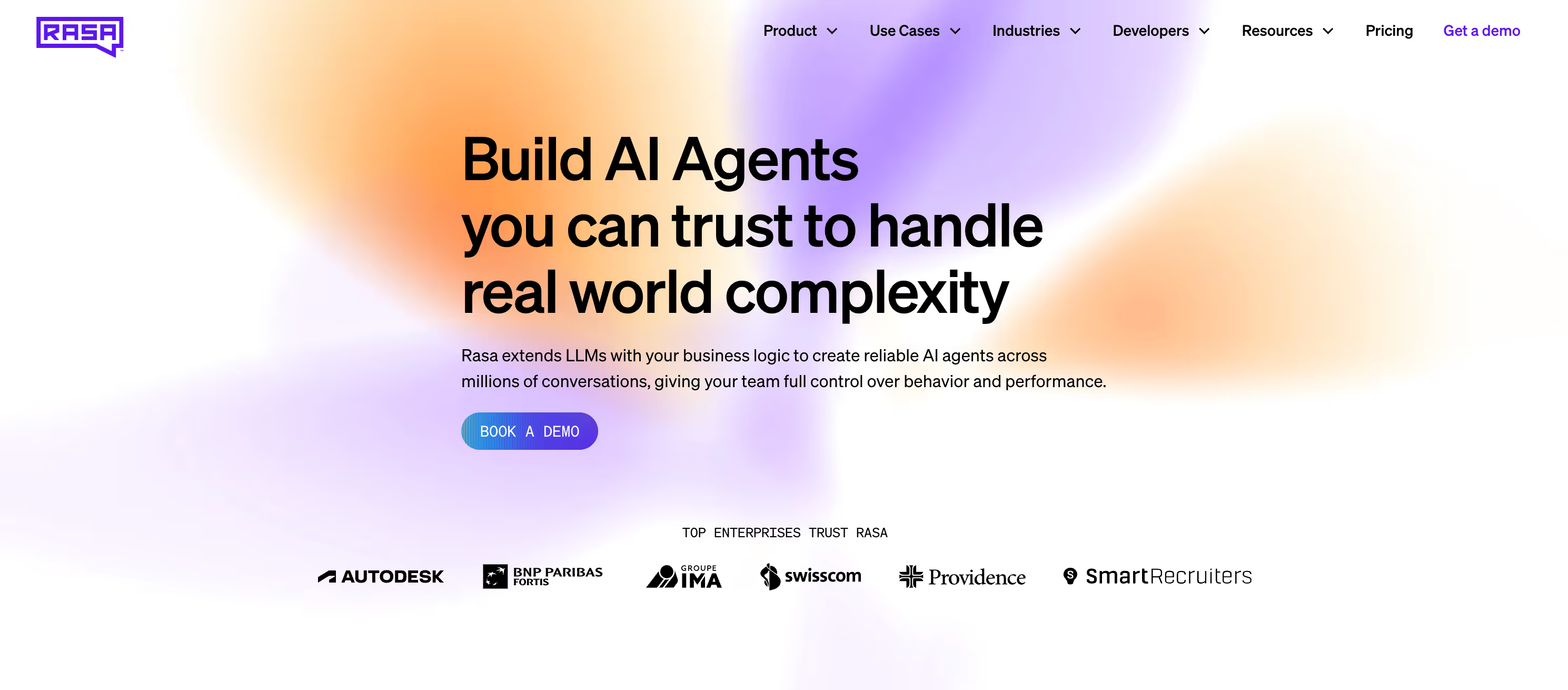
Rasa is the developer platform for enterprise AI agents. Deutsche Telekom, Autodesk, Swisscom, and Groupe IMA use it to build, orchestrate, and own AI agents across voice and chat.
Best for enterprise engineering teams (1,000+ employees) in regulated industries that need self-hosted deployment, multi-agent orchestration, and full code-level control over agent behavior.
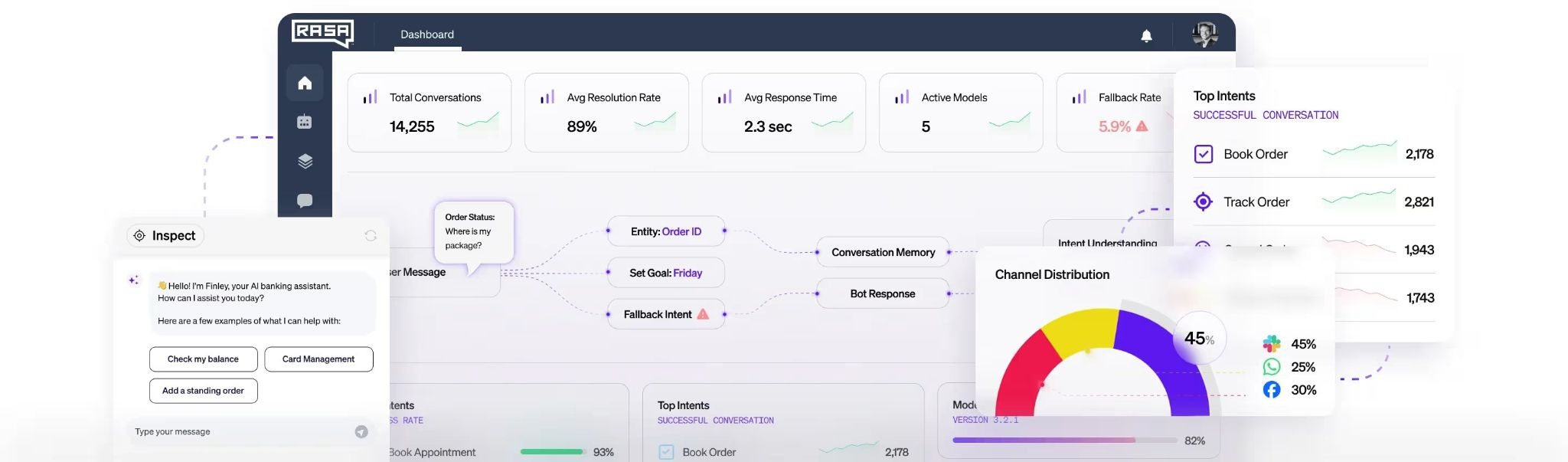
Product Overview
Most enterprise teams hit the same wall with AI agents: logic scattered across dozens of disconnected prompts, no shared state between channels, and no way to reuse what works.
The first agent takes months. The second takes just as long because nothing transfers.
Rasa's architecture solves that compounding problem across three layers:
Rasa's architecture solves that compounding problem across three layers:
- Reusable agent building blocks
Skills, tools, memory, integrations, and conversation patterns can be built once and reused across agents and use cases. A claims lookup skill, password reset workflow, account update, or appointment scheduler should not be rebuilt from scratch every time a new agent needs it.
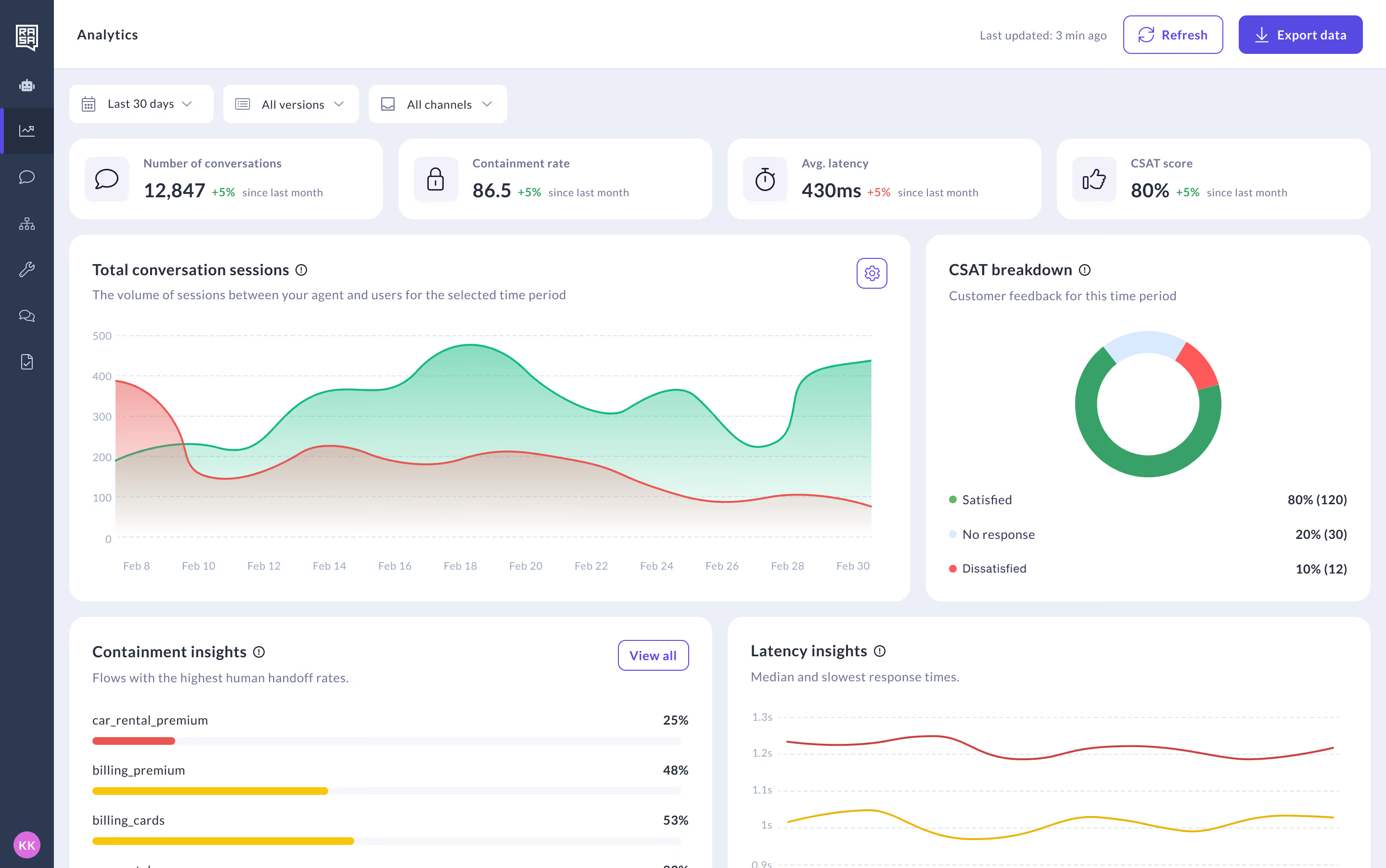
- Control by use case
Rasa lets teams tune how much control each part of the agent needs. Open-ended questions can stay natural and flexible. High-stakes steps can be locked down with exact wording, required sequences, policy checks, approvals, handoffs, or backend actions. Teams do not have to choose between full autonomy and fully scripted flows for the entire agent.
- Multi-agent orchestration across channels
Rasa keeps track of active tasks, interrupted work, relevant user context, and what needs to happen next. A customer can change topics, come back later, or move between voice and digital channels without the agent losing the thread. The customer never repeats themselves.
Pricing
Rasa offers these pricing tiers:
- Developer Edition (Free): Rasa offers a free Developer Edition for teams starting an agent project. It can be used locally or in production, with one bot per company and usage limits of up to 1,000 external conversations per month or 100 internal conversations per month.Designed for individual developers exploring agent projects.
- Enterprise (Custom): Premium support, dedicated CSM, advanced security features, custom onboarding. Contact Rasa for a quote.
Pricing is based on annual conversation volume, not per-user or per-seat.
Integrations
Teams connect the Rasa agent to internal APIs, databases, CRM, ERP, ticketing, contact center systems, and proprietary services through customer-owned integration logic.
Core integration paths
- Custom Actions: stable path for calling APIs, querying databases, validating data, triggering workflows, and returning dynamic results to the conversation.
- Action Server: runs the customer’s backend logic outside the assistant runtime, so integration code stays owned and maintained by the customer.
- MCP servers: beta support for exposing external tools, APIs, databases, and services through Model Context Protocol.
- A2A external agents: beta support for connecting external agents into a Rasa-orchestrated conversation.
- Voice connectors: connect Rasa to telephony and contact center environments, including Genesys Cloud, Jambonz, AudioCodes, and Twilio Media Streams.
- Model/provider choice: customers can choose the LLMs, ASR/TTS providers, hosting model, and data path that fit their architecture.
Setup
Customers bring their infrastructure, model provider, backend systems, and channels. Rasa provides the platform layer, implementation guidance, onboarding support, and enterprise expertise to help turn those pieces into a production agent.
Compared with a managed SaaS platform or pure DIY, Rasa takes more ownership from the customer’s technical team. The payoff is control: the agent runs in the customer’s architecture, connects to their real systems, and can evolve through their own security, release, and governance processes.
Mini Case Study
Deutsche Telekom deployed Rasa's CALM framework for internal IT support and now resolves 50% of service desk inquiries autonomously, reducing human agent workloads by 30%. The system serves 10,000+ employees in German and English. Non-technical IT experts design conversational flows in Rasa Studio, freeing developers for strategic projects.
See How Rasa Handles Enterprise Agent Orchestration
#2. Fin by Intercom: Best Decagon Alternative for Integrated Helpdesk + AI
Fin is Intercom's AI agent, built directly into the Intercom customer service suite.
Best for teams that want AI resolution and human support in one platform without managing a separate AI vendor.
Product Overview
- Fin resolves customer conversations across live chat, email, SMS, WhatsApp, and social channels.
- Fin uses knowledge sources and approved content.
- Fin uses outcome-based pricing. Outcomes include resolutions and procedure handoffs, with sales outcomes priced differently.
Pros and Cons
Pros:
- Fast setup for teams already using Intercom or a supported helpdesk
- Built-in handoff, reporting, knowledge management, and support workflows
- Fin Optimize Dashboard for debugging.
Cons:
- Per-resolution pricing becomes unpredictable at high volume (2,000 resolutions/month = $1,980 on top of seat costs).
- Cloud-only, no self-hosted option.
- Less control over model choice, deployment architecture, and data path
- Customization happens through Fin’s product surface, not customer-owned runtime code
- Outcome pricing can become harder to forecast at high volume
- Salesforce acquisition may change roadmap, packaging, and ecosystem direction over time
Pricing
- $0.99/resolution with minimum 50 resolutions/month.
- Requires an Intercom seat plan: Essential ($29/seat/mo), Advanced ($99/seat/mo), or Expert ($132/seat/mo).
- AI Copilot add-on: $35/agent/mo.
Setup
Fin is fast to set up when teams already have helpdesk content, procedures, channels, and handoff rules ready. Basic deployment can be quick, while more complex setup depends on backend actions, phone support, multilingual coverage, and escalation design.
Tradeoffs
- Fin works well inside the Intercom ecosystem. Outside it, integration options are limited.
- Per-resolution pricing rewards automation success but creates cost uncertainty for high-volume teams.
- No on-premise deployment.
- No code-level control over agent decision logic.
#3. Sierra: Best Decagon Alternative for Brand-led Customer Experiences
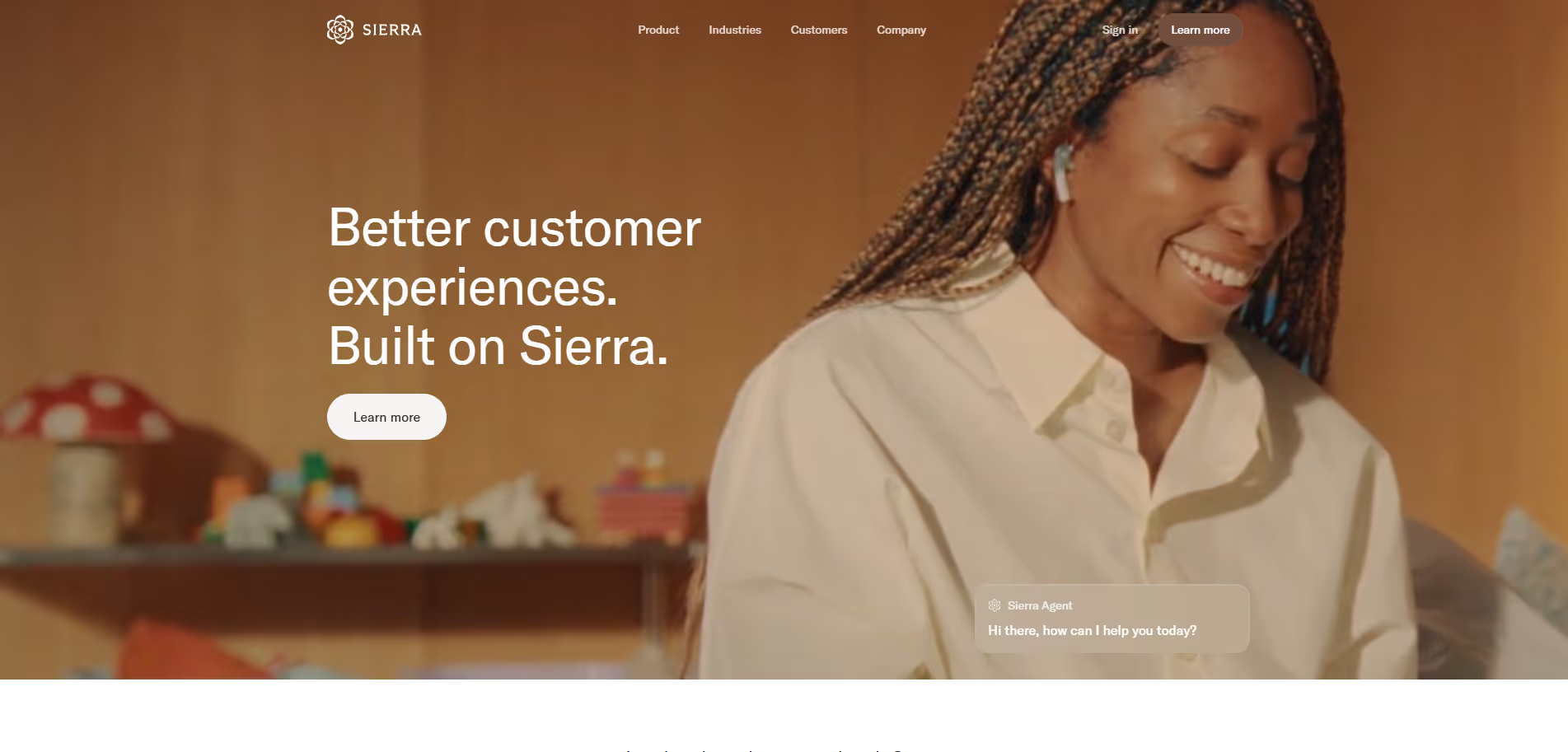
Sierra builds AI agents as brand ambassadors. Founded by Bret Taylor (ex-Salesforce co-CEO) and Clay Bavor (ex-Google VP).
Best for consumer brands that want a managed AI agent platform for customer-facing support, service, and personalized CX across channels.
Product Overview
- Sierra Agent OS is a closed, managed platform for building and operating customer-facing AI agents.
- Agent Studio gives CX teams a no-code surface for journeys, knowledge, and brand guidance.
- Insights adds analytics, experimentation, and observability for improving agent behavior over time.
- Good fit when the company wants a vendor-managed CX agent with brand control, polished tooling, and outcome alignment.
Pros and Cons
Pros:
- Managed platform model for teams that want a partner to help shape and operate the agent program
- Strong executive narrative around AI agents as the primary customer touchpoint
- Clear CX story around brand voice, personalization, customer relationships, and business outcomes
- Outcome-based pricing can align spend with defined business results
Cons:
- Closed SaaS platform, not customer-operated infrastructure
- Outcome-based pricing depends heavily on how “successful outcome” is defined in the contract
- Less fit for teams that need self-hosting, model flexibility, infrastructure ownership, or deep control over the agent runtime
- Opaque custom pricing ($50K-$200K+ professional services).
Pricing
- Custom enterprise pricing.
- Sierra publicly positions outcome-based pricing.
Setup
- Vendor-led enterprise rollout.
- Setup likely depends on channel scope, backend integrations, brand/guardrail work, simulations, and success criteria.
Tradeoffs
- Young platform with some enterprise gaps still maturing
- Public positioning is stronger on CX transformation than on deep platform ownership
- Analysts noted gaps around reporting, administration, development tools, legacy system integration, and live-agent escalation
- Outcome-based pricing depends heavily on contract definitions and can be harder to compare against platform pricing
- Better fit for teams buying a managed AI agent program than teams that need to own the runtime, data path, models, integrations, and deployment architecture
#4. Kore.ai: Best Decagon Alternative for Enterprise Suite Coverage
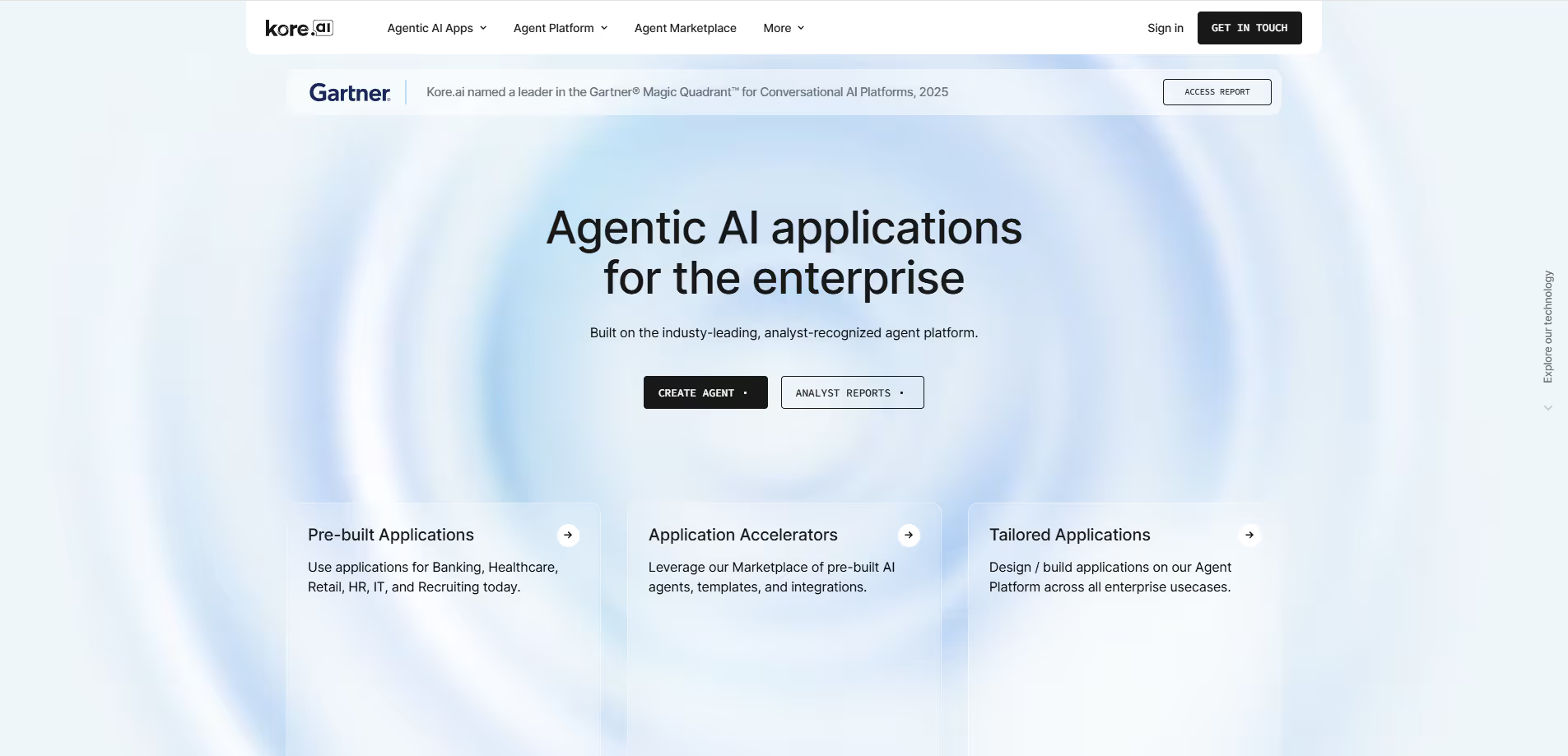
Kore.ai is one of the broadest enterprise AI agent platforms in this comparison. It covers customer service, employee support, process automation, contact center AI, agent assist, workflow orchestration, and enterprise search.
Best for large enterprises that want wide capability coverage without assembling best-of-breed components.
Product Overview
- Broad platform across AI for Service, AI for Work, AI for Process, and Agent Platform.
- Enterprise integration coverage across contact center, CRM, ITSM, HR, commerce, and backend systems.
- Strong fit for large enterprises that want one broad platform across many teams and use cases.
Pros and Cons
Pros:
- Broadest suite coverage among the alternatives listed here.
- Large integration catalog across enterprise systems and channels.
- Voice, chat, digital channels, and agent assist in one platform.
Cons:
- Breadth adds complexity. Teams may need more platform training, configuration, and governance to use it well.
- More suite-led than developer-platform-led. Strong for standardizing across many use cases, less clean for teams that want full architectural ownership.
- Deep customization happens inside Kore’s platform model rather than through an open, customer-owned runtime.
- Enterprise pricing and packaging can be harder to understand than narrower tools.
- Strong fit for buying a broad AI suite. Less focused fit for teams that want an owned agent platform built around their own stack.
Pricing
- Automation AI from $50/month (Essential).
- Enterprise contracts are custom, typically $50K-$300K+/year.
- Session-based billing: a 31-minute conversation counts as three billing sessions.
Setup
- Enterprise setup depends on the number of channels, integrations, agent types, contact center systems, and governance requirements.
- More complex than simpler managed support-agent tools because Kore covers more use cases and platform surfaces.
Tradeoffs
- Broad platform coverage means more product surface to learn, configure, and govern.
- Best suited for large enterprise programs, not teams looking for a narrow support-agent rollout.
- Customization happens inside Kore’s platform model, which may be less attractive for teams that want full control over the runtime and codebase.
- Enterprise pricing and packaging can be harder to compare against simpler support-agent tools.
- Analysts noted customers see room for improvement in the speed and responsiveness of Kore’s support teams.
#5. Forethought: Best Decagon Alternative for Multi-Agent Triage
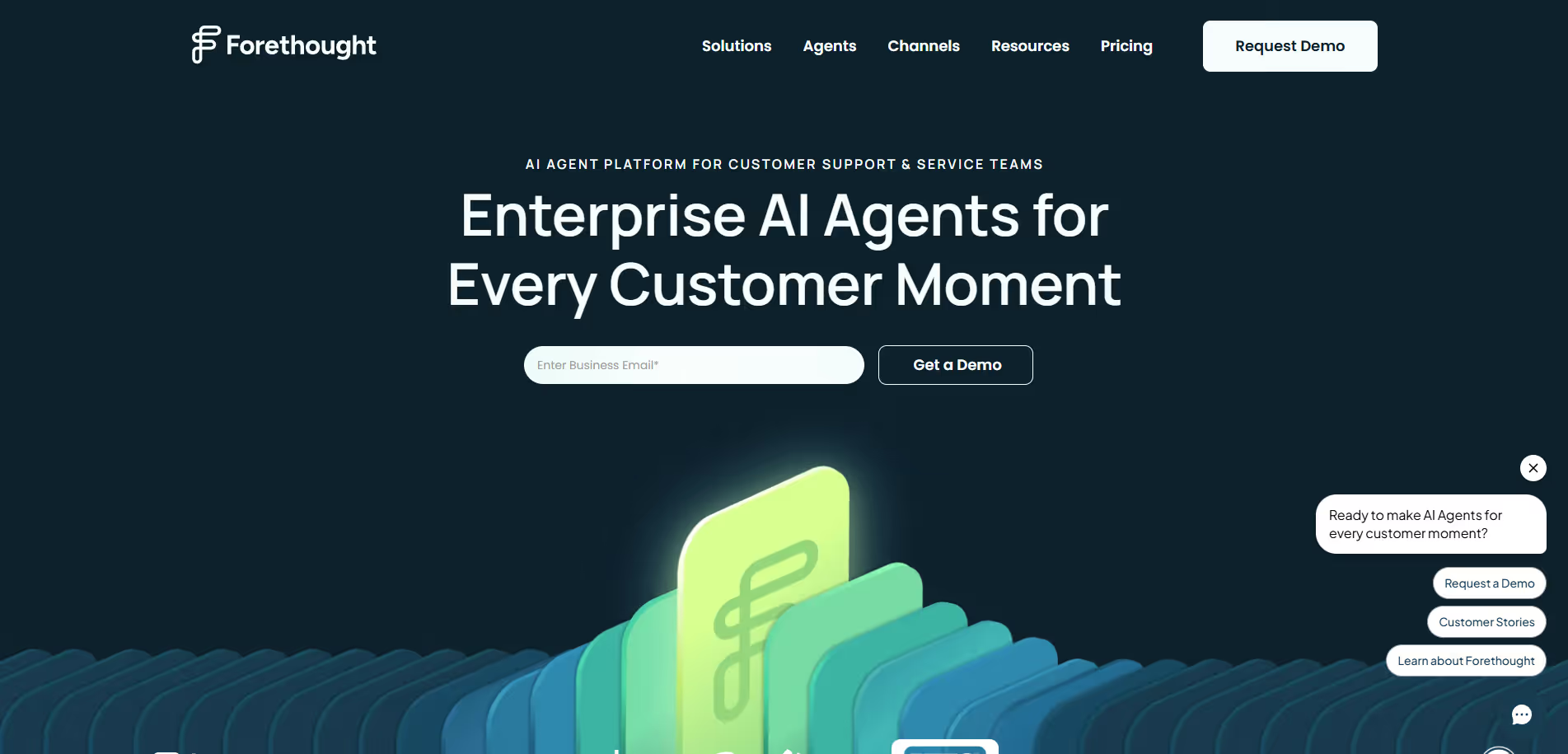
Forethought's multi-agent architecture (Solve, Triage, Assist, Discover) routes customer issues to the right resolution path automatically.
Best for support teams handling 20K+ tickets/month that need intelligent routing before resolution.
Product Overview
- NLU-based intent prediction routes tickets to the right agent or automation.
- Solve handles direct resolution.
- Triage categorizes and prioritizes.
- Assist surfaces knowledge for human agents.
- Discover identifies ticket trends.
- Good fit for support teams that want to improve ticket operations, not just launch a chatbot.
Pros and Cons
Pros:
- Strong support-ops focus across resolution, routing, agent assist, QA, and insights.
- Useful fit for teams with high ticket volume and mature helpdesk operations.
- Multilingual and omnichannel coverage are now part of the product story.
Cons:
- Opaque enterprise pricing with minimum 20K+ tickets/month.
- Usage-based billing with unpredictable costs.
- Limited voice capabilities.
- Cloud-only.
Pricing
- Custom enterprise pricing.
- Minimum 20K+ tickets/month requirement.
Setup
- Weeks to months, depending on ticket volume and integration complexity.
Tradeoffs
- More support-suite focused than platform-ownership focused.
- Better suited to ticket-heavy service operations than deeply custom enterprise agent architecture.
#6. Ada: Best Decagon Alternative for No-Code Automation
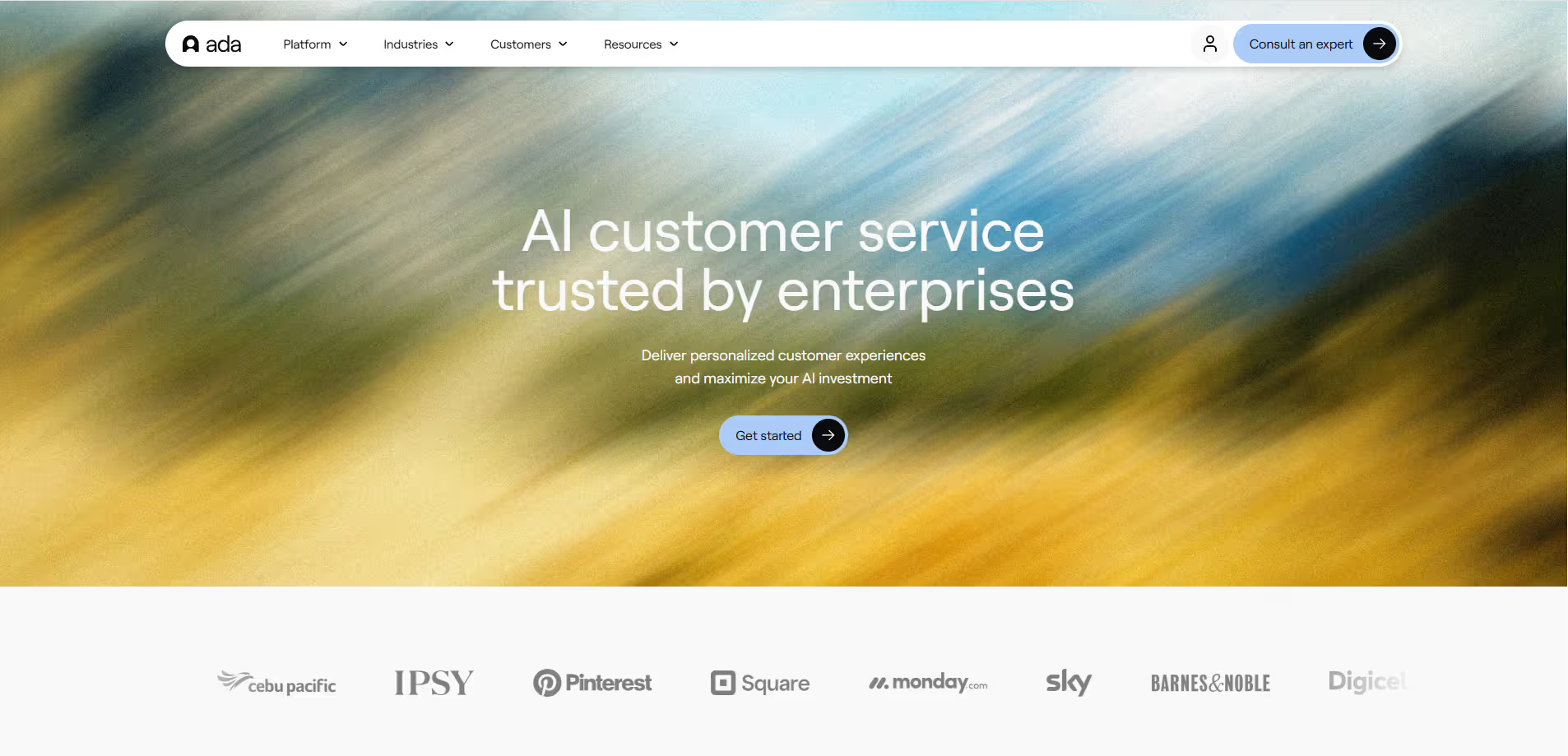
Ada's Reasoning Engine platform automates customer interactions with Playbooks for workflow automation.
Best for CX teams that want to build automations without engineering support.
Product Overview
- Ada’s ACX Platform includes Reasoning Engine, Conversation Hub, Performance Center, Playbooks, Coaching, and Developer Toolkit.
- Playbooks help teams define multi-step customer service procedures.
- Conversation Hub supports channels like voice, email, chat, Messenger, WhatsApp, SMS, Instagram, in-app, and custom channels.
- Best fit for CX teams that want an operations-led platform for AI customer service.
Pros and Cons
Pros:
- No-code interface.
- High claimed resolution rate.
- Playbooks for workflow automation.
Cons:
- Opaque pricing with six-figure annual contracts.
- Steep learning curve despite no-code claims.
- 1-3 months onboarding.
- Cloud-only.
Pricing
- Custom enterprise pricing.
- Six-figure annual contracts typical.
Setup
- 1-3 months for production deployment.
Tradeoffs
- More operations-led than developer-led.
- Analysts noted below-par tooling for building, testing, managing applications, and CI/CD integration.
- Best fit when CX teams want to operate inside Ada’s platform model.
- Less fit for teams that need self-hosted deployment, deep runtime control, or an agent system owned through their own engineering workflow.
Specialized Alternatives
#7. Gorgias: Best for Shopify and E-Commerce
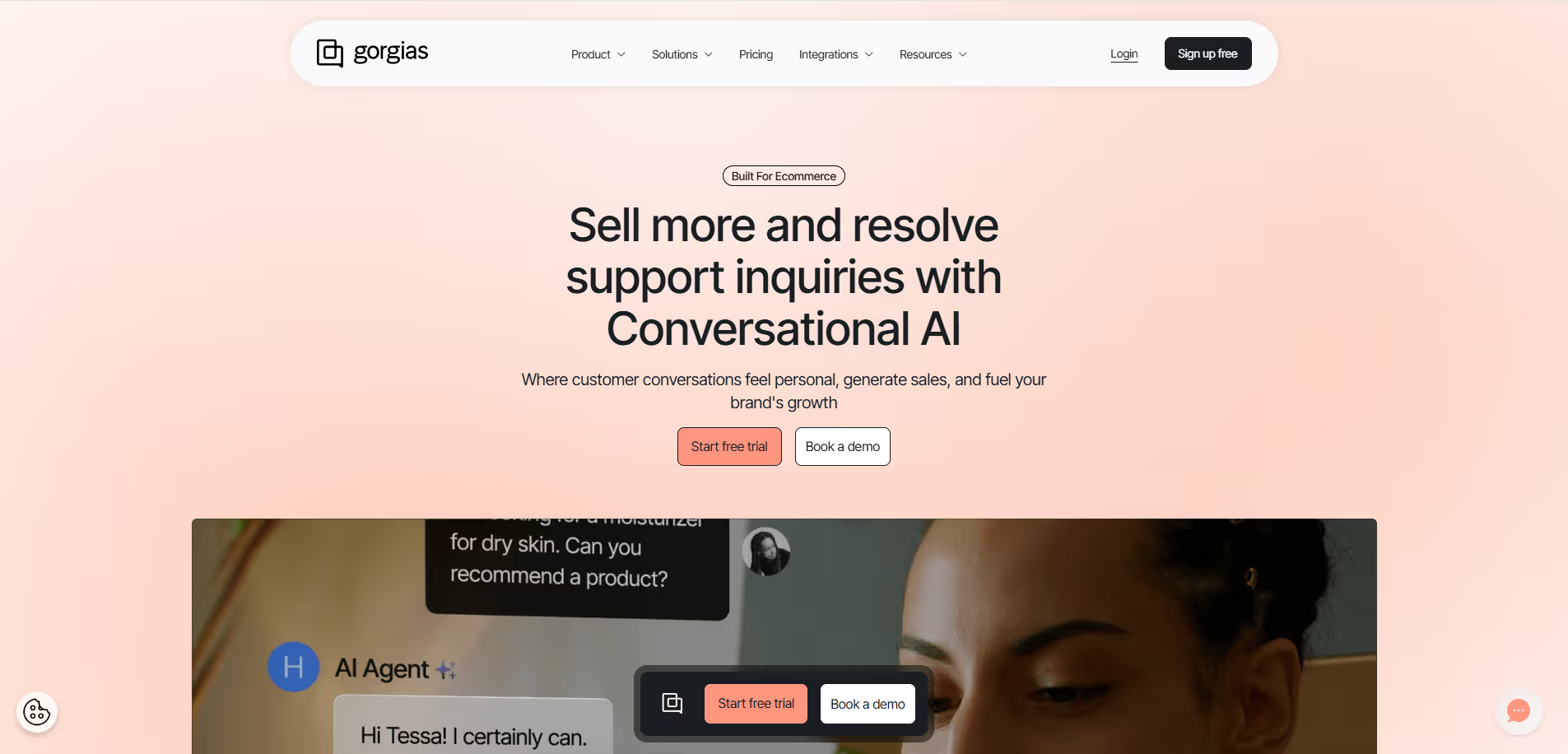
Deep native Shopify integration with order management built into the helpdesk. AI Agent handles WISMO (where is my order) automation.
Best for e-commerce teams on Shopify. Not suited for enterprise or regulated industries.
Pricing
- $0.36-$0.40/ticket + $1/AI resolution.
- Ticket-based costs escalate with volume.
Tradeoff
- Ecommerce-specific. Limited fit outside Shopify/DTC support.
- AI Agent depends on Gorgias helpdesk and Shopify-connected data.
- Voice is not the core AI Agent strength.
- Less relevant for regulated enterprises, complex internal systems, or customer-owned deployment requirements.
- Pricing includes helpdesk volume plus AI Agent resolved interactions, so teams should model both.
#8. KODIF: Best for E-Commerce Speed

E-commerce native with 76-92% resolution rates. 15-day deployment timeline. No-code policy builder.
Best for e-commerce teams that need fast deployment and high automation rates.
Pricing
- Custom.
Tradeoff
- E-commerce focus limits broader enterprise applicability.
- Newer platform with less enterprise track record.
#9. Parloa: Best for DACH Voice AI
German enterprise voice-first platform. Real-time translation across 35+ languages. Purpose-built for contact center voice automation in regulated European markets.
Pricing
- $300K+ annual minimum.
Tradeoff
- High cost floor.
- DACH-focused.
- 700-900ms voice latency reported.
- No self-hosted deployment.
#10. Retell AI: Best for Developer Voice API

Developer-first voice AI platform with modular pricing. 30+ language support.
Best for engineering teams building custom voice agents from components.
Pricing
- $0.07+/min pay-as-you-go.
- STT/TTS/LLM costs are added on.
Tradeoff
- Simple voice agents can be configured in Retell, but production integrations and sensitive workflows usually need developer support.
- Unpredictable costs as add-ons stack.
#11. Tidio (Lyro): Best for SMB Chatbot
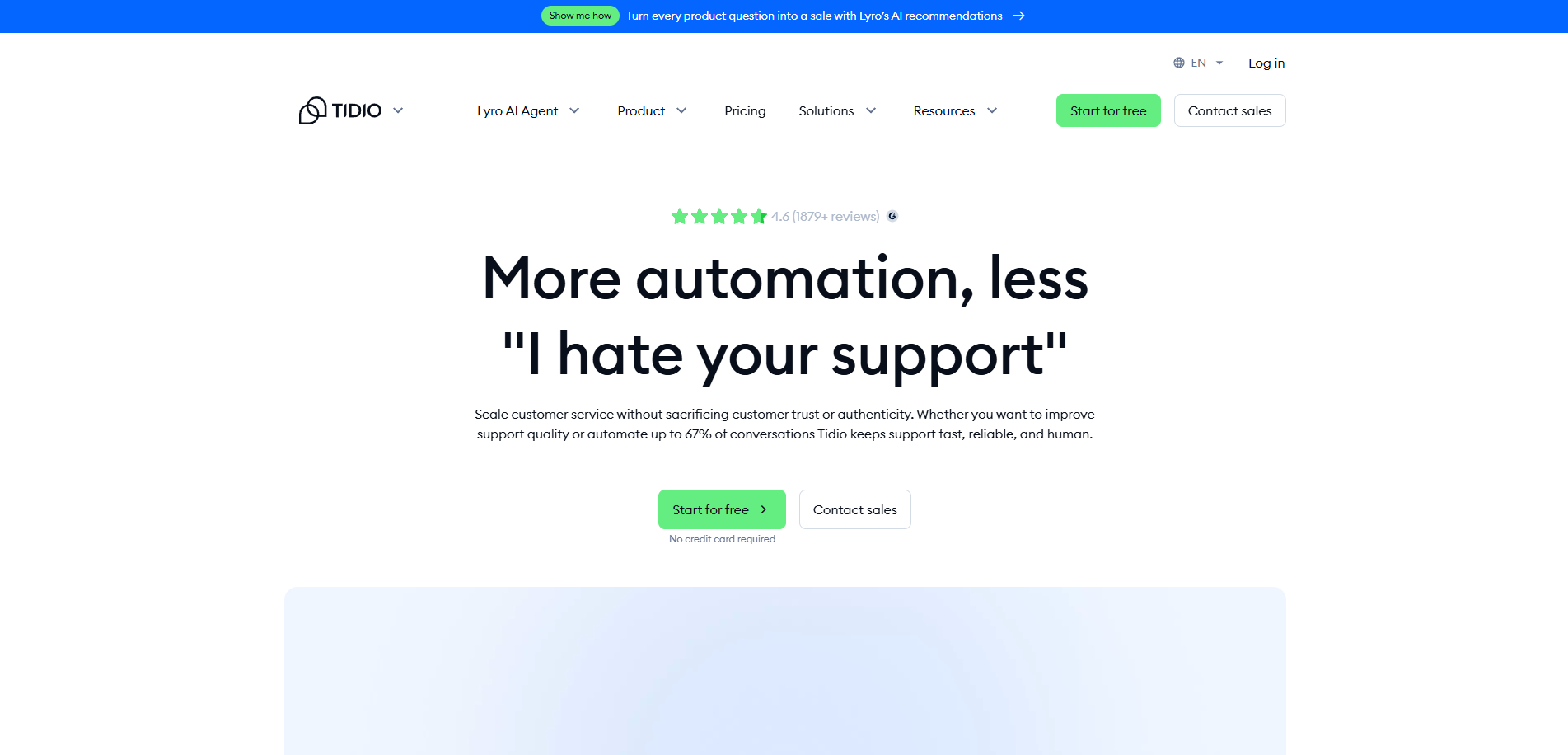
Affordable SMB chatbot with conversation-based pricing. Lyro AI agent starts at $32/month for 50 conversations.
Best for small businesses needing basic chat automation.
Pricing
- $24-$749/month.
Tradeoff
- Built for SMB and ecommerce-style support, not complex enterprise agent programs.
- Lyro usage is limited by AI conversation quotas, so teams need to model monthly volume.
- No voice, no self-hosted deployment.
Why Choose Decagon AI Alternatives
Self-Hosted Deployment for Regulated Data
Decagon is a managed SaaS platform.
That works well for teams comfortable with a vendor-operated AI agent, but it can be a blocker when policy requires the agent runtime, conversation records, integrations, and model path to stay inside the customer’s environment.
Native Voice Capabilities
Decagon was built text-first with voice added later.
The question is less whether it has voice, and more whether the buyer needs to own the voice stack, infrastructure, providers, latency tuning, and cross-channel architecture.
Predictable Cost Scaling
Per-resolution pricing appears affordable at pilot scale but becomes unpredictable at enterprise volume.
Conversation-volume-based licensing (Rasa) or seat-based models provide more predictable cost curves.
How to Choose the Right Alternative to Decagon
Step 1: Define Your Deployment Requirement
Can your data go to a vendor's cloud? If yes, Decagon, Fin, and Ada work.
If no, your options narrow to Rasa (self-hosted) and Kore.ai (on-prem available).
Step 2. Match the platform to the real use case
- Simple support automation: Fin, Tidio, Gorgias
- Ecommerce support: Gorgias, KODIF
- Ticket triage and support ops: Forethought
- Voice-first contact center: Rasa, Parloa, Retell
- Regulated, backend-heavy, multi-system journeys: Rasa, Kore.ai
Step 3. Check the deployment boundary early
If customer data and agent runtime can live in a vendor-managed SaaS platform, Decagon and similar tools stay in the running. If the runtime, conversation state, logs, or model path need to stay in your own environment, narrow the list to platforms with self-hosted or private deployment options.
Step 4: Model cost against real volume
Decagon supports per-conversation and per-resolution pricing. Fin charges by outcome. Retell charges by usage. Gorgias charges by resolved interaction. Rasa uses custom enterprise pricing. The right model depends on volume, call duration, resolution definition, escalation rate, and how much work the agent is expected to complete.
Step 5: Run a Production Pilot
Use a high-volume journey with actual business logic, not an FAQ. Track resolution quality, escalation quality, time to change behavior, integration effort, support-team adoption, and how clearly the team can explain what the agent did and why.
Key Features to Look for When Exploring the Best Decagon Alternatives
Self-Hosted / Sovereign Deployment
If your security team blocks SaaS vendors, look for platforms that run in your environment on your infrastructure with full data sovereignty.
Multi-Agent Orchestration
Beyond single-agent pilots, enterprise deployments need coordination across multiple agents, tools, and systems with shared state and clean handoffs.
Deterministic Business Logic
Pure-LLM agents hallucinate. For regulated industries, deterministic business rules that control every action are non-negotiable.
Voice and Chat Continuity
Customers start in one channel and finish in another. The agent must carry context across voice, chat, SMS, and internal systems.
Code-Level Extensibility
Can you modify core engine modules, add custom actions, and integrate with MCP/A2A protocols? Configuration-only platforms hit a ceiling.
Transparent Pricing
Per-resolution and per-ticket models create cost surprises at scale. Understand the billing model at 10x your current volume before signing.
Observability and Audit Trails
Trace what the agent did, what data it accessed, and why it made each decision. Required for compliance in regulated industries.
Cost Comparison: Decagon vs. Competitors
Pricing in this category ranges from SMB-friendly ($24/month for Tidio) to enterprise-scale ($300K+ for Parloa). The billing model matters as much as the price.
- Volume-based licensing: Rasa Growth at Developer Edition free. Enterprise custom. [Rasa to confirm Growth tier pricing.]
- Per-resolution: Fin at $0.99/resolution. Affordable at low volume, unpredictable at scale.
- Per-ticket: Gorgias at $0.36-$0.40/ticket + $1/AI resolution.
- Enterprise custom: Sierra, Kore.ai, Forethought, Ada, Parloa negotiate per-deal. Typical range: $50K-$300K+/year.
Which of the Alternatives to Decagon Is Right for Your Business?
- Need ownership and control: Rasa. Self-hosted deployment, multi-agent orchestration, code-level extensibility.
- Need speed with helpdesk integration: Fin by Intercom. Fastest path to AI + human support in one platform.
- Need brand-aligned CX: Sierra. Multi-model orchestration for consumer-brand experiences.
- Need suite coverage: Kore.ai. Broadest feature set for large enterprises.
- Need e-commerce automation: Gorgias (Shopify) or KODIF (e-commerce native).
- Need voice-first: Rasa Voice for sovereign voice. Parloa for DACH. Retell AI for developer voice API.
Best Decagon Alternatives for Large Companies That Need Full Platform Control
Full platform control means you can modify agent behavior at the code level, replace core engine modules, and deploy in your own infrastructure.
Decagon is a managed SaaS platform. That can work well for teams that want the vendor to package more of the agent lifecycle. It is less suitable when the buyer needs to operate the runtime inside its own infrastructure or treat the agent as part of its internal software stack.
Rasa is the strongest fit when full platform ownership is the requirement. Teams can deploy Rasa in their own environment, connect their own backend systems, choose their model and speech providers, build custom actions, and tune the level of agent control by use case.
Kore.ai is also a serious option for large enterprises that want broad suite coverage, strong governance, and complex customer-service deployments. The tradeoff is that control sits more inside Kore’s platform model, while Rasa is better suited for teams that want deeper ownership of the runtime, code, infrastructure, and release process.
Best Decagon Alternatives for Regulated Industries Like Banking and Healthcare
Regulated industries require self-hosted deployment, deterministic agent behavior, and full audit trails. Rasa is a stronger fit when regulated service journeys need to run closer to the enterprise stack. Teams can keep the agent inside their own environment, connect it to internal systems through owned integration logic, and apply stricter control only where the workflow needs it: disclosures, approvals, required sequences, handoffs, or backend actions. That makes Rasa better suited for banks, insurers, healthcare organizations, and telcos where the agent is expected to complete real work, not only manage support conversations.
FAQs
What are the main reasons teams look for Decagon alternatives?
Teams usually look beyond Decagon when they need a different deployment model, more control over architecture, clearer cost planning, deeper enterprise integration, or stronger fit for regulated workflows.
Which Decagon alternative is best for platform ownership?
Rasa. It is the strongest fit when teams need to run agents in their own environment, connect deeply to internal systems, choose their model and infrastructure stack, and control how agent behavior changes over time.
Which Decagon alternative is best for fast helpdesk automation?
Fin is the better fit when the team wants AI support inside a managed helpdesk workflow. It is especially relevant for teams already using Intercom or a supported helpdesk.
Which Decagon alternatives support self-hosted or private deployment?
Rasa is the clearest fit for customer-operated deployment. Kore.ai is also a serious option for large enterprises that want broader suite coverage with more deployment flexibility than most managed SaaS vendors.
How long does it take to deploy a Decagon alternative in production?
Fin: under one hour for basic, 1-2 weeks for production. KODIF: 15 days. Rasa: Swisscom went from prototype to production in 20 weeks. Sierra: 6-9 months. Kore.ai: 6-18 months.
Timelines vary by complexity, integrations, and internal resources.
What's the difference between a managed AI agent platform and a developer-first platform like Rasa?
Managed platforms like Decagon, Sierra, and Fin package more of the agent lifecycle inside a vendor-operated product. Rasa is built for teams that want more direct control over deployment, integrations, models, release workflows, and how agent behavior is changed over time.
Which Decagon alternatives support multi-agent orchestration and complex workflow handoffs?
Rasa and Kore.ai are the strongest fits here. Kore.ai has a broad multi-agent and suite orchestration story. Rasa is stronger when the buyer wants orchestration inside a customer-owned platform. Forethought has multiple support modules, but do not overstate that as enterprise multi-agent orchestration.
How do Decagon alternatives compare for resolution rates?
Reported resolution rates are not directly comparable. Vendors define “resolution” differently and use different customer mixes, channels, and escalation rules. Use vendor rates as directional proof only, not ranking evidence.
Which Decagon alternatives are best suited for financial services?
Rasa is the strongest fit when financial workflows require customer-controlled deployment, internal-system integration, and stricter control over identity, payments, account changes, disclosures, or approvals. Kore.ai is also credible for large financial-services programs that need broad suite coverage.
Which Decagon alternatives are best suited for healthcare?
Rasa is strongest when healthcare workflows require customer-controlled infrastructure, PHI-sensitive integrations, auditability, and tighter control over clinical or member-service actions.
Which Decagon alternatives are best suited for telecom?
Rasa is a strong fit for telecom because telecom journeys are usually multi-system, high-volume, voice-heavy, and policy-bound. Swisscom and Deutsche Telekom are useful proof points. Kore.ai and Parloa can also be credible depending on whether the buyer wants suite breadth or voice/contact-center focus.
Can AI agents be audited after an incident or regulatory review?
Audit depth depends on what the platform exposes and who controls the environment. Rasa is strongest when the customer needs conversation state, logs, integrations, and deployment evidence inside its own operating model.
.png)
.png)
.png)