.png)

LangChain remains one of the most widely adopted open-source frameworks for building LLM applications and agents. But for engineering teams taking LangChain-based systems into production, the alternatives search is real.
The recurring drivers behind this are: too many ways to do the same thing, fragmented documentation across LangChain v0 and v1, deep call stacks that make debugging painful, performance overhead at scale, and the ongoing question of whether to commit to LangGraph as LangChain's official agent evolution or migrate to a cleaner framework.
Pydantic AI has gained momentum with Python teams that want type-safe structured outputs, simpler debugging, and lower framework overhead than LangChain-style abstractions.
Public Pydantic case studies, including MindsDB and Overjoy, describe teams replacing LangChain or LangSmith with Pydantic AI and Logfire for stronger type safety, clearer debugging, and better production visibility.
This guide compares 13 LangChain alternatives for AI agent development in 2026 across architectural fit (single-agent vs. multi-agent vs. graph-based), production readiness (observability, deployment, governance), type safety, performance benchmarks, ecosystem breadth, and target team profile.
Each option is scored on the same weighted criteria, so engineering leads, AI engineers, and platform architects can match their actual build constraints to the right framework, whether the requirement is type-safe Python development, stateful multi-agent orchestration, Anthropic or OpenAI vendor-native tooling, RAG-heavy knowledge agents, .NET enterprise stacks, TypeScript web-integrated agents, or graduating from framework to enterprise platform for production conversational AI.
A note on category framing. Many of these alternatives are Python or TypeScript frameworks competing directly with LangChain on developer flexibility, code-first building, and self-managed agent runtime. Others are vendor-native SDKs, frontend AI SDKs, or enterprise platforms that solve a different part of the production stack.
One option in this comparison, Rasa, is positioned differently. Rasa is the developer platform for enterprise AI agents, with a patented Orchestrator, self-hosted and private-cloud deployment options, and support for voice and digital channels through channel connectors and speech-provider integrations.
For engineering teams that have outgrown framework-only stacks and need a platform that fits their architecture, deployment model, security process, integrations, release workflow, and audit requirements, Rasa is the platform option.
For teams that want a framework to build with, LangGraph, Pydantic AI, and CrewAI are the most credible direct LangChain alternatives in 2026.
What LangChain Alternatives Are There? Framework Comparison and Ratings Chart
13 Best LangChain Alternatives for AI Agent Development in 2026
The alternatives below are organized by the engineering decision that drives the framework choice:
- Enterprise platform ownership Stateful multi-agent workflows
- Type-safe Python development
- Role-based multi-agent collaboration
- Vendor-native tooling (Anthropic, OpenAI, Microsoft)
- RAG and knowledge-heavy agents
- EU-native NLP
- TypeScript and frontend-integrated agents
- Minimal HuggingFace builds
Each section looks at where LangChain-style frameworks fit, where they create extra production work, and when another framework, SDK, or platform is the better choice.
#1. Rasa: Best LangChain Alternative for Enterprise Platform Ownership
Rasa is the developer platform for enterprise AI agents. Named a Strong Performer in The Forrester Wave™: Conversational AI Platforms For Customer Service, Q2 2026.
Rasa is not a like-for-like replacement for LangChain. LangChain and LangGraph are strong choices when engineering teams want flexible building blocks for custom agent stacks. Rasa is the platform choice when the agent needs to become part of the company’s own software and service operation.
That matters when the work moves beyond agent logic into deployment, auditability, release workflows, backend actions, voice and digital channels, and long-term ownership across multiple teams.
Rasa’s patented Orchestrator manages conversation state and coordinates flexible agent behavior with stricter controls where the use case requires them. The Framework gives engineers a code-first way to build, test, integrate, and release agents. Studio gives non-engineering teammates a place to review, test, and refine agent behavior without owning the codebase.
Rasa supports self-hosted, private-cloud, and air-gapped deployment models. It also supports voice and digital channels in one operating model, using channel connectors and speech-provider integrations rather than acting as a standalone speech stack.
Best for technical enterprise teams that need their agent platform to fit their architecture, deployment model, security process, integrations, and release workflow.
Score: 9.4/10. Highest marks for enterprise governance (10/10), deployment flexibility (10/10), native voice (10/10), and multi-channel orchestration (10/10). Scored lower on time-to-first-prototype vs. pure frameworks (6/10) and Python-only ecosystem breadth (7/10).
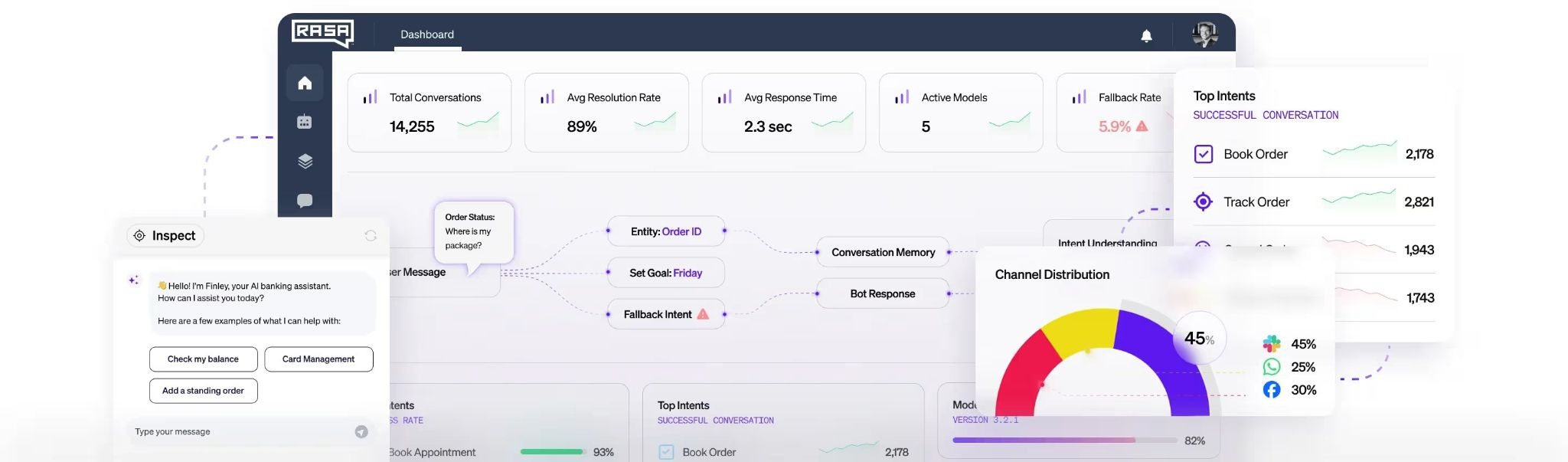
Product Overview
LangChain gives you a Python (and TypeScript) library for building LLM applications: chains, agents, tools, memory, 100+ integrations. The team builds the production layer on top: testing, observability, governance, deployment, voice (if needed), and multi-channel orchestration (if needed). Rasa gives you the platform layer that LangChain leaves to the team.
Rasa has three platform layers: Framework (Build), Orchestrator (Run), and Studio (Refine).
LangChain gives teams the building blocks for LLM applications: models, tools, agents, retrieval, memory, and integrations. LangGraph adds stronger primitives for stateful workflows, durable execution, human-in-the-loop patterns, and multi-agent systems.
Rasa starts from a different problem: how to operate conversational agents in production across systems, teams, channels, and policies.
With LangChain and LangGraph, the team assembles more of the production operating model itself. With Rasa, more of that layer comes with the platform: orchestration, state, conversation behavior, integrations, deployment, testing, review, and controlled releases.
Rasa is strongest when the agent needs to handle real customer or employee journeys, connect to backend systems, support voice and digital channels, and remain observable and auditable over time.
Teams can use flexible agent behavior where natural conversation matters, then add stricter controls where required: approvals, policy checks, required steps, backend actions, handoffs, exact wording, tests, review, and controlled releases.
Studio lets business, operations, and conversation teams participate in review and improvement while engineering keeps ownership of the codebase, CI/CD, tests, integrations, and deployment process.
Pricing
Developer Edition (Free): Full access to Rasa. One bot per company, up to 1,000 external conversations/month (100 for internal agents). Community support via the Rasa Forum.
Enterprise (Custom): Premium support, dedicated CSM, advanced security features, custom onboarding, Rasa Studio for refining design and review. Contact Rasa for a quote.
Pricing is based on annual conversation volume, decoupled from per-conversation or per-token consumption.
Integrations
Rasa supports backend integrations through custom actions, APIs, MCP server connectivity, and channel connectors.
For voice, Rasa connects to enterprise voice infrastructure through voice connectors and speech-provider integrations. Teams can choose their ASR and TTS providers instead of being locked into a single speech stack.
Setup
Self-hosted in your environment from day one. On-premises, private cloud, and air-gapped deployment options. Rasa does not host any customer data, systems, or applications.
Initial deployment timeline: 8-20 weeks for production agent, including integrations and governance configuration.
Swisscom went from prototype to production in 20 weeks, doubling automation rates and cutting operational costs by 50 percent.
Pros and Cons
Pros:
- Customer-controlled deployment: self-hosted, private cloud, and air-gapped options.
- Patented Orchestrator for managing conversation state and controlled agent behavior.
- Voice and digital channels in one operating model.
- Code-first engineering workflow: version control, CI/CD, tests, review, and controlled releases.
- Model, speech provider, and integration flexibility.
- Annual conversation-volume licensing.
Cons:
- Rasa is a platform, not a lightweight agent framework.
- Requires a builder mindset and meaningful upfront investment in platform deployment.
- Less suited for research agents, coding agents, batch workflows, or non-conversational AI systems where a pure framework is the better fit.
Tradeoffs
Choose Rasa when the hard part is no longer building the first agent. Choose it when the hard part is operating agents across systems, teams, channels, policies, and releases.
Choose LangGraph, Pydantic AI, CrewAI, or a vendor-native SDK when you mainly need a flexible framework for custom agent logic, research workflows, coding agents, RAG experiments, or non-conversational AI applications.
Some teams may also combine the two patterns: a framework for specialized reasoning or workflow logic, and Rasa as the enterprise platform layer for conversation orchestration, channels, governance, and operations.
Support
Enterprise customers receive production enablement support, including onboarding, implementation guidance, architecture alignment, and best-practice reviews.
Community support via the Rasa Forum. Documentation at rasa.com/docs. Learning resources at learning.rasa.com.
Mini Case Study
Deutsche Telekom deployed Rasa for internal IT support across 10,000+ employees in German and English. 50 percent of service desk inquiries resolved autonomously. 30 percent reduction in agent workload. Non-technical IT experts use Rasa Studio to design conversation flows.
Read the full case study here >
See How Rasa Compares to Pure-Framework Production Hardening
#2. LangGraph: Best LangChain Alternative for Stateful AgentWorkflows
LangGraph is the best choice for teams that want to stay in the LangChain ecosystem but need more structure than standard LangChain agents provide.
It models agent behavior as a graph: nodes for steps, edges for transitions, and state that can persist across the run. That makes it a strong fit for long-running workflows, approval steps, retries, branching paths, and multi-agent patterns where the team needs to see and control how execution moves.
Best for engineering teams building custom agent systems where state, checkpointing, human-in-the-loop review, and graph-level control matter more than fastest first prototype.
Score: 8.4/10. Strongest stateful workflow modeling (10/10), durable execution (10/10), large-scale enterprise deployment list (9/10), and tightest LangChain ecosystem integration (10/10).
Scored lower on time-to-first-prototype vs. CrewAI's higher-level abstraction (6/10) and code volume (more lines of code per agent than Pydantic AI per published benchmarks).
Product Overview
LangGraph is the agent orchestration framework from the LangChain team. It gives developers a more explicit way to build agent systems than a simple LLM loop.
The core abstraction is the graph. Each node performs a step. Edges define what can happen next. State is carried through the graph, and checkpointing makes it possible to pause, resume, replay, or inspect execution.
That makes LangGraph especially useful for workflows like:
- Multi-step research agents
- Human approval flows
- Tool-using agents with retries
- Supervisor and worker agent patterns
- Long-running background tasks
- Agent systems that need to resume after interruption
Pros and Cons
Pros:
- Strong fit for stateful, branching, long-running agent workflows.
- First-party continuation of the LangChain ecosystem.
- Checkpointing and persistence are core concepts, not add-ons.
- Human-in-the-loop workflows are well supported.
- Good fit for custom multi-agent architectures.
- Works with LangSmith for tracing, evaluation, monitoring, deployment, and debugging.
Cons:
- Still a framework-first approach. The team owns more of the production operating model.
- Best suited to engineering teams, not business teams or CX teams building directly.
- Complex graphs can still become hard to debug when state, loops, retries, and agents interact.
- LangSmith helps, but observability, governance, release process, and operational workflows still need to be designed around the implementation.
- Less suited when the buyer wants a complete enterprise agent platform with built-in channel, review, governance, and deployment patterns.
Pricing
LangGraph open-source (MIT license) free. LangGraph Platform for managed deployment custom enterprise pricing. LangSmith observability from $39/user/month Plus tier.
Setup
Days for prototype graphs. Weeks for production deployments with checkpointing and durable execution.
Tradeoffs
Choose LangGraph when you want to build the agent system yourself and need strong primitives for state, branching, checkpoints, and human-in-the-loop control.
Choose Pydantic AI when typed Python development and structured outputs are the main priority.
Choose CrewAI when fast role-based multi-agent prototyping matters more than low-level graph control.
Choose Rasa when the problem is no longer just building the workflow. Rasa is the better fit when conversational agents need to run across enterprise systems, voice and digital channels, security requirements, release workflows, and audit processes as part of a broader platform.
#3. Pydantic AI: Best LangChain Alternative for Type-Safe Python Development
Pydantic AI is best for Python teams that want agents to behave more like typed application code: clear inputs, validated outputs, dependency injection, structured tool calls, and predictable error handling.
This is the cleanest LangChain alternative when the main problem is not orchestration breadth, but engineering discipline. If your team already builds with Pydantic, FastAPI, or strongly typed Python patterns, Pydantic AI gives you a familiar way to build agents without pulling in the full LangChain abstraction stack.
Score: 8.2/10. Strongest type safety (10/10), best published production performance benchmarks (9/10), and minimal dependencies (9/10).
Scored lower on ecosystem breadth (6/10, fewer pre-built templates than LangChain) and vendor lock-in concerns (7/10, OSS but smaller community).
Product Overview
Pydantic AI comes from the team behind Pydantic. Its core idea is simple: define the shape of the agent’s inputs, outputs, dependencies, and tools, then let the framework validate the run.
That makes it especially useful for agents that need to return structured data into an application, call typed tools, or run inside a larger Python backend. It fits naturally with FastAPI-style development because the mental model is similar: schemas, dependencies, validation, and explicit contracts.
Pydantic AI supports major model providers including OpenAI, Anthropic, Gemini, and others. It also connects directly with Pydantic Logfire for observability. Logfire is OpenTelemetry-based, so teams can inspect traces, logs, metrics, latency, errors, model calls, and cost signals in one place.
Best use cases:
- Typed Python agents
- Backend application agents
- Structured extraction
- Tool-calling agents with validated arguments
- RAG components inside Python services
- Agents that need to return reliable JSON or Pydantic models
- Teams that want a smaller, clearer framework than LangChain
Pros and Cons
Pros:
- Strong type safety through Pydantic models.
- Clear structured outputs for application use.
- Dependency injection fits normal Python service design.
- Good fit for FastAPI-style teams.
- Lower abstraction weight than LangChain.
- Native Logfire observability.
- OpenTelemetry-based tracing through Logfire.
- Model-provider flexibility.
Cons:
- Python-only.
- Smaller ecosystem than LangChain.
- Fewer pre-built templates, integrations, and community recipes.
- Less mature for complex multi-agent orchestration than LangGraph.
- Not a full enterprise agent platform. Deployment, governance, channel orchestration, review workflows, and operating model still sit with the team.
Pricing
Free under MIT license. Pydantic Logfire observability separate pricing.
Setup
Hours for first typed agent. Days to weeks for production deployments with observability and testing.
Tradeoffs
Choose Pydantic AI when the agent is part of a Python application and typed contracts matter more than a large agent ecosystem.
Choose LangGraph when you need graph-based state, durable execution, human-in-the-loop workflows, or complex multi-agent orchestration.
Choose CrewAI when you want fast role-based multi-agent prototyping.
Choose Rasa when the agent needs to become part of a broader enterprise operating model across channels, backend systems, governance, release workflows, and long-term ownership.
#4. CrewAI: Best LangChain Alternative for Role-Based Multi-Agent Automation
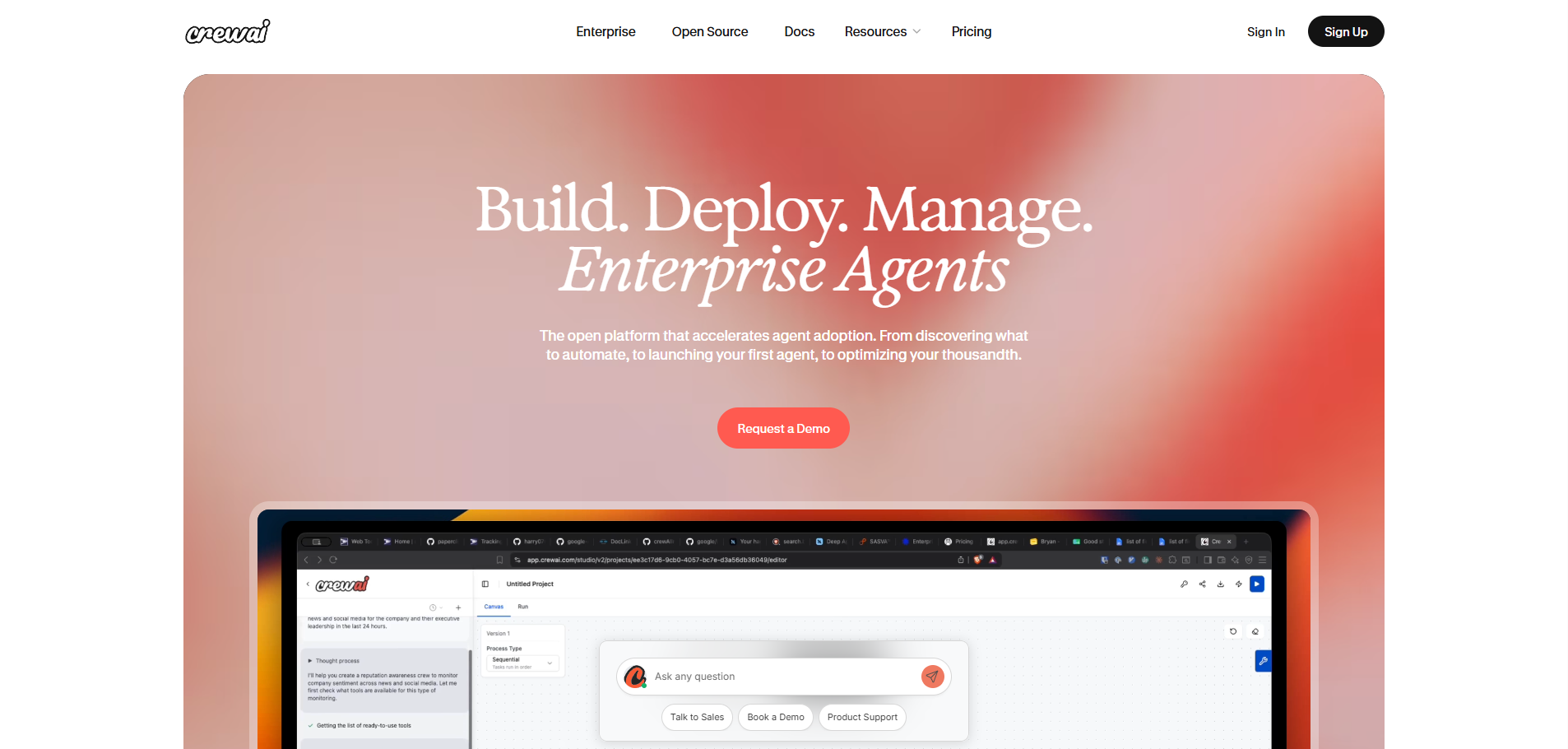
CrewAI is best for teams that want to build agent crews quickly: role-based agents, task delegation, sequential or hierarchical coordination, and automation workflows that can be understood without designing a full state graph from scratch.
Its strength is the product shape. Instead of starting with graph nodes and state transitions, teams start with agents, roles, goals, tasks, tools, and flows. That makes CrewAI a strong fit for research workflows, content operations, sales operations, internal automation, document-heavy analysis, and business processes where multiple specialized agents can divide the work.
Score: 7.2/10. Fastest multi-agent prototyping (10/10), role-based delegation primitives (9/10), and largest Python multi-agent community (47K+ GitHub stars).
Scored lower on debugging inside the abstraction (5/10), production-grade observability (6/10), and enterprise governance (5/10).
Product Overview
CrewAI has two main building patterns:
- Crews: role-based groups of agents that collaborate on tasks.
- Flows: event-driven workflows for more controlled orchestration, including single LLM calls and structured process logic.
Crews are useful when autonomy and collaboration are the main value. Flows are useful when teams need more predictable control over how work moves through the system.
CrewAI AMP adds the platform layer around the framework: visual building, deployment, tracing, monitoring, triggers, RBAC, guardrails, LLM testing, workflow chat, usage dashboards, and enterprise deployment options.
AMP triggers can launch automations from tools like Gmail, Google Calendar, Google Drive, Outlook, OneDrive, Microsoft Teams, HubSpot, Salesforce, Slack, and Zapier. That makes CrewAI more than a research framework. It is moving toward business process automation powered by agent crews.
Pros and Cons
Pros:
- Fast path to role-based multi-agent workflows.
- Simple mental model: agents, roles, goals, tasks, tools, and flows.
- Good fit for research, analysis, content, sales, and internal automation workflows.
- Crews support collaborative agent behavior.
- Flows add more controlled event-driven orchestration.
- AMP adds visual building, triggers, tracing, monitoring, guardrails, and enterprise deployment options.
Cons:
- Role-based abstraction can hide failure modes when agents loop, delegate poorly, or pass weak context to each other.
- Less precise than graph-based frameworks when every state transition needs to be explicitly modeled.
- Complex production workflows still need careful design around cost, retries, observability, security, and tool permissions.
- Stronger for task automation than for customer-facing conversational agents that need channel continuity, exact wording, controlled handoffs, and audit-friendly conversation state.
Pricing
CrewAI open-source free (Apache 2.0). CrewAI AMP enterprise custom pricing.
Setup
Hours for working multi-agent crew. Days for production deployments.
Tradeoffs
Choose CrewAI when the work naturally breaks into specialized agent roles: researcher, analyst, planner, writer, reviewer, operator, or sales assistant.
Choose LangGraph when the workflow needs explicit state, durable execution, checkpointing, and lower-level control over every transition.
Choose Pydantic AI when typed Python contracts and structured outputs matter more than multi-agent collaboration.
Choose Rasa when the problem is a production conversational agent, not just an agent crew. Rasa is the better fit when the agent has to run across voice and digital channels, maintain conversation state, connect to enterprise systems, support controlled releases, and meet audit or governance requirements.
#5. Claude Agent SDK: Best LangChain Alternative for Claude-Native Coding and Research Agents
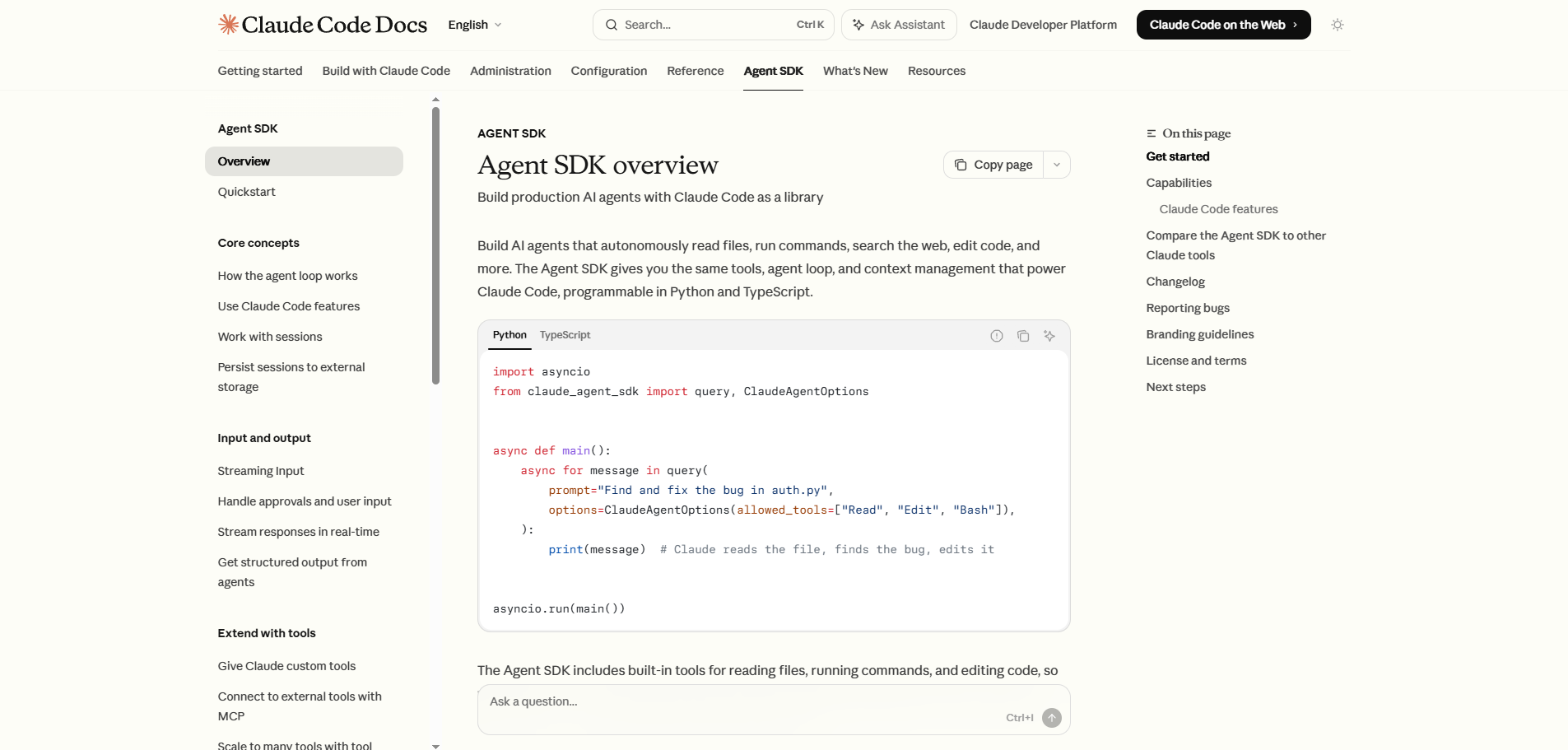
The Claude Agent SDK is the strongest fit when the team wants Claude Code as a programmable agent runtime.
It is built for agents that read files, search, run shell commands, edit code, use tools, and work through multi-step tasks inside a developer-controlled environment. That makes it a better fit for coding agents, research agents, codebase analysis, internal engineering tools, and file-system-based workflows than for broad model-agnostic agent infrastructure.
Score: 7.4/10. Strongest built-in tooling for coding agents (10/10), Anthropic reasoning quality (9/10), and same agent loop as Claude Code (9/10).
Scored lower on multi-provider portability (3/10) and ecosystem breadth vs. LangChain (5/10).
Product Overview
The Claude Agent SDK gives developers the same agent loop, tool execution, and context management used by Claude Code, exposed through Python and TypeScript.
Best use cases:
- Coding agents
- Code review agents
- Bug-fixing agents
- Repository analysis
- Research agents
- Developer workflow automation
- Internal tools where Claude Code-style behavior is the product
Pros and Cons
Pros:
- Same agent loop and tool model as Claude Code.
- Built-in tools for reading files, editing files, running bash commands, and searching.
- Python and TypeScript support.
- Strong session handling for continuing, resuming, and forking agent work.
- Subagents for focused parallel tasks and context isolation.
- Good fit for developer environments and file-system-based workflows.
Cons:
- Anthropic-first runtime.
- Not model-agnostic in the way LangChain, LangGraph, or Pydantic AI are.
- Token cost and latency depend heavily on task length, model choice, tool use, and how much context the agent gathers.
- Less suited for high-volume transactional workloads where a lighter typed framework may be cheaper and easier to control.
- Not designed as a full enterprise conversational AI platform with built-in voice/digital channel orchestration, governed release workflows, or contact-center operating patterns.
Pricing
Pay-as-you-go Anthropic token pricing. SDK is free.
Setup
30 minutes for first coding agent. Days for production deployments.
Tradeoffs
Choose the Claude Agent SDK when Claude is the intended runtime and the agent needs to work like a programmable version of Claude Code.
Choose LangGraph when the priority is explicit state graphs, durable execution, and model/provider flexibility.
Choose Pydantic AI when typed Python contracts and structured outputs matter more than file-system autonomy.
Choose Rasa when the agent is customer- or employee-facing, runs across voice and digital channels, needs enterprise deployment control, and has to fit into governed release and support operations.
#6. OpenAI Agents SDK: Best LangChain Alternative for OpenAI-Native Agents
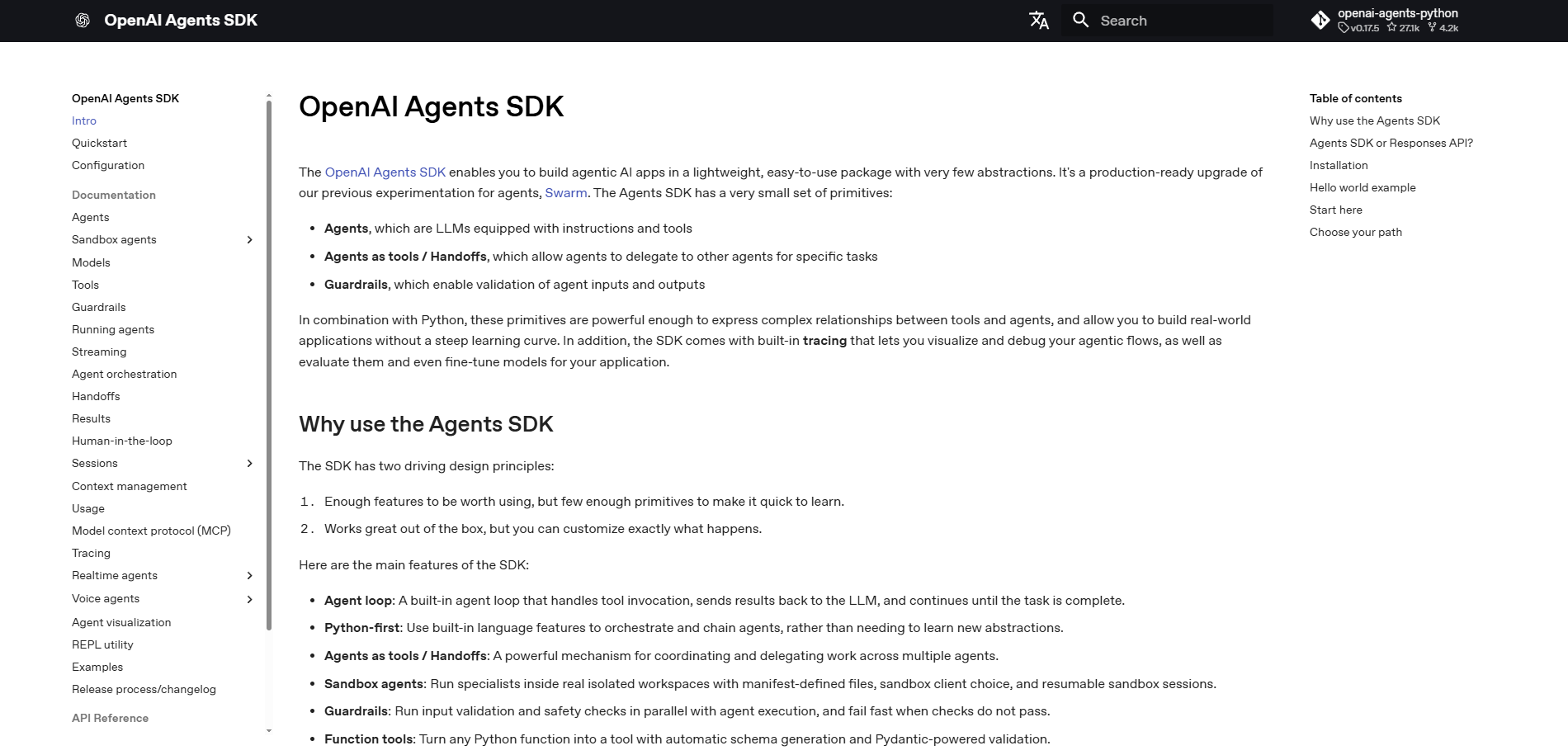
Best for teams already building on OpenAI that want a first-party SDK for agents, tools, handoffs, streaming, guardrails, and tracing.
Score: 7.2/10. Strongest OpenAI integration (10/10), first-party SDK reliability (9/10), and handoffs primitive for multi-agent patterns (8/10).
Scored lower on multi-provider portability (3/10) and ecosystem breadth vs. LangChain (5/10).
Product Overview
The OpenAI Agents SDK gives developers a direct way to build agentic applications on OpenAI models.
It supports agents that use tools, call functions, hand work to other agents, stream responses, and keep a trace of what happened during the run.
Handoffs are the main multi-agent primitive. One agent can transfer work to another specialized agent, such as a refund agent, booking agent, or support agent.
Tracing is built in. The SDK records model generations, tool calls, handoffs, guardrails, and custom events, which helps teams debug and monitor agent runs during development and production.
Best use cases:
- OpenAI-native agent apps
- Tool-calling agents
- Multi-agent handoff patterns
- Support agents inside OpenAI-based stacks
- Apps that use OpenAI built-in tools like file search, web search, or computer use
- Teams that want a simpler OpenAI-first path instead of a multi-provider framework
Pros and Cons
Pros:
- First-party OpenAI SDK.
- Python and TypeScript support.
- Handoffs for specialized agent routing.
- Built-in tracing for model calls, tool calls, handoffs, and guardrails.
- Works directly with OpenAI models and platform tools.
- Cleaner setup for OpenAI-first teams than a broad abstraction layer.
Cons:
- OpenAI-first runtime.
- Limited portability if the team wants to swap providers freely.
- Smaller ecosystem than LangChain.
- Production cost depends on model choice, tool use, context size, and traffic volume.
- The team still owns the surrounding production setup: deployment, evals, monitoring, security, review workflows, and release process.
- Less suited for enterprise conversational agents that need customer-controlled deployment, voice and digital channel orchestration, and audit-heavy operating workflows.
Pricing
Pay-as-you-go OpenAI token pricing. SDK is free.
Setup
Hours for first agent. Days for production deployments with handoffs.
Tradeoffs
Choose OpenAI Agents SDK when OpenAI is the chosen model platform and the team wants first-party agent primitives.
Choose LangGraph when the team needs provider flexibility, state graphs, checkpointing, and durable workflow execution.
Choose Pydantic AI when typed Python outputs and application-level validation matter most.
Choose Rasa when the agent needs to run as part of an enterprise service operation across voice and digital channels, backend systems, governed releases, and customer-controlled deployment.
#7. AutoGen / AG2: Best LangChain Alternative for Multi-Agent Conversational Research
Best for teams exploring multi-agent conversation patterns: agents talking to agents, group chat, tool use, human input, and research-style collaboration loops.
Score: 7.0/10. Strong multi-agent conversational architecture (8/10), Microsoft Research origins (8/10), and AG2 community fork (7/10).
Scored lower on production-grade governance (5/10), enterprise deployment support (5/10), and roadmap stability since AG2 fork (6/10).
Product Overview
AutoGen started as a Microsoft Research framework for building multi-agent systems. It helped popularize the pattern of agents with different roles, tools, and conversation strategies working together on a task.
The AutoGen story is now split.
Microsoft has moved its main production direction toward Microsoft Agent Framework, which brings together ideas from AutoGen and Semantic Kernel into a supported framework for .NET and Python.
AG2 continues the earlier AutoGen direction as an open-source community framework. It focuses on multi-agent conversation, tool use, human-in-the-loop workflows, and agent collaboration patterns.
That makes AutoGen / AG2 useful for experimentation, research prototypes, and teams that want to explore agent-to-agent collaboration without starting from scratch.
Pros and Cons
Pros:
- Strong multi-agent conversation model.
- Good for research, prototypes, and agent collaboration experiments.
- Supports human-in-the-loop workflows and tool use.
- AG2 keeps the earlier AutoGen-style patterns available as an active open-source path.
- Useful for teams studying group chat, swarm, or role-based agent behavior.
Cons:
- The Microsoft path has shifted toward Microsoft Agent Framework.
- AutoGen, AG2, and Microsoft Agent Framework can be confusing to compare because the naming and package history overlap.
- Less clear as a production default than LangGraph or Microsoft Agent Framework.
- Enterprise governance, deployment, observability, and release workflows are still mostly the team’s responsibility.
- Smaller ecosystem than LangChain.
Pricing
Free under MIT license.
Setup
Hours for research prototypes. Weeks for production deployments.
Tradeoffs
Choose AG2 when the goal is to test multi-agent conversation patterns quickly.
Choose Microsoft Agent Framework when the team wants the Microsoft-supported path for agent workflows in .NET or Python.
Choose LangGraph when the team wants state graphs, checkpointing, durable execution, and a larger LangChain ecosystem.
Choose Rasa when the work is a production conversational agent that needs enterprise deployment control, voice and digital channels, backend integrations, governed releases, and audit-friendly operations.
#8. Microsoft Semantic Kernel: Best LangChain Alternative for .NET/C# and Azure
Best for teams building agents inside the Microsoft stack: .NET, Azure OpenAI, Azure AI Foundry, Microsoft 365, Teams, and enterprise Azure infrastructure.
Score: 6.8/10. Strongest .NET/C# SDK (10/10), Azure ecosystem integration (9/10), and Microsoft 365 integration (8/10).
Scored lower on Python ecosystem parity (6/10), portability outside Microsoft (4/10), and learning curve for non-Microsoft developers (5/10).
Product Overview
Semantic Kernel is Microsoft’s open-source SDK for building AI agents and multi-agent systems in .NET, Python, and Java.
It works with OpenAI, Azure OpenAI, Hugging Face, local models, vector databases, plugins, planning, memory, and MCP. For Microsoft teams, the advantage is not only the SDK. It is the surrounding ecosystem: Azure hosting, Azure AI services, enterprise identity, Microsoft 365, Teams, and existing .NET application code.
Semantic Kernel is a strong LangChain alternative when the team already builds in C# or .NET and wants agent logic close to existing Microsoft infrastructure.
Pros and Cons
Pros:
- Strong .NET/C# support.
- Python and Java support also available.
- Works with Azure OpenAI and Azure AI Foundry.
- Good fit for Microsoft 365 and Teams agent projects.
- Supports plugins, planning, memory, vector stores, MCP, and multi-agent workflows.
- Open source under MIT license.
- Natural fit for enterprises already using Azure identity, security, and deployment patterns.
Cons:
- Less compelling outside the Microsoft ecosystem.
- Smaller open-source community than LangChain.
- Python support exists, but .NET/C# is the stronger reason to choose it.
- Product surface can feel fragmented across Semantic Kernel, Azure AI Foundry, Microsoft 365 Agents SDK, and Microsoft Agent Framework.
- Not a standalone voice or contact-center agent platform.
Pricing
Free under MIT license. Azure consumption pricing for hosted services.
Setup
Days for SDK-based agents within Azure. Weeks for production with custom integrations.
Tradeoffs
Choose Semantic Kernel when your team already builds in Microsoft: .NET, Azure, Entra ID, Microsoft 365, and Teams.
It makes less sense if your team wants a model-agnostic framework, a large Python-first ecosystem, or a lighter path outside Azure. In those cases, LangGraph or Pydantic AI will usually feel simpler.
For customer-facing conversational agents, Semantic Kernel is still a framework. Teams still need to design the channel layer, deployment model, governance process, observability, and release workflow around it.
#9. LlamaIndex: Best LangChain Alternative for RAG and Knowledge-Heavy Agents
Best for teams building agents around private knowledge: document search, internal knowledge bases, data extraction, and RAG systems that need strong parsing, indexing, retrieval, and evaluation.
Score: 7.0/10. Strongest data-connector ecosystem (10/10), advanced indexing strategies (10/10), and RAG-focused architecture (9/10).
Scored lower on multi-agent orchestration outside retrieval (6/10), conversational AI primitives (5/10), and breadth vs. LangChain general-purpose (7/10).
Product Overview
LlamaIndex is built around one problem: getting private data into an LLM application in a usable form.
It is strongest when the agent needs to search, parse, index, retrieve, and reason over enterprise knowledge. That includes PDFs, internal docs, knowledge bases, support content, contracts, policies, tickets, databases, and other private data sources.
LlamaIndex supports Python and TypeScript. Python is the main ecosystem, but TypeScript support exists and should not be described as missing.
LlamaCloud adds managed parsing, extraction, indexing, and retrieval infrastructure for teams that do not want to operate the full RAG pipeline themselves.
Pros and Cons
Pros:
- Strong fit for RAG and knowledge-heavy agents.
- Broad connector ecosystem for enterprise data sources.
- Advanced parsing, chunking, indexing, retrieval, and reranking patterns.
- Useful for document search, internal knowledge bases, and grounded answer generation.
- LlamaCloud adds managed parsing, extraction, indexing, and retrieval.
- Python and TypeScript support.
Cons:
- More specialized than LangChain for general-purpose agent orchestration.
- Less natural for workflows where retrieval is only a small part of the agent.
- Multi-agent patterns exist, but LlamaIndex is still most clearly differentiated by the data and retrieval layer.
- Not a standalone voice or conversational AI platform.
- Production teams still need to design deployment, evals, monitoring, permissions, and release workflows around the RAG system.
Pricing
LlamaIndex open-source free. LlamaCloud managed enterprise custom pricing.
Setup
Hours for first RAG agent. Days to weeks for production with custom indexing strategies.
Tradeoffs
Choose LlamaIndex when the hard part is the knowledge layer.
If the agent mainly needs to retrieve from messy documents, cite sources, extract structured data, or answer questions from private enterprise content, LlamaIndex is usually the cleaner starting point than LangChain.
If retrieval is only one step inside a larger workflow, LangGraph may be better as the orchestration layer, with LlamaIndex handling retrieval.
For production conversational agents across voice, digital channels, backend systems, release workflows, and audit requirements, Rasa is the stronger platform fit.
#10. Haystack: Best LangChain Alternative for RAG Pipelines and Search-Heavy AI Apps
Best for teams building production RAG, semantic search, document QA, and pipeline-based AI applications where retrieval quality matters more than broad agent orchestration.
Score: 6.6/10. Strong enterprise NLP pipeline architecture (8/10), EU-native deepset origins (8/10), and hybrid retrieval (7/10).
Scored lower on agent-specific primitives vs. LangGraph (5/10), community size (6/10), and ecosystem breadth (6/10).
Product Overview
Haystack is an open-source AI framework from deepset for building agents, RAG applications, and multimodal search systems.
Its core model is component-based pipelines. Teams connect retrievers, rankers, generators, routers, document stores, tools, and evaluation steps into a controlled workflow. That makes Haystack useful when the main challenge is not “how do agents collaborate?” but “how do we build a reliable retrieval pipeline over enterprise data?”
Haystack is strongest for:
- RAG applications
- Semantic search
- Hybrid retrieval
- Document question answering
- Enterprise knowledge search
- Pipeline-based LLM applications
- Teams that want visible control over each retrieval and generation step
Haystack Enterprise and the Haystack Enterprise Platform add support, deployment guidance, governance, testing, and platform tooling for teams running Haystack in production.
Pros and Cons
Pros:
- Strong pipeline architecture for RAG and search-heavy applications.
- Good support for retrievers, rankers, generators, routers, tools, and document stores.
- Hybrid retrieval patterns for sparse and dense search.
- Open-source framework with production-oriented documentation.
- Backed by deepset, a European vendor with enterprise Haystack offerings.
- Useful when teams want to inspect and tune each step of the retrieval pipeline.
Cons:
- Smaller ecosystem than LangChain.
- Less natural for broad multi-agent orchestration.
- More specialized than LangGraph for stateful agent workflows.
- Not a standalone voice or conversational AI platform.
- Teams still need to design deployment, monitoring, permissions, governance, and release workflows around the pipeline.
Pricing
Haystack open-source free. Haystack Enterprise custom pricing through deepset.
Setup
Days for first pipeline. Weeks for production NLP deployments.
Tradeoffs
Choose Haystack when retrieval is the center of the product.
If the application depends on search quality, document grounding, hybrid retrieval, and visible pipeline control, Haystack is a strong LangChain alternative.
If the main problem is stateful agent execution, LangGraph is usually stronger.
If the main problem is typed Python application logic, Pydantic AI is usually lighter.
If the main problem is operating customer-facing conversational agents across channels, systems, policies, and release workflows, Rasa is the better platform fit.
#11. Mastra: Best LangChain Alternative for TypeScript Agent Applications
Best for TypeScript teams building agents inside Node.js, React, Next.js, or backend web applications.
Score: 6.8/10. Strongest TypeScript-first design (10/10), Next.js/Vercel stack integration (9/10), and developer experience for web teams (8/10).
Scored lower on production maturity vs. Python alternatives (6/10), ecosystem breadth (6/10), and enterprise governance (5/10).
Product Overview
Mastra is an open-source TypeScript framework for building AI agents and AI-powered applications.
It gives web teams a TypeScript-native way to define agents, tools, workflows, memory, and observability without moving agent logic into a Python stack.
Mastra supports agents, workflow orchestration, RAG, memory, tool use, evals, tracing, MCP, and model routing across many providers. It can run inside existing React, Next.js, Node.js, Express, Fastify, or Hono applications, or as a standalone server.
Mastra is strongest when the agent is part of a web product or internal application where the frontend, API layer, backend logic, and agent logic are already TypeScript.
Pros and Cons
Pros:
- TypeScript-first framework.
- Good fit for Node.js, React, Next.js, and backend web teams.
- Agents, workflows, memory, RAG, evals, tracing, and tools in one framework.
- Supports MCP and model routing across many providers.
- Can run inside existing web applications or as a standalone server.
- Easier fit for TypeScript teams than adopting a Python-first framework.
Cons:
- Smaller ecosystem than LangChain.
- Newer than the main Python agent frameworks.
- Less useful for teams already standardized on Python.
- Not a standalone voice or conversational AI platform.
- Enterprise governance, release process, permissions, and production operations still need to be designed around the implementation.
Pricing
Free open source.
Setup
Hours for first agent in TypeScript. Days for production Next.js integration.
Tradeoffs
Choose Mastra when your agents need to live inside a TypeScript product.
Choose LangGraph when you need more mature graph-based orchestration and checkpointing.
Choose Pydantic AI when the team is Python-first and wants typed agent outputs inside backend services.
Choose Rasa when the agent needs enterprise conversational infrastructure across voice, digital channels, backend systems, governed releases, and customer-controlled deployment.
#12. Vercel AI SDK: Best LangChain Alternative for Next.js Frontend AI Apps
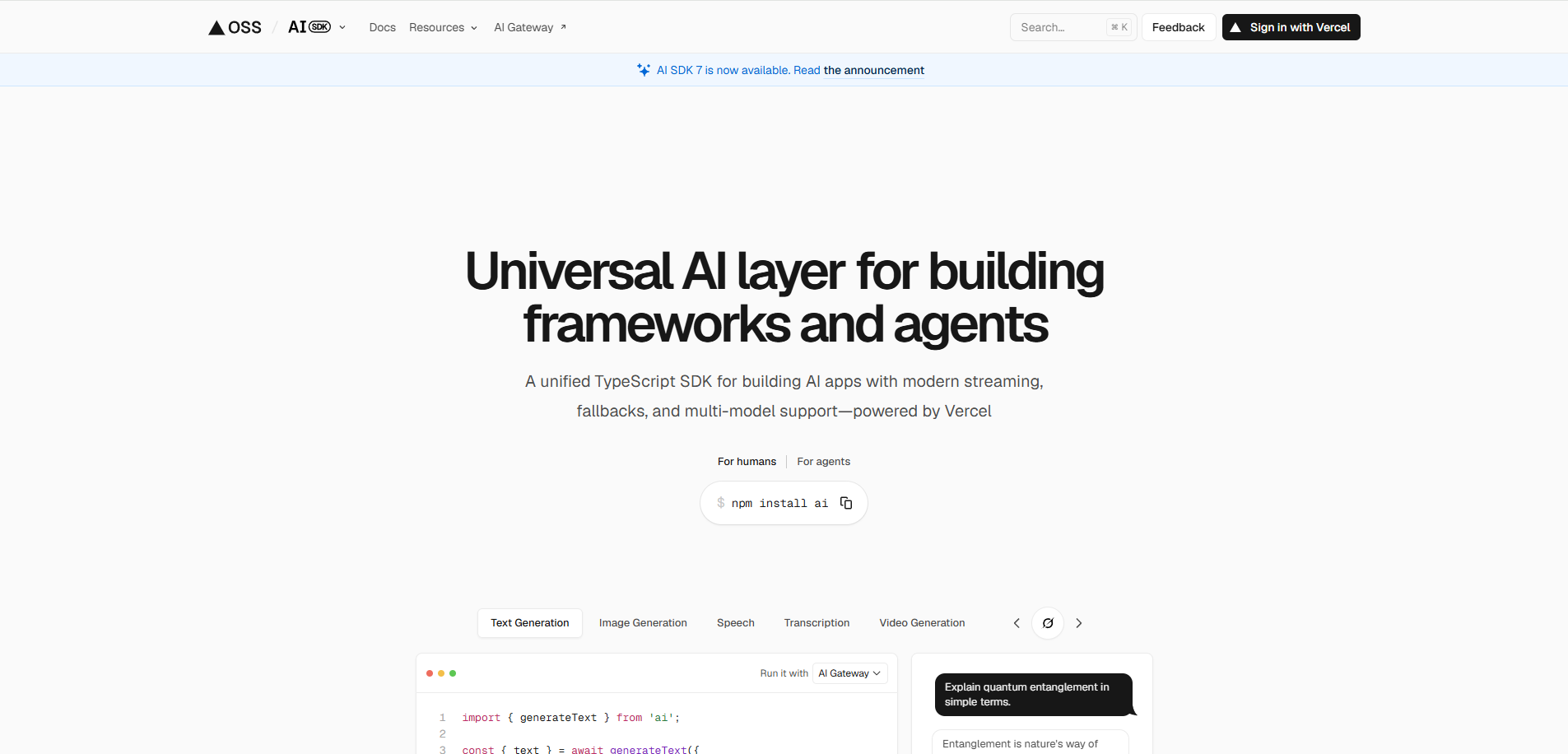
Best for frontend and full-stack TypeScript teams building AI features inside React and Next.js applications.
Score: 6.6/10. Strongest frontend AI integration (9/10), React Server Components support (9/10), and streaming UI primitives (8/10).
Scored lower on backend agent primitives (5/10), multi-agent orchestration (5/10), and enterprise production (5/10).
Product Overview
Vercel AI SDK is a TypeScript toolkit for building AI-powered web applications.
It is strongest when the user experience matters as much as the model call: chat interfaces, copilots, streaming responses, tool-call rendering, structured output, and generative UI inside a React or Next.js app.
The SDK supports multiple model providers through a common interface. It also supports tool calling, structured outputs, streaming, chat state, and frontend hooks for building AI UI quickly.
This is not a replacement for LangChain when the main problem is backend agent orchestration. It is a better fit when the agent experience lives inside the product UI.
Pros and Cons
Pros:
- Strong fit for React and Next.js applications.
- TypeScript-first developer experience.
- Streaming text and UI primitives.
- Useful hooks for chat, completions, and assistant-style interfaces.
- Supports tool calling and structured output.
- Works with multiple model providers.
- Natural fit for teams already deploying on Vercel.
Cons:
- Frontend and app-layer focused.
- Not built for complex backend agent orchestration.
- No deep multi-agent workflow model like LangGraph.
- Production deployment outside Vercel is possible, but the strongest experience is inside the Vercel stack.
- Enterprise governance, release process, backend permissions, and long-running workflow control still need to be handled around the app.
Pricing
SDK is free open source. Vercel platform usage pricing for production deployment.
Setup
Hours for first AI-powered React component. Days for production Next.js deployment.
Tradeoffs
Choose Vercel AI SDK when the AI feature is part of a web app and the UI experience is central.
Choose Mastra when the TypeScript backend needs more agent framework structure: agents, workflows, memory, evals, and observability.
Choose LangGraph when the main problem is stateful backend orchestration.
Choose Rasa when the agent needs to operate across enterprise systems, voice and digital channels, governed releases, and customer-controlled deployment.
#13. SmolAgents: Best LangChain Alternative for Minimal HuggingFace-Native Builds
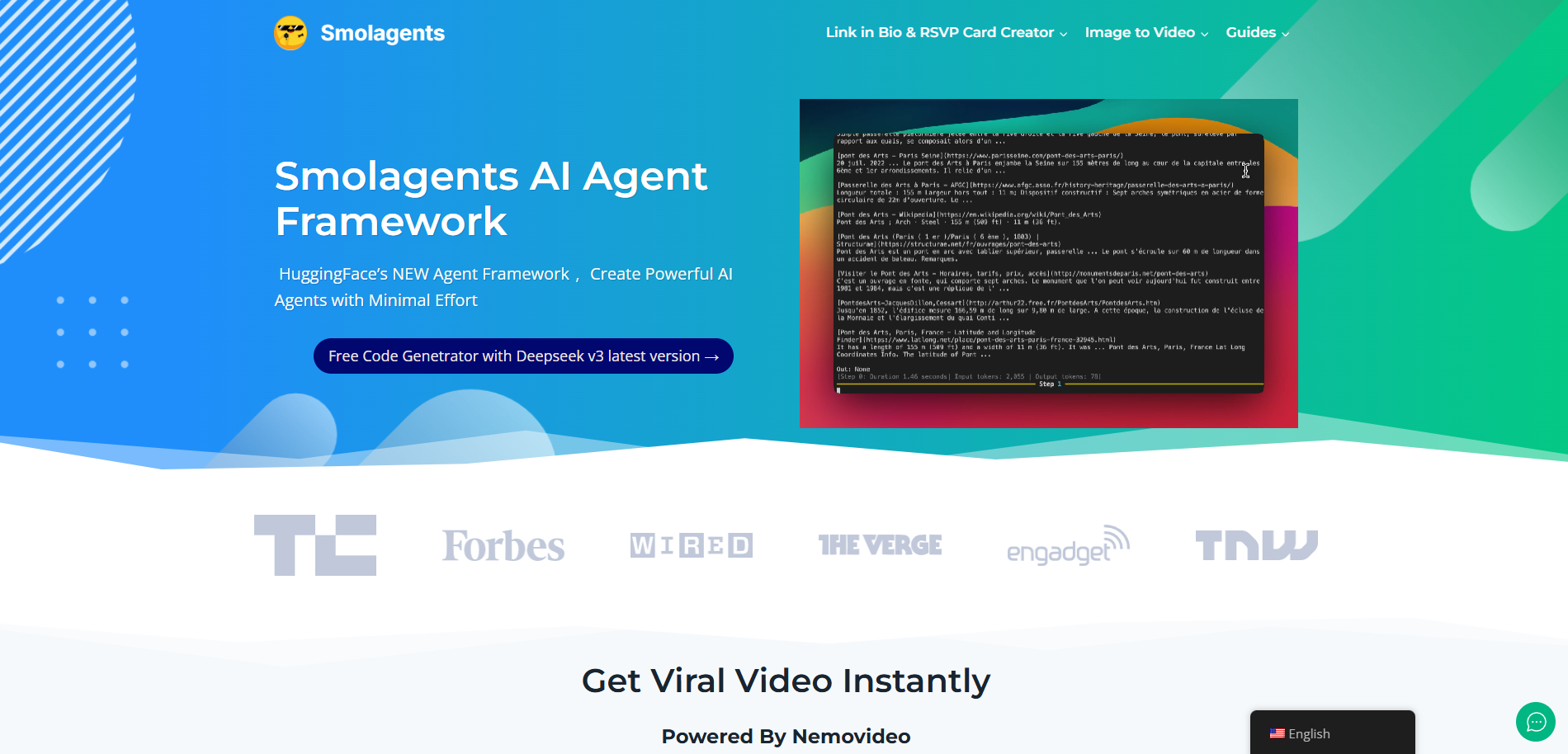
Best for teams that want a small Python agent framework with code execution, simple tool use, and Hugging Face ecosystem support.
Score: 6.4/10. Lightweight design (9/10), code-as-action pattern (8/10), and HuggingFace ecosystem integration (8/10).
Scored lower on production governance (5/10), multi-agent orchestration (5/10), and enterprise deployment (4/10).
Product Overview
SmolAgents is Hugging Face’s lightweight Python framework for building agents.
Its default pattern is a CodeAgent: the agent writes Python code as its action, executes it, reads the result, and continues. It also supports tool-calling agents that use JSON-style tool calls.
SmolAgents works with Hugging Face models and inference providers, but it can also use providers like OpenAI and Anthropic. It includes Hub integrations, Gradio UI support, telemetry, memory, secure code execution guidance, and examples for RAG, browser agents, and multi-agent systems.
SmolAgents is strongest when the team wants to stay close to raw Python and keep the framework small.
Pros and Cons
Pros:
- Small Python framework with minimal abstractions.
- CodeAgent pattern for Python-based actions.
- ToolCallingAgent option for JSON-style tool calls.
- Works with Hugging Face models and major external providers.
- Hub and Gradio integrations.
- Supports telemetry, memory, RAG examples, browser-agent examples, and multi-agent examples.
Cons:
- Code execution needs careful sandboxing and permission design.
- Smaller ecosystem than LangChain.
- Less built out for enterprise governance, deployment, review workflows, and release management.
- Not a standalone voice or conversational AI platform.
- Better for technical teams than non-technical builders.
Pricing
Free under Apache 2.0.
Setup
Hours for minimal agent. Days for HuggingFace ecosystem integration.
Tradeoffs
Choose SmolAgents when the team wants a lightweight Python framework and is comfortable with code execution.
Choose LangGraph when the workflow needs explicit state, checkpointing, durable execution, and human review.
Choose Pydantic AI when typed outputs and application-level validation matter more than code-as-action flexibility.
Choose Rasa when the agent needs to run as part of an enterprise conversational platform across channels, systems, governed releases, and customer-controlled deployment.
Why Choose LangChain Alternatives
Type Safety and Production Performance
Pydantic AI is a stronger fit for Python teams that want typed inputs, validated outputs, dependency injection, and clearer control over agent behavior.
MindsDB reported a major performance improvement after moving from LangChain to Pydantic AI. Overjoy replaced LangChain and LangSmith with Pydantic AI and Logfire to improve observability, debugging, and cost visibility.
For FastAPI-native teams, the main reason to consider Pydantic AI is straightforward: agent code can look more like normal typed Python application code.
Deep Call Stacks and Debugging Pain
LangChain's heavy abstraction creates deep call stacks that make debugging painful when agents fail in production.
The framework's flexibility has accumulated multiple ways to do the same thing across v0 and v1, fragmenting documentation and community knowledge.
Pydantic AI, LangGraph, and CrewAI each reduce a different kind of complexity: Pydantic AI through typed validation, LangGraph through explicit state graphs, and CrewAI through higher-level role and task abstractions.
Vendor-Native Tooling Over Multi-Provider Abstraction
LangChain's value proposition is the multi-provider abstraction layer: swap OpenAI, Anthropic, or Google models without rewriting agent logic.
For teams committed to a single vendor (Anthropic Claude, OpenAI GPT), the abstraction tax is real.
Claude Agent SDK and OpenAI Agents SDK give teams first-party primitives inside each vendor’s stack. Claude Agent SDK is strongest for Claude Code-style file, shell, edit, and research workflows. OpenAI Agents SDK gives OpenAI-first teams agents, tools, handoffs, tracing, streaming, and guardrails.
Enterprise Platform Primitives for Regulated Production
LangChain is a framework, not an enterprise agent platform. For regulated production, teams still need to design the surrounding operating layer: deployment, monitoring, tests, permissions, audit trails, release workflows, backend actions, and channel strategy.
Rasa is the platform option when the agent needs to run inside the company’s own architecture, across voice and digital channels, with customer-controlled deployment and governed release processes.
Stateful Workflows With Durable Execution
Plain chains and agent loops can become hard to manage when workflows need branching, retries, checkpoints, pauses, resumes, and human approval.
LangGraph adds graph-based state management with nodes, edges, persistence, checkpointing, and human-in-the-loop patterns. For teams that want to stay in the LangChain ecosystem, LangGraph is the main path for stateful agent workflows.
Specialized Architectural Fit
LangChain is broad, which is useful when teams need many integrations and patterns in one ecosystem. Some teams still prefer a narrower tool built around the main job.
For RAG-heavy workloads, LlamaIndex is usually a stronger starting point. For role-based multi-agent work, CrewAI is simpler to start with. For Microsoft .NET stacks, Semantic Kernel fits better. For TypeScript and Next.js web apps, Mastra and Vercel AI SDK are closer to how those teams already build.
Multi-Language SDK Support Beyond Python
LangChain supports Python and JavaScript/TypeScript, but not every team wants to build around that ecosystem.
For .NET/C# teams, Semantic Kernel is closer to the existing stack. For TypeScript web teams, Mastra and Vercel AI SDK fit more naturally. For Java enterprise teams, Semantic Kernel is also worth considering.
How to Choose the Right LangChain Alternative
Step 1: Identify Your Primary Architectural Constraint
The architectural constraint determines the category before features matter:
- Pure framework flexibility for engineering R&D? LangGraph or Pydantic AI.
- Multi-agent role-based collaboration? CrewAI.
- Vendor-native tooling? Claude Agent SDK or OpenAI Agents SDK.
- RAG-heavy knowledge agents? LlamaIndex.
- .NET/Azure stack? Semantic Kernel.
- TypeScript/Next.js? Mastra or Vercel AI SDK.
- Enterprise platform for regulated conversational AI? Rasa.
Step 2: Score Type Safety and Production Benchmarks
Pydantic AI is strongest when the agent needs to behave like typed Python application code: validated inputs, structured outputs, dependency injection, and clearer failure handling.
For FastAPI-native teams, this matters. For research agents, early prototypes, or open-ended multi-agent experiments, type safety may matter less than flexibility, speed, or orchestration depth.
Step 3: Evaluate Observability and Debugging Story
Do not treat observability as an add-on. The framework decision should include how the team will trace runs, inspect tool calls, evaluate outputs, monitor cost, and debug failures.
Common options include LangSmith for LangChain/LangGraph, Pydantic Logfire for Pydantic AI, Langfuse for multi-framework tracing, and Arize Phoenix for evaluation and observability.
Step 4: Run a Real Production Workload, Not a Demo
Build the same use case on two shortlisted options and measure what matters for your team: latency, error rate, cost, debugging time, code complexity, tool reliability, and deployment effort.
A demo can show that the framework works. A real workload shows whether your team can operate it.
Step 5: Decide Whether You Need a Framework or a Platform
If the team needs to design deployment, permissions, audit trails, testing, monitoring, voice and digital channels, backend actions, review workflows, and release processes around the framework, the problem may no longer be framework selection.
That is where Rasa fits: regulated production agents that need to run inside the company’s architecture, across systems and channels, with clear ownership over deployment and operations.
Key Features to Look for in LangChain Competitors
Type Safety With Pydantic Models or Equivalent
Validated inputs and outputs through Pydantic models or equivalent type systems. Catches schema and validation issues earlier, before they turn into harder-to-debug runtime failures.
Pydantic AI is the leading type-safe alternative; LangGraph and Pydantic AI both support typed state.
Stateful Workflows With Cycles and Durable Execution
Graph-based state machines for cycles, branching, retries, checkpointing, and human-in-the-loop approvals.
LangGraph is the leading abstraction; Pydantic AI also supports graph patterns for complex flows.
Observability and Tracing Built-In or Native
Production agents need traces, evaluations, and prompt versioning.
LangSmith (LangChain ecosystem), Pydantic Logfire (Pydantic AI native), Langfuse (multi-framework), and Arize for evaluation.
The observability story is non-framework but determines production success.
Multi-Agent Orchestration Primitives
Role/goal/task abstraction (CrewAI), state graph multi-agent (LangGraph), conversational multi-agent (AutoGen/AG2), or vendor-native handoffs (OpenAI Agents SDK).
Choose the abstraction that matches the team's mental model for the use case.
Vendor-Native Tool Execution
Claude Agent SDK includes built-in file, bash, edit, search, and computer-use tools. OpenAI Agents SDK includes agents, tools, handoffs, tracing, streaming, and guardrails.
These first-party SDKs are the cleaner path when the team has already chosen Anthropic or OpenAI as the runtime.
RAG and Data-Connector Ecosystem
For RAG-heavy agents, LlamaIndex is often the stronger starting point for parsing, indexing, retrieval, connectors, and knowledge workflows.
Language and Framework Fit
Python-first (LangGraph, Pydantic AI, CrewAI, LlamaIndex, Haystack, SmolAgents). Multi-language (Semantic Kernel C#/Python/Java). TypeScript-first (Mastra, Vercel AI SDK).
Match the framework's primary language to the team's existing stack.
Enterprise Production Primitives
Deployment control, permissions, audit trails, testing, monitoring, backend actions, voice and digital channels, review workflows, and release processes.
For regulated production agents, these are usually platform and operating-model questions, not just framework questions. Rasa is the platform option when teams need customer-controlled deployment and governed operation across systems and channels.
Cost Comparison: LangChain vs. Alternatives
Most LangChain alternatives are free open source. The real cost comparison is engineering time, token consumption, and observability tooling rather than license fees.
- Rasa: Developer Edition free (1,000 conversations/month). Enterprise custom based on annual conversation volume. Decoupled from per-token consumption.
- LangChain / LangGraph: Free under MIT license. LangSmith observability Plus from $39/seat/month, Enterprise custom. LangGraph Platform managed runtime custom enterprise. LLM token costs accumulate separately.
- Pydantic AI: Free under MIT license. Pydantic Logfire observability separate pricing. LLM token costs accumulate separately. Lower token consumption per task vs LangChain per published benchmarks.
- CrewAI: Open-source core free (Apache 2.0). CrewAI AMP enterprise custom for UI, RBAC, deployments.
- Claude Agent SDK: SDK free. Pay-as-you-go Anthropic token pricing. Higher token cost at scale per public production reviews.
- OpenAI Agents SDK: SDK free. Pay-as-you-go OpenAI token pricing.
- AutoGen / AG2: Free under MIT license.
- Microsoft Semantic Kernel: Free under MIT license. Azure consumption pricing for hosted services.
- LlamaIndex: Open-source free. LlamaCloud managed enterprise custom pricing.
- Haystack: Open-source free. Haystack Enterprise custom through deepset.
- Mastra: Free open source.
- Vercel AI SDK: SDK free. Vercel platform usage pricing for production deployment.
- SmolAgents: Free under Apache 2.0.
Which of the LangChain Alternatives Is Right for Your Team?
- Need enterprise platform ownership for regulated production: Rasa. Patented Orchestrator for architectural governance over agent behavior, native voice and chat orchestration, self-hosted deployment. Best when the team has graduated past framework flexibility and needs platform primitives.
- Need stateful production multi-agent workflows: LangGraph. LangChain's official evolution with graph state machines, durable execution, Klarna/Uber/JPMorgan refs.
- Need type-safe Python agent development: Pydantic AI. Strong fit for typed inputs, validated outputs, dependency injection, structured tool calls, and FastAPI-style Python teams.
- Need multi-agent role-based collaboration: CrewAI. Role, goal, task, crew, and flow primitives for fast multi-agent workflow building.
- Need Anthropic-native coding and research agents: Claude Agent SDK. Built-in file/bash/edit/computer-use tools, same agent loop as Claude Code.
- Need OpenAI-native agent builds: OpenAI Agents SDK. First-party SDK with agents, tools, handoffs, tracing, streaming, and guardrails.
- Need multi-agent conversational research: AutoGen / AG2. Microsoft Research origins, AG2 community fork.
- Need .NET/C# and Azure stack: Microsoft Semantic Kernel. First-class .NET, Azure AI Foundry integration.
- Need RAG and knowledge-heavy agents: LlamaIndex. Strong fit for parsing, indexing, retrieval, connectors, and private knowledge workflows.
- Need RAG pipelines and search-heavy AI apps: Haystack. Strong fit for retrieval pipelines, document stores, hybrid search, and deepset-backed enterprise deployments.Need TypeScript/Node.js web-integrated agents: Mastra. TypeScript framework for agents, workflows, memory, evals, observability, and web-stack integration.
- Need Next.js frontend AI applications: Vercel AI SDK. React Server Components, streaming UI primitives.
- Need minimal HuggingFace-native agent builds: SmolAgents. Lightweight, code-as-action pattern, Apache 2.0.
FAQs
What is the best LangChain alternative in 2026?
LangGraph if you want more control and explicit state management as LangChain's official evolution.
Pydantic AI if you want strict typing, validated outputs, and the strongest published production performance benchmarks.
CrewAI if you want a multi-agent team abstraction with faster onboarding.
Rasa if you need an enterprise agent platform for regulated production, customer-controlled deployment, voice and digital channels, backend integrations, and governed release workflows.
Is LangGraph really an alternative to LangChain or just an evolution?
Both. LangGraph is LangChain's official agent-specific evolution built by the LangChain team. It addresses many of the criticisms of original LangChain (linear chain primitive, weak stateful workflows, deep abstractions) with graph-based state machines, durable execution, and explicit cycles.
For most teams searching for 'LangChain alternative' meaning 'something cleaner than LangChain in the same ecosystem,' LangGraph is the answer.
For teams that want a fundamentally different architecture (type safety, vendor-native, enterprise platform), Pydantic AI, vendor SDKs, or Rasa fit better.
Pydantic AI vs LangChain: which is better for production?
Pydantic AI is a better fit when the agent needs typed inputs, validated outputs, structured tool calls, and clearer failure handling inside a Python application.
MindsDB reported a major performance improvement after moving from LangChain to Pydantic AI. Overjoy replaced LangChain and LangSmith with Pydantic AI and Logfire to improve debugging, observability, and cost visibility.
CrewAI vs LangGraph: which should I pick?
Pick CrewAI when the work splits naturally into specialist roles (researcher, writer, editor) and you want a working multi-agent prototype in an afternoon.
Pick LangGraph when one workflow needs cycles, branching, retries, durable checkpoints, or a real human approval step.
CrewAI optimizes for fast multi-agent prototyping with role-based abstraction; LangGraph optimizes for explicit stateful workflow control with production durability.
Is the Claude Agent SDK a real LangChain alternative or just an Anthropic-specific tool?
It’s a real alternative for engineering teams committed to Claude as the strategic LLM. The Claude Agent SDK is Anthropic's first-party agent framework, the same agent loop used by Claude Code, with built-in file, bash, edit, search, and computer-use tools.
For multi-provider teams that need to swap models, LangChain's abstraction layer or Pydantic AI's model-agnostic design fit better.
For Claude-committed teams, the SDK is usually simpler than adding a multi-provider framework layer.
Which LangChain alternative has the best multi-agent support?
CrewAI for role-based multi-agent collaboration with agents, tasks, crews, flows, and a large open-source community.
LangGraph for state-graph multi-agent with explicit control over coordination.
AutoGen/AG2 for conversational multi-agent with research provenance.
OpenAI Agents SDK for vendor-native handoffs.
The right choice depends on the multi-agent mental model: roles and goals (CrewAI), state graphs (LangGraph), conversations (AutoGen), or handoffs (OpenAI Agents SDK).
Are there any TypeScript LangChain alternatives?
Yes. Mastra is the leading TypeScript-first AI agent framework with first-class TypeScript design (not bindings over Python) and Next.js/Vercel stack alignment.
Vercel AI SDK is the leading TypeScript SDK for frontend-first AI applications with React Server Components and streaming UI.
LangChain has JavaScript/TypeScript support, but TypeScript-native teams may prefer Mastra for agent applications or Vercel AI SDK for AI features inside React and Next.js apps.
What is the best LangChain alternative for RAG?
LlamaIndex.LlamaIndex is usually the strongest starting point for RAG-heavy agents: parsing, indexing, retrieval, connectors, and private knowledge workflows.
For document search, internal knowledge bases, and grounded answers over enterprise content, LlamaIndex is often a better fit than a general-purpose framework.
Why would I choose Rasa over LangChain or LangGraph?
Choose Rasa when the agent needs to run inside the company’s own architecture, across voice and digital channels, with backend integrations, customer-controlled deployment, audit-friendly behavior, and governed release workflows.
Rasa is not a lightweight agent framework. It is the developer platform for enterprise AI agents. It fits when the problem is no longer just building agent logic, but operating agents in production across systems, teams, channels, and policies.
Can I use LangChain and Rasa together?
Yes, but do not assume this is the default architecture.
Teams can connect LangChain or LangGraph-based logic to Rasa through custom actions, APIs, or MCP-style integration patterns. In that setup, LangChain or LangGraph can handle specialized reasoning or workflow logic, while Rasa handles the enterprise conversational layer: channels, orchestration, backend actions, deployment model, and governance workflows.
How do I migrate from LangChain to Pydantic AI?
Three-phase migration:
(1) Identify LangChain chains, agents, and tools that benefit most from type safety (typically tool-calling agents with structured outputs).
(2) Rewrite agent logic as Pydantic AI functions with typed input/output models. Pydantic AI's design treats agents like well-typed functions: define inputs, outputs, and dependencies with Pydantic models.
(3) Reuse existing LLM provider connections (OpenAI, Anthropic, Gemini, Cohere all work natively) and observability stack. Scope migration by workload. Start with the LangChain components that benefit most from typed outputs, structured tool calls, and clearer validation. Timeline depends on the number of tools, prompts, integrations, evals, and production dependencies.
Migration typically takes 1-2 weeks per production agent.
Is LangChain dying or being replaced in 2026?
Not dying. LangChain remains one of the most widely adopted open-source ecosystems for LLM applications and agents.
However, LangGraph (LangChain's own evolution) has captured the agent-specific use cases, and Pydantic AI, CrewAI, and vendor-native SDKs have captured production builds where type safety, multi-agent abstraction, or vendor primitives matter more than ecosystem breadth.
The crowded middle is consolidating around LangGraph and the vendor SDKs as 2026 production standards.
Which LangChain alternative supports voice agents?
Rasa is the strongest option in this list for enterprise conversational agents that need voice and digital channels in one operating model.
Rasa supports voice through connectors and speech-provider integrations. Pure frameworks like LangChain, LangGraph, Pydantic AI, and CrewAI do not provide a full enterprise voice operating model by themselves, so teams need to assemble the voice pipeline, provider integrations, and channel behavior around the framework.
Which LangChain alternative is best for enterprise governance?
Rasa for enterprise agent platform governance: customer-controlled deployment, audit-friendly conversation behavior, backend action control, testing, review workflows, release processes, and voice/digital channel operations.
LangGraph for framework-level state durability, checkpointing, and human-in-the-loop workflows.
They can be complementary, but only when the architecture needs both: LangGraph for specialized workflow logic, Rasa for the enterprise conversational platform layer.
What about OpenAI Swarm, Atomic Agents, or other emerging LangChain alternatives?
OpenAI Swarm was an experimental research framework that informed the OpenAI Agents SDK design, but it isn’t the production path forward.
Atomic Agents, DSPy, Mirascope, and other emerging frameworks have niche communities but haven’t reached the production adoption of the 13 alternatives covered in this guide.
For engineering teams making framework decisions in 2026, the leading alternatives (LangGraph, Pydantic AI, CrewAI, Claude Agent SDK, OpenAI Agents SDK, Semantic Kernel, LlamaIndex) cover the vast majority of credible production builds.
Niche framework adoption decisions are best made after the leading alternatives have been ruled out.
.png)
.png)
.png)