SoundHound AI is a publicly traded voice AI company best known for voice-first automation. Its product portfolio covers embedded voice, restaurant ordering, drive-thru automation, customer service agents, and the Amelia conversational AI platform.
SoundHound is a strong fit when the buyer wants a managed voice AI platform with packaged industry use cases. Its clearest strengths are in automotive, restaurants, customer service, and commerce-led voice experiences.
For enterprise buyers, the question is whether SoundHound’s operating model matches how they need to build and run AI agents. Some teams want a managed vendor to own more of the voice experience. Others need more control over deployment, engineering workflow, speech providers, model choices, release process, and backend integrations.
This is where SoundHound alternatives become relevant. A bank, telecom, healthcare organization, or government team may need voice AI that fits into its own architecture rather than a vendor-managed stack. A contact center team may want stronger visual tooling. A developer team may want a voice API. A CX team may want a managed support agent with faster rollout.
This guide compares the best SoundHound alternatives for enterprise voice and conversational AI in 2026. The focus is not only who has the most features. It is which platform fits the buyer’s channel strategy, deployment needs, governance model, pricing expectations, and long-term operating model.
SoundHound Alternatives Comparison and Ratings Chart
10 Best SoundHound Alternatives for Enterprise Voice and Conversational AI in 2026
The platforms below are organized by buyer need, so you can compare alternatives by operating model, voice maturity, deployment fit, and long-term ownership.
#1. Rasa: Best SoundHound Alternative for Enterprise Ownership and Self-Hosted Voice
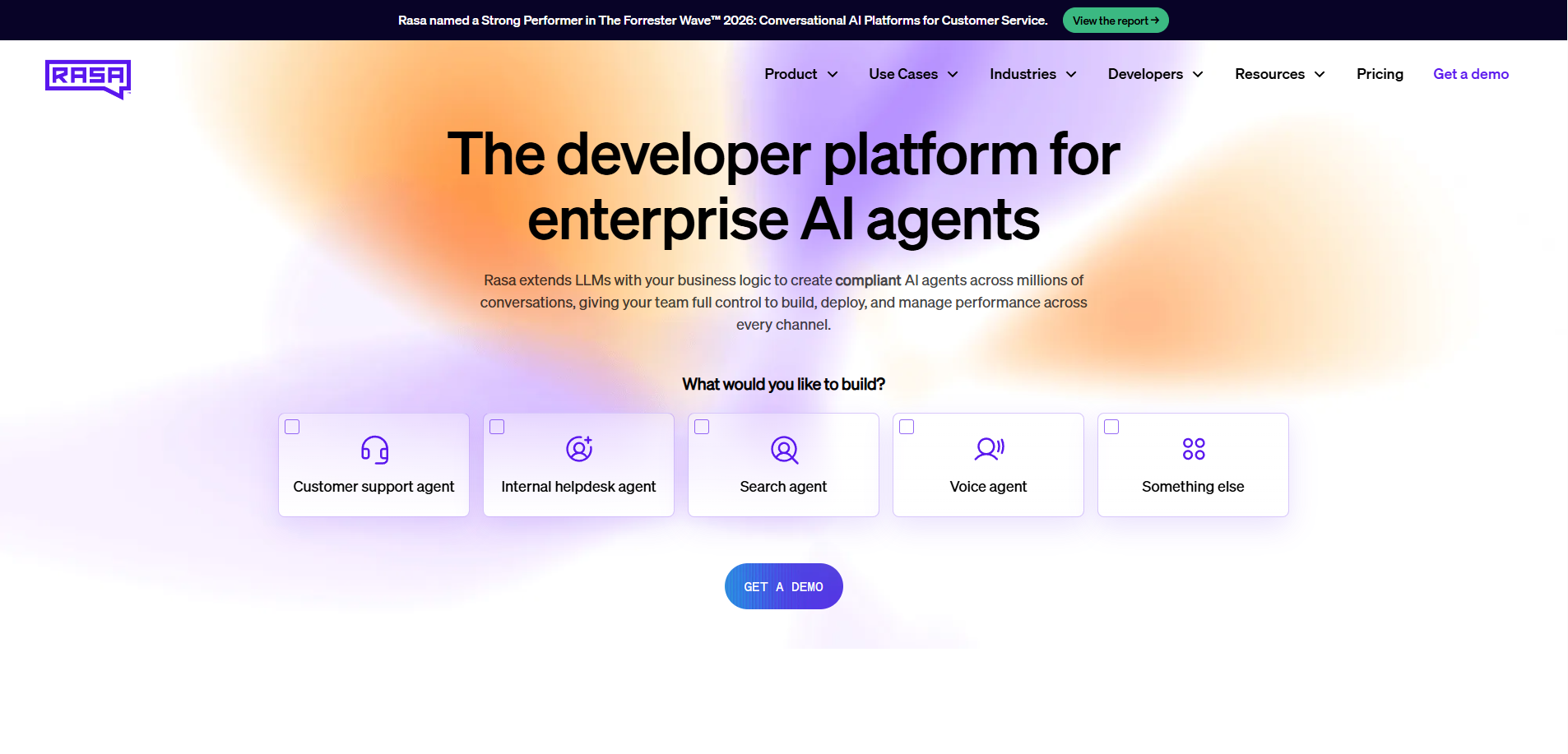
Rasa is the developer platform for enterprise AI agents. It is a strong SoundHound alternative for technical enterprise teams that want voice and digital agents to run inside their own architecture, release process, and security model.
SoundHound is a strong fit when the buyer wants a managed voice AI platform with packaged solutions for industries like restaurants, automotive, customer service, and commerce. Rasa fits a different buyer. It is built for enterprises that want to own how agents are built, deployed, integrated, tested, reviewed, and improved over time.
Deutsche Telekom, Autodesk, Swisscom, and Groupe IMA run Rasa in production across large-scale customer and employee service use cases. For regulated teams in banking, healthcare, government, insurance, and telecom, the draw is not only voice support. It is the ability to connect voice agents to the same governed operating model used for digital agents, backend systems, release workflows, and enterprise approvals.
Score: 9.4/10. Highest marks for governance (10/10), deployment flexibility (10/10), voice (10/10), and pricing transparency (9/10).
Scored lower on review volume (6/10) vs. SoundHound's established Amelia customer base.
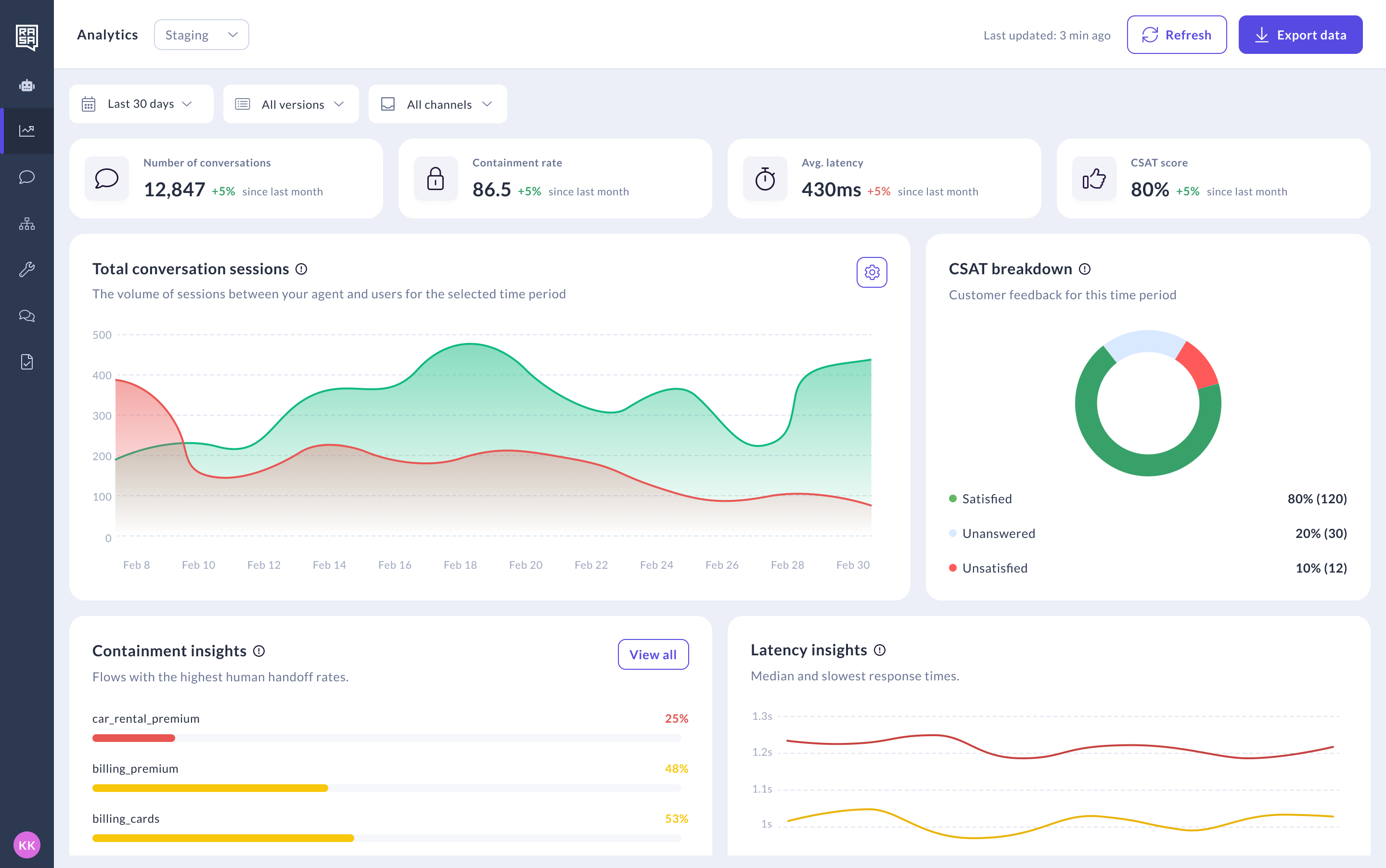
Product Overview
Rasa gives technical teams a platform for building conversational agents that can handle complex service journeys across voice and digital channels. The platform is organized around the Framework, the patented Orchestrator, and Studio.
The Framework gives engineering teams a code-first foundation for building agents that fit their existing software workflow. Teams can use version control, testing, review, CI/CD, staging, and controlled releases instead of managing agent behavior only through a hosted vendor console.
The Orchestrator manages how agents handle conversations, call tools, follow business logic, and maintain state across turns. This is important when the agent is not just answering questions, but helping with real service work like claims intake, troubleshooting, account changes, appointment handling, employee support, or customer service automation.
Studio gives non-technical team members a way to review, test, and improve agents without taking ownership away from engineering. Conversation designers, product owners, and subject-matter experts can inspect behavior, review test results, and contribute to improvements while the codebase remains the source of truth.
For voice use cases, Rasa supports voice through channel connectors and speech-provider integrations. This makes it a better fit when voice is one part of a broader enterprise agent strategy rather than a standalone phone automation project. Teams can connect telephony and speech providers while keeping agent logic, backend actions, and release governance under their own control.
Pricing
Developer Edition (Free): Full access to Rasa. One bot per company, up to 1,000 external conversations/month (100 for internal agents). Community support via the Rasa Forum.
Enterprise (Custom): Premium support, dedicated CSM, advanced security features, custom onboarding, Rasa Studio for refining design and review. Contact Rasa for a quote.
Pricing is based on annual conversation volume, not per-interaction voice usage. Contrast with SoundHound's sales-led enterprise pricing, where Amelia, Smart Answering, Smart Ordering, Dynamic Drive-Thru, and Chat AI are sold through enterprise sales with custom quotes and no published rate cards.
Integrations
Rasa connects to enterprise systems through custom actions, APIs, MCP-style integration patterns, and channel connectors. Teams can integrate with CRM, ERP, ticketing, contact center, identity, billing, and internal workflow systems.
For voice, Rasa can work with telephony and speech providers through supported connectors and integrations. This gives teams more flexibility than a single-vendor speech stack, while still keeping the agent experience connected across channels.
Setup
Rasa is designed for technical teams that want to build and operate agents as part of their own software environment. It supports self-hosted, private-cloud, and air-gapped deployment.
This makes Rasa a better fit for enterprises that need customer-controlled deployment, strong security review, backend integration, and release governance. It is not the fastest option for a team that wants a vendor to build and run everything for them.
Pros and Cons
Pros:
- Customer-controlled deployment, including self-hosted, private-cloud, and air-gapped options.
- Strong fit for engineering workflows, including code review, tests, staging, and controlled releases.
- Voice and digital channels can share the same agent operating model.
- Supports provider choice across models, speech services, infrastructure, and integrations.
- Built for complex service journeys that require backend actions and governed workflows.
- Studio helps non-technical teams review and improve agents without removing engineering ownership.
Cons:
- Requires technical resources or an implementation partner.
- Not a turnkey managed voice service.
- May be more platform than needed for simple phone bots, standalone voice APIs, or narrow restaurant ordering use cases.
Tradeoffs
Choose SoundHound if you want a managed voice AI vendor with packaged solutions for voice-first use cases, especially in restaurants, automotive, commerce, and customer service.
Choose Rasa if your team needs voice and digital agents to become part of your own enterprise architecture. Rasa is stronger when the agent needs to connect to internal systems, follow a controlled release process, support regulated workflows, and be improved by both technical and business teams over time.
SoundHound can be the better fit when the vendor should own more of the voice stack and delivery model. Rasa is the better fit when your enterprise wants to own the agent platform, the deployment model, the integration layer, and the long-term operating model.
Support
Enterprise customers receive premium support, onboarding guidance, architecture support, deployment guidance, and best-practice reviews.
Community support is available through the Rasa Forum.
Mini Case Study
Deutsche Telekom deployed Rasa for internal IT support across 10,000+ employees in German and English. 50% of service desk inquiries resolved autonomously. 30% reduction in agent workload. Non-technical IT experts use Rasa Studio to design conversation flows.
Read the full case study here >
See How Rasa Compares to SoundHound's Managed Voice Stack
#2. Cognigy (NICE): Best SoundHound Alternative for Contact Center Voice + On-Premises
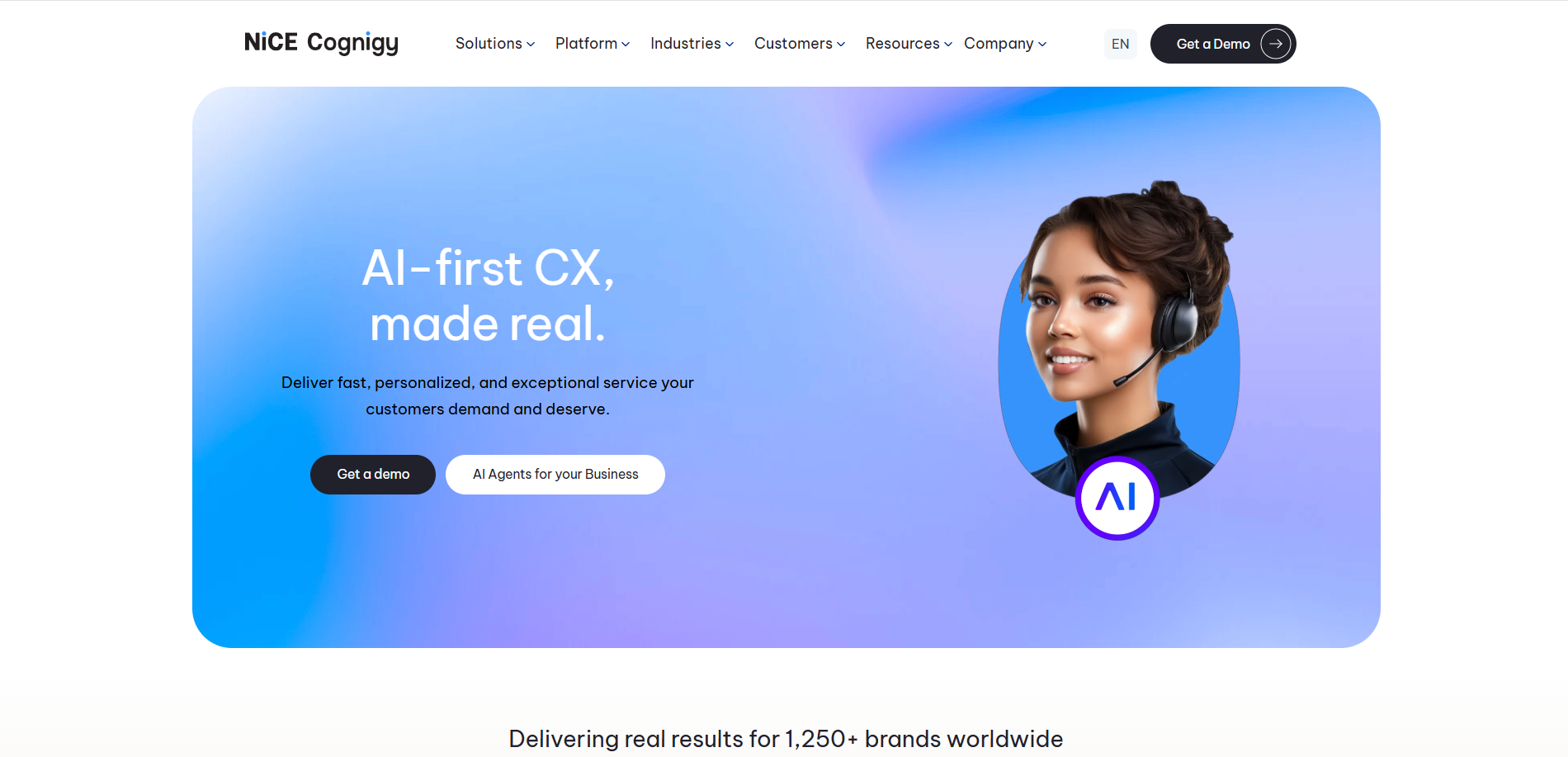
Best for large contact centers that want a mature conversational AI platform with strong voice automation, visual tooling, agent assist, analytics, and enterprise deployment options.
Score: 7.6/10. Strong omnichannel (9/10), native voice (9/10), and on-premises option (8/10).
Scored lower on governance depth vs. Rasa's Orchestrator (6/10), pricing transparency (5/10), and NICE acquisition roadmap risk (6/10).
Product Overview
Cognigy is an enterprise conversational AI platform for customer service automation. It supports chat and voice agents, with Cognigy Voice Gateway connecting AI agents to phone conversations and contact center systems.
The platform is a strong SoundHound alternative when the buyer wants a contact-center-focused platform rather than a broader voice AI portfolio spanning restaurants, automotive, commerce, and embedded voice. Cognigy is especially relevant for teams that need visual building tools, omnichannel automation, agent assist, and contact center integration in one platform.
Cognigy is now part of NICE, which gives it a stronger position inside the enterprise CX and contact center market. That can be an advantage for organizations already invested in NICE CXone or looking for a broader CX platform strategy. It also means buyers should evaluate how Cognigy’s roadmap, packaging, and operating model will evolve inside the NICE portfolio.
Pros and Cons
Pros:
- Strong contact center focus.
- Voice automation through Cognigy Voice Gateway.
- Visual tooling for building and managing conversational experiences.
- Agent assist, analytics, and enterprise CX features.
- On-premises deployment documentation is publicly available.
- Strong fit for organizations already using or evaluating NICE.
Cons:
- Pricing is sales-led and not published as a simple public rate card.
- Voice Gateway may require a separate license and concurrent-line planning.
- Buyers should evaluate how tightly Cognigy will be packaged with NICE CXone over time.
- Less suited to teams that want the agent platform to live fully inside their own engineering workflow.
Pricing
Pilots from $2,500-$5,000/month. Enterprise $100K-$350K+/year. Voice minutes and LLM tokens bill separately.
Setup
Weeks for pre-built templates. 2-4 months for enterprise deployments.
Tradeoffs
Cognigy is one of the strongest SoundHound alternatives for enterprise contact center voice. It is a better fit than SoundHound when the buyer wants a contact-center automation platform with visual tooling, Voice Gateway, agent assist, and NICE ecosystem alignment.
Rasa is the stronger fit when the buyer wants the agent platform to sit inside its own software architecture. Technical teams choose Rasa when they need deeper control over deployment, integration logic, model and provider choice, testing, release workflow, and long-term platform ownership.
Choose Cognigy if your priority is a mature contact center AI platform with a strong visual builder and NICE alignment. Choose Rasa if your priority is building enterprise agents as part of your own engineering and service operating model.
#3. PolyAI: Best SoundHound Alternative for Premium Contact Center Voice
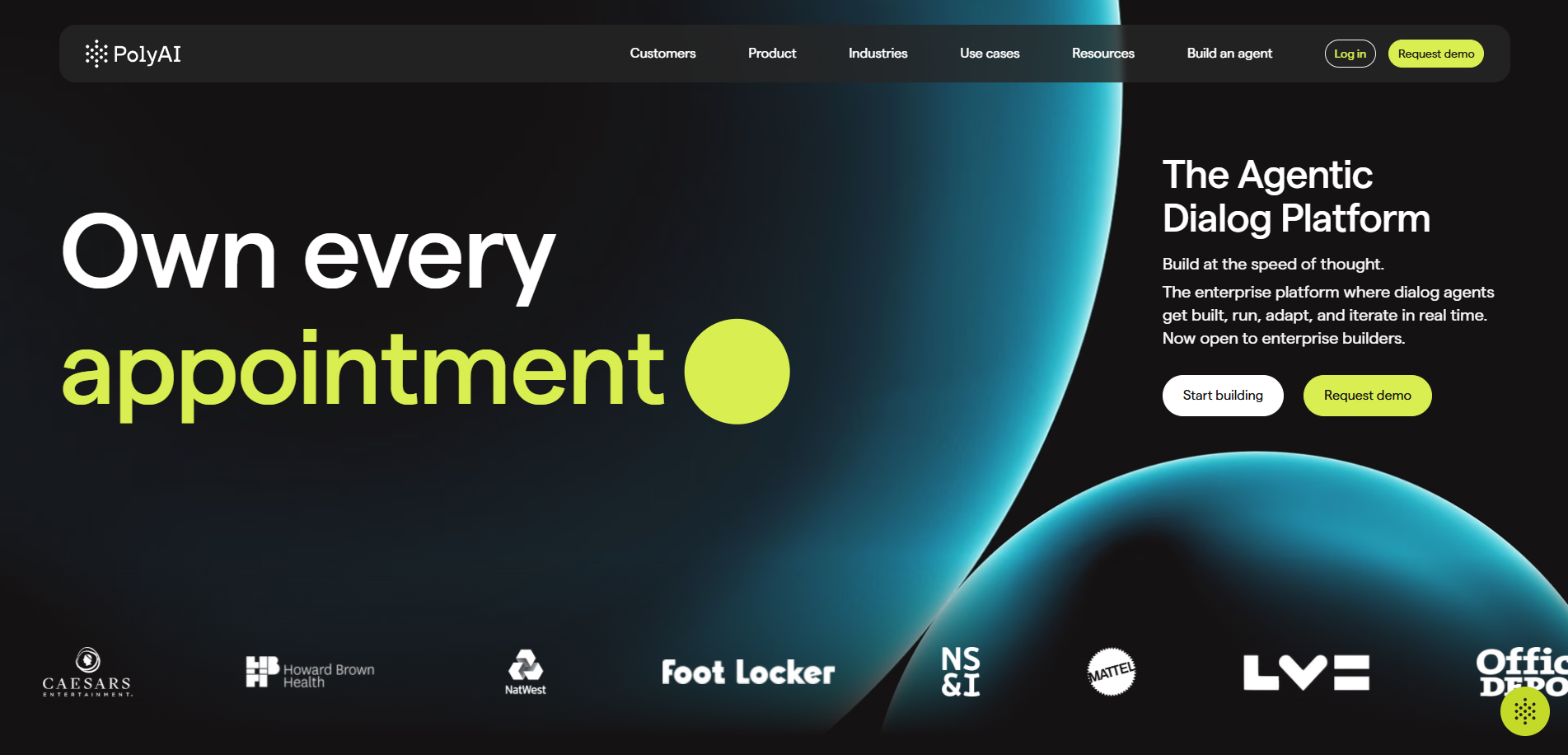
Best for enterprises where phone automation is the main priority and the caller experience needs to feel natural, fast, and carefully controlled.
Score: 7.4/10. Highest voice quality (10/10) and customer satisfaction metrics (9/10).
Scored lower on deployment flexibility (4/10), pricing transparency (4/10), and self-hosted option (2/10).
Product Overview
PolyAI is a voice-first enterprise CX platform for customer service. Its strongest fit is the contact center, especially when the buyer wants a premium phone agent rather than a general conversational AI platform.
PolyAI’s platform is built around Agent Studio, where teams can design, deploy, and monitor agents across voice, chat, and SMS. Its voice stack is a major part of the product. PolyAI uses its own telephony-optimized model, Raven, and provides detailed voice controls for things like ASR biasing, DTMF handling, pronunciation, interruptions, and call handoff.
This makes PolyAI a strong SoundHound alternative when the buyer is mainly evaluating call quality, latency, and voice experience. It is especially relevant for hotels, travel, retail, restaurants, financial services, healthcare, insurance, telecom, and other high-volume service environments where phone calls remain central.
PolyAI is not just a no-code tool. It also offers an Agent Development Kit for teams that want to work with YAML, Python, validation, branches, and review workflows. The production environment still runs through PolyAI’s managed platform.
Pros and Cons
Pros:
- Strong voice-first product focus.
- Designed for enterprise contact center automation.
- Rich telephony controls for real phone conversations.
- Supports voice, chat, and SMS from the same platform.
- Developer tooling is available through PolyAI’s ADK.
- Built-in review, analytics, safety, and production monitoring.
Cons:
- Custom enterprise pricing, with no simple public rate card.
- Managed platform model. Public materials do not describe a customer self-hosted deployment option.
- Best fit is voice-led CX, not broader enterprise agent ownership.
- Less suitable for teams that want the agent platform to sit fully inside their own engineering and deployment environment.
Pricing
Custom enterprise pricing. Typically positioned at a premium.
Setup
Weeks for vendor-led implementation.
Tradeoffs
PolyAI is a strong SoundHound alternative when the main requirement is a premium managed voice agent for the contact center. It is a better fit than many general-purpose platforms when phone quality, latency, and telephony behavior are the deciding factors.
Rasa fits a different buyer. Choose Rasa when voice is one channel in a broader enterprise agent strategy, and the team needs ownership of deployment, backend integrations, release workflow, model choices, and governance across voice and digital journeys.
Choose PolyAI if the priority is a managed, voice-first contact center platform. Choose Rasa if the priority is building enterprise agents as part of your own architecture and long-term operating model.
4.5/5 Gartner Peer Insights (40+ reviews).
#4. Kore.ai: Best SoundHound Alternative for Broad Enterprise Agent Programs
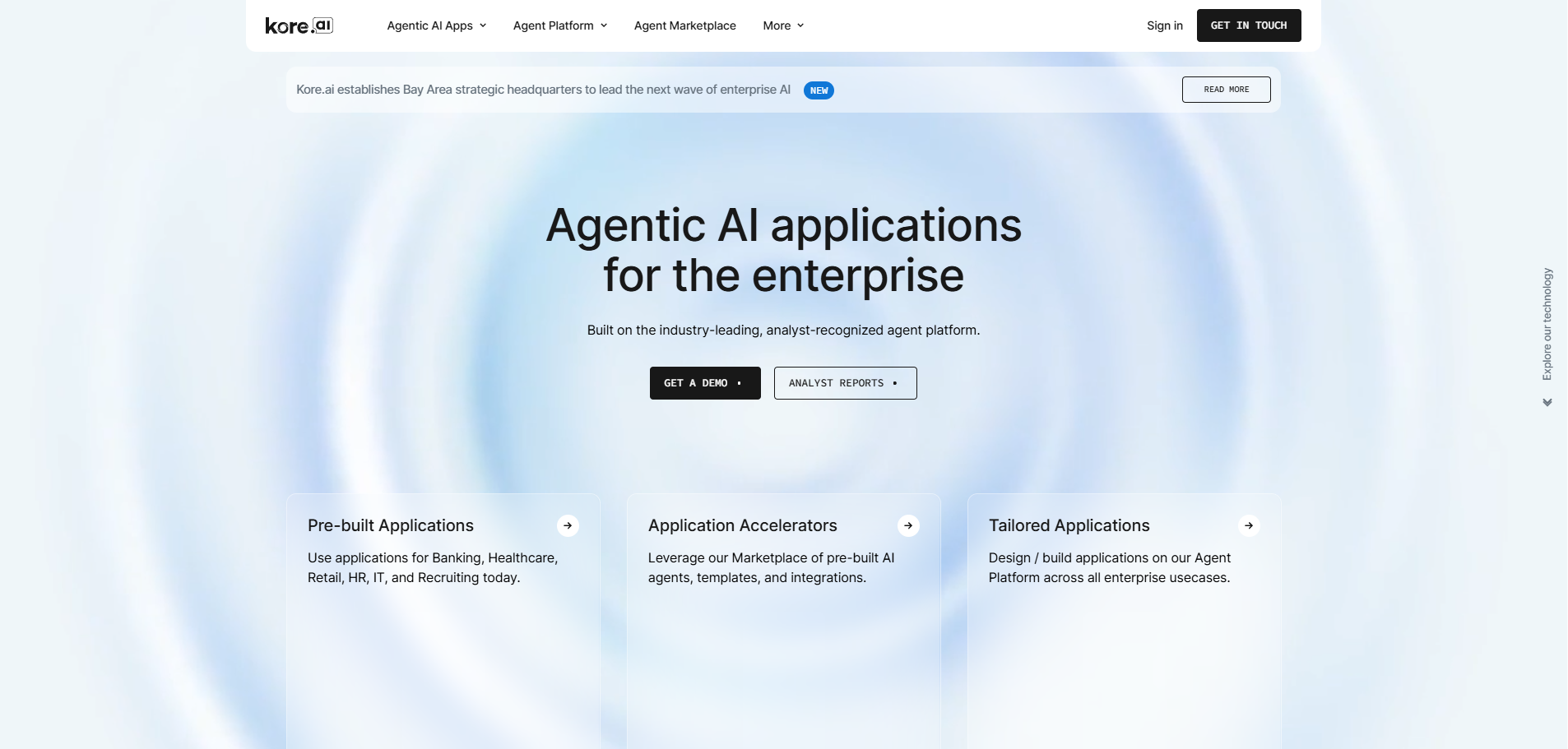
Best for large enterprises that want a wide AI agent platform for customer service, employee service, industry agents, contact center automation, and multi-agent initiatives.
Score: 7.2/10. Strong enterprise depth (8/10), on-prem option (8/10), and Gartner Leader recognition (9/10).
Scored lower on setup speed (5/10 - 3-6 month implementations), pricing transparency (5/10), and integration reliability (6/10 per Capterra).
Product Overview
Experience Optimization Platform with multi-engine NLP and pre-built industry agents for banking, healthcare, retail, HR. Gartner Magic Quadrant Leader.
400 Fortune 2000 deployments, including Morgan Stanley, Pfizer, Coca-Cola, AT&T.
On-premises deployment available. 100+ pre-built connectors.Kore.ai is a broad enterprise AI agent platform. It is not only a contact center tool and not only a voice automation vendor. Its current platform story covers customer service, employee experience, process automation, pre-built industry applications, contact center AI, agent assist, search, guardrails, and multi-agent orchestration.
This makes Kore.ai a strong SoundHound alternative for enterprises that want one vendor across many agent programs. SoundHound is stronger when the buyer is centered on voice-first use cases such as automotive, restaurants, ordering, and managed voice commerce. Kore.ai is stronger when the buyer wants a broader enterprise platform for many teams, channels, and internal use cases.
Kore.ai also has strong contact center coverage. Its Contact Center AI product supports intelligent self-service, routing, and real-time agent assistance across voice and digital channels.
The platform has also moved deeper into agentic AI. Kore.ai describes its Agent Platform as the foundation for building and scaling agents, with no-code tools, SDKs, security controls, and multi-agent orchestration. It also provides guardrails that evaluate user inputs and model outputs for safer AI interactions.
Pros and Cons
Pros:
- Broad enterprise agent platform, not limited to one service channel.
- Strong fit for customer service, HR, IT, recruiting, healthcare, banking, and retail use cases.
- Contact Center AI and agent assist are part of the product portfolio.
- Multi-agent orchestration, guardrails, knowledge tools, and observability are documented platform capabilities.
- Good fit for enterprises that want a packaged platform with no-code and pro-code surfaces.
Cons:
- Broad platform scope can mean more complexity for teams that only need one narrow voice use case.
- Pricing is sales-led rather than published as a simple public rate card.
- Buyers should evaluate implementation effort carefully, especially for multi-team, multi-channel deployments.
- Less suited to engineering teams that want the agent platform to sit fully inside their own codebase and release workflow.
Pricing
Custom enterprise pricing. No public pricing. Six-figure annual typical.
Setup
Weeks for pre-built agents. Months for custom enterprise.
Tradeoffs
Kore.ai is a strong SoundHound alternative when the buyer wants a broad enterprise agent platform with contact center AI, pre-built applications, governance features, and multi-agent direction.
Rasa fits a different technical buyer. Choose Rasa when the enterprise wants deeper ownership of the agent codebase, deployment model, integration logic, model choices, testing, and release process.
Choose Kore.ai if your priority is a broad packaged enterprise agent platform with strong customer service and employee service coverage. Choose Rasa if your priority is building agents inside your own architecture and long-term software operating model.
4.4/5 Capterra (17 reviews).
#5. IBM watsonx Assistant: Best SoundHound Alternative for IBM-Standardized Enterprises
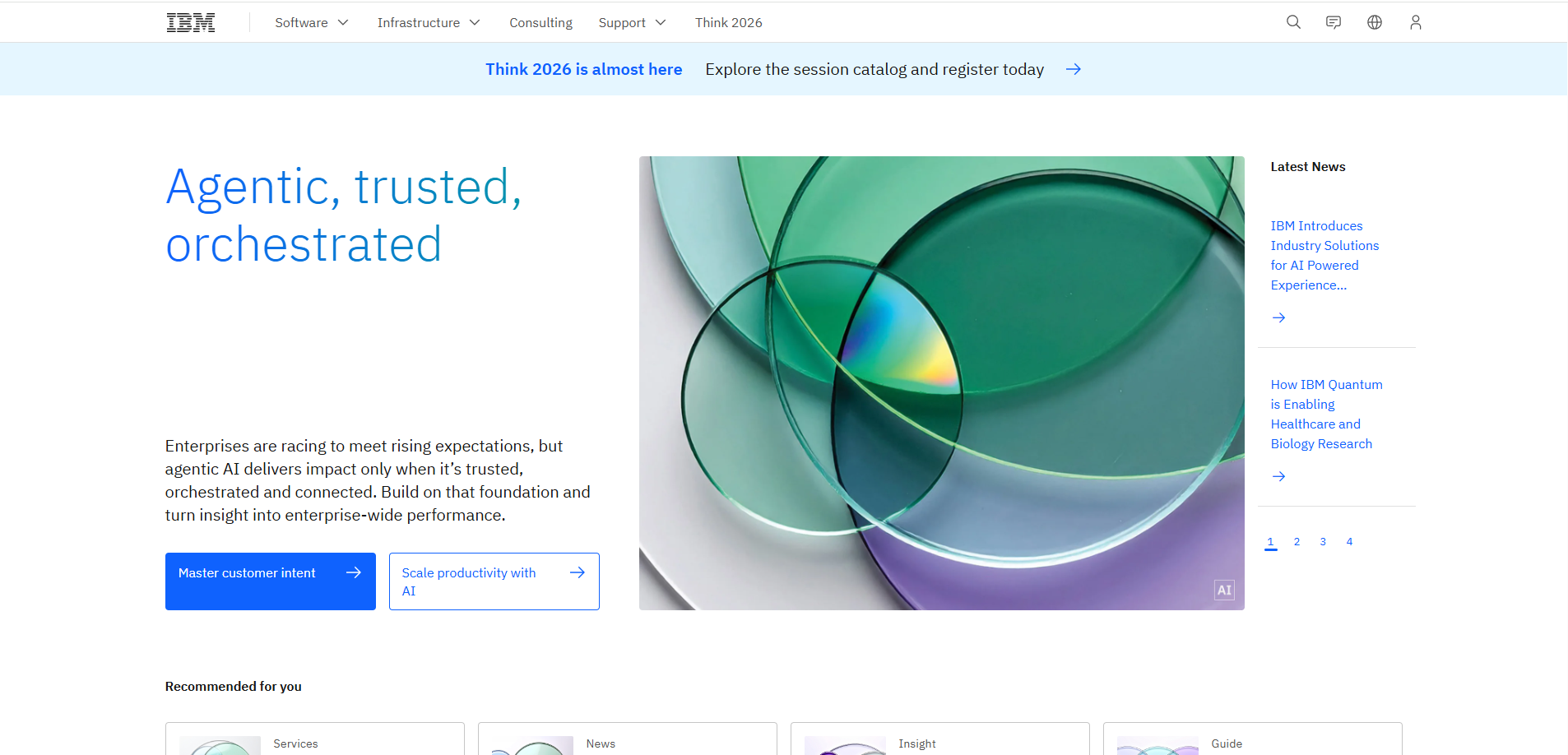
Best for enterprises already committed to IBM Cloud, watsonx, IBM Consulting, or IBM’s broader automation and governance stack.
Score: 7.0/10. Strong on-prem deployment (9/10) and IBM compliance framework (8/10).
Scored lower on voice (6/10, voice is add-on), setup speed (5/10), and governance architecture vs. Rasa's Orchestrator (6/10).
Product Overview
IBM watsonx Assistant is IBM’s conversational AI platform for building customer and employee service agents. It combines a visual builder, generative AI features, search and knowledge integration, analytics, and enterprise deployment options.
IBM is a strong SoundHound alternative when the buyer wants conversational AI inside an IBM-standardized environment. This is most relevant for banks, insurers, healthcare organizations, government agencies, and large enterprises that already rely on IBM for cloud, consulting, automation, security, or data governance.
Compared with SoundHound, IBM’s center of gravity is not voice-first automation for restaurants, automotive, or commerce. Its strength is enterprise software depth. Buyers choose IBM when conversational AI needs to sit alongside watsonx, IBM Cloud, governance workflows, enterprise search, and existing IBM relationships.
Voice is supported through integrations, but IBM watsonx Assistant is not primarily a standalone voice automation platform. Teams evaluating high-volume phone automation should look closely at the speech, telephony, contact center, and implementation model required for their use case.
Pros and Cons
Pros:
- Strong fit for enterprises already standardized on IBM.
- Mature enterprise security, governance, and compliance posture.
- Visual builder plus developer extensibility.
- Integration with IBM’s broader watsonx and automation portfolio.
- Useful for customer service, employee service, IT support, and internal knowledge use cases.
Cons:
- Best value is usually inside the IBM ecosystem.
- Voice requires additional architecture and integration planning.
- Can feel heavy for teams that want a lighter developer platform.
- Less suited to enterprises that want cloud-neutral agent architecture outside a major vendor stack.
Pricing
Lite (free tier). Plus from $140/month + usage. Enterprise custom.
Setup
Weeks for cloud deployment. Months for on-premises enterprise.
Tradeoffs
IBM watsonx Assistant is a strong SoundHound alternative when the buyer already trusts IBM as an enterprise technology partner and wants conversational AI inside that stack.
Rasa is stronger when technical teams want a more flexible developer platform that fits their own architecture, deployment model, release workflow, model choices, and backend integration strategy.
Choose IBM if your organization is already building around watsonx and wants conversational AI from a major enterprise vendor. Choose Rasa if your team wants to own the agent architecture more directly and avoid tying the long-term operating model to one enterprise software ecosystem.
4.4/5 Capterra (30+ reviews).
#6. Microsoft Copilot Studio + Azure Speech Services: Best SoundHound Alternative for Microsoft Ecosystem Voice
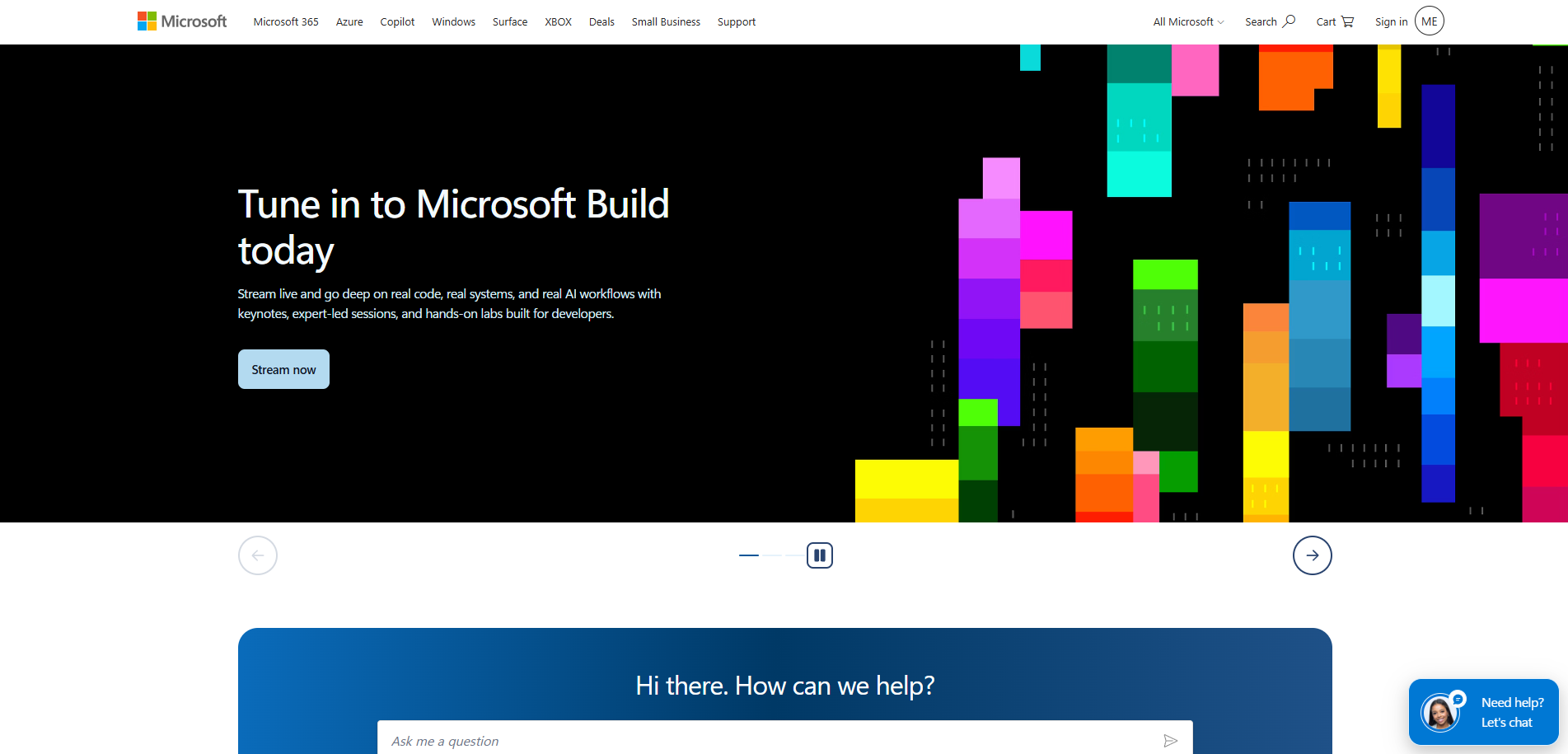
Best for enterprises already standardized on Microsoft 365, Teams, Dynamics 365, Power Platform, and Azure.
Score: 7.0/10. Strong Microsoft integration (9/10) and Azure data residency (8/10).
Scored lower on voice architecture vs. native voice platforms (6/10), deployment outside Azure (3/10), and governance depth (6/10).
Product Overview
Microsoft Copilot Studio is Microsoft’s low-code platform for building agents and copilots. It is strongest when the agent needs to work inside the Microsoft ecosystem.
For Microsoft-first teams, the appeal is clear. Copilot Studio connects naturally with Microsoft 365, Teams, Dynamics 365, Power Platform, Azure services, and enterprise identity controls. A business team can start with a low-code agent in a familiar environment, then extend it with Azure services and developer support when the use case becomes more complex.
Voice use cases are possible through Azure Speech, Azure Communication Services, and contact center integrations. This makes Microsoft a relevant SoundHound alternative when the buyer wants voice AI connected to existing Microsoft infrastructure rather than a standalone voice-first vendor.
The tradeoff is focus. SoundHound is built around voice-first experiences and packaged industry automation. Microsoft is broader. It is often the better fit when the organization wants agents embedded across internal tools, workflows, productivity apps, CRM, and Azure infrastructure.
Pros and Cons
Pros:
- Strong fit for Microsoft 365, Teams, Dynamics 365, Power Platform, and Azure customers.
- Low-code builder that business and IT teams may already understand.
- Good enterprise identity, security, and admin alignment through Microsoft.
- Azure Speech can support voice use cases.
- Strong option when agents need to connect into Microsoft business workflows.
Cons:
- Best fit is inside the Microsoft ecosystem.
- Voice requires architecture across Copilot Studio, Azure Speech, telephony, and contact center systems.
- Less specialized than voice-first platforms for premium phone automation.
- Can become complex when the agent needs to operate across many non-Microsoft systems.
Pricing
$200/tenant/month (2,000 messages). Additional messages available. Azure Speech Services billed separately per minute. Enterprise custom.
Setup
Hours for basic bots within Microsoft tenants. Weeks for custom voice integrations.
Tradeoffs
Microsoft is a strong SoundHound alternative when the enterprise is already committed to Microsoft and wants agents close to Teams, Dynamics, Power Platform, and Azure.
Rasa is stronger when the buyer wants a cloud-neutral agent platform that fits its own engineering workflow, deployment model, backend integration strategy, and release process.
Choose Microsoft if the agent should live mainly inside the Microsoft operating model. Choose Rasa if the agent needs to operate across a mixed enterprise architecture with customer-controlled deployment and deeper platform ownership.
4.2/5 Gartner Peer Insights (71 reviews).
#7. Google CCAI / Dialogflow CX: Best SoundHound Alternative for Google Cloud Contact Center AI
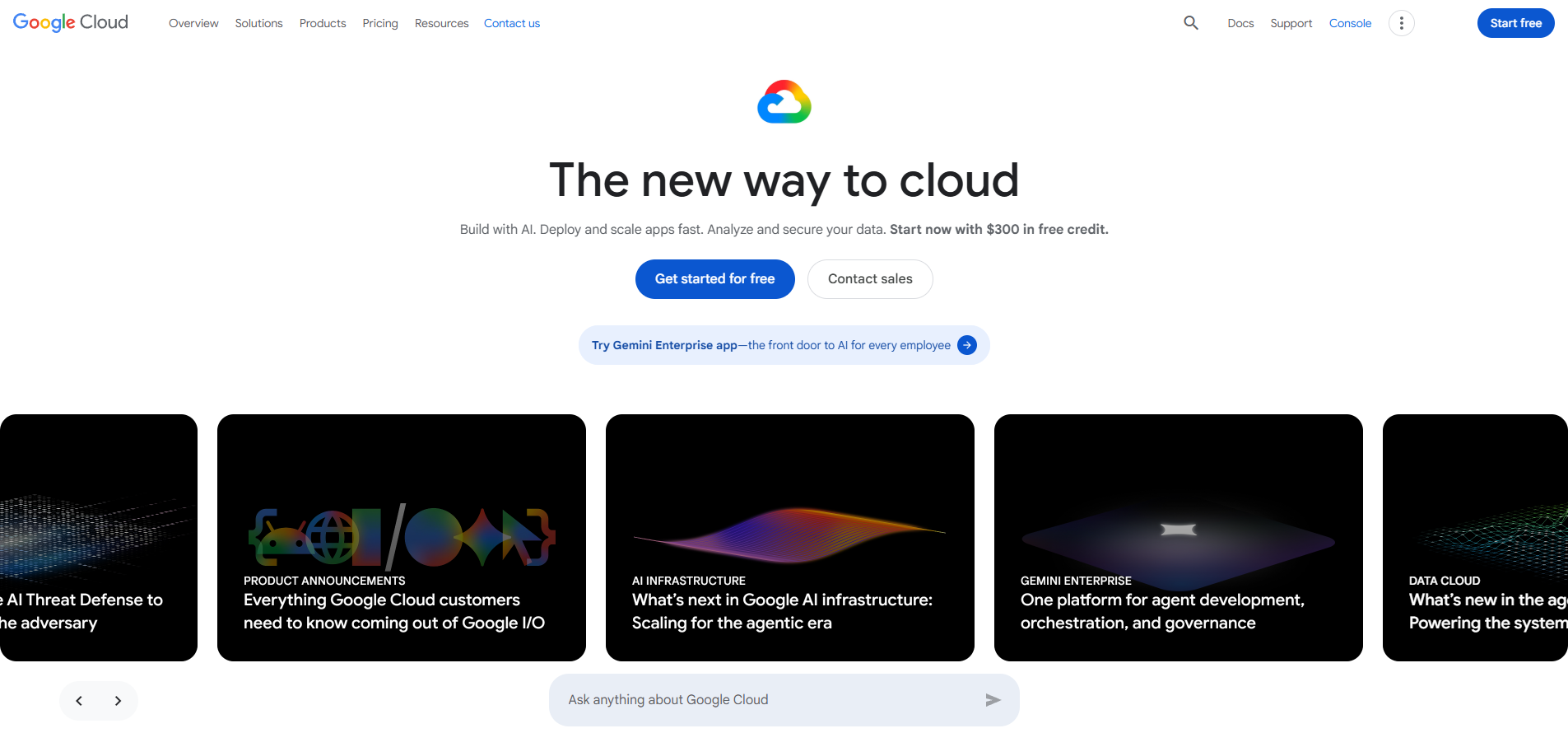
Best for enterprises already committed to Google Cloud that want conversational agents connected to GCP services, contact center AI, and Google’s speech and language infrastructure.
Score: 6.8/10. Strong NLU accuracy (9/10) and GCP integration (8/10).
Scored lower on deployment flexibility (4/10), governance (5/10), and voice architecture vs. self-hosted alternatives (6/10).
Product Overview
Google Conversational Agents, including Dialogflow CX, is Google Cloud’s platform for building virtual agents. Dialogflow CX supports text and audio inputs, can return text or synthetic speech, and is designed for structured, multi-turn service journeys.
The platform is a strong SoundHound alternative for Google Cloud teams. It fits buyers that want agent design, telephony, speech, analytics, and cloud services inside the GCP operating model.
Dialogflow CX uses a visual flow structure for designing conversations. This makes it useful for contact center and IVR use cases where teams need to manage states, routes, intents, fulfillment, and handoff logic clearly.
Voice is supported through Google telephony options and integrations. Dialogflow CX Phone Gateway provides a telephone interface for building conversational IVR, while Google’s telephony integration can connect Session Border Controller systems to the Google Telephony Platform.
Pros and Cons
Pros:
- Strong fit for Google Cloud customers.
- Visual flow builder for structured service journeys.
- Supports text and audio conversations.
- Phone Gateway and telephony integration options for voice use cases.
- Useful for contact center automation, IVR, and customer service bots.
- Pay-as-you-go pricing model with published pricing information.
Cons:
- Best fit is inside the Google Cloud ecosystem.
- Public materials do not describe a customer self-hosted deployment option.
- Voice use cases require planning across Dialogflow CX, telephony, speech, fulfillment, and contact center systems.
- Less suited to teams that want a cloud-neutral agent platform inside their own engineering and release workflow.
Pricing
Pay-as-you-go. Free tier for text. Session and audio-minute pricing.
Setup
Days for basic bots. Weeks for complex telephony deployments.
Tradeoffs
Google Conversational Agents is a strong SoundHound alternative when the buyer is already building on GCP and wants voice or contact center AI connected to Google Cloud services.
Rasa is stronger when the enterprise wants a cloud-neutral developer platform that fits its own deployment model, backend integration strategy, model choices, testing process, and release workflow.
Choose Google if the agent should live mainly inside the GCP operating model. Choose Rasa if the agent needs to operate across a mixed enterprise architecture with customer-controlled deployment and deeper platform ownership.
4.5/5 Capterra (36+ reviews).
#8. Speechmatics: Best SoundHound Alternative for Enterprise Speech Recognition
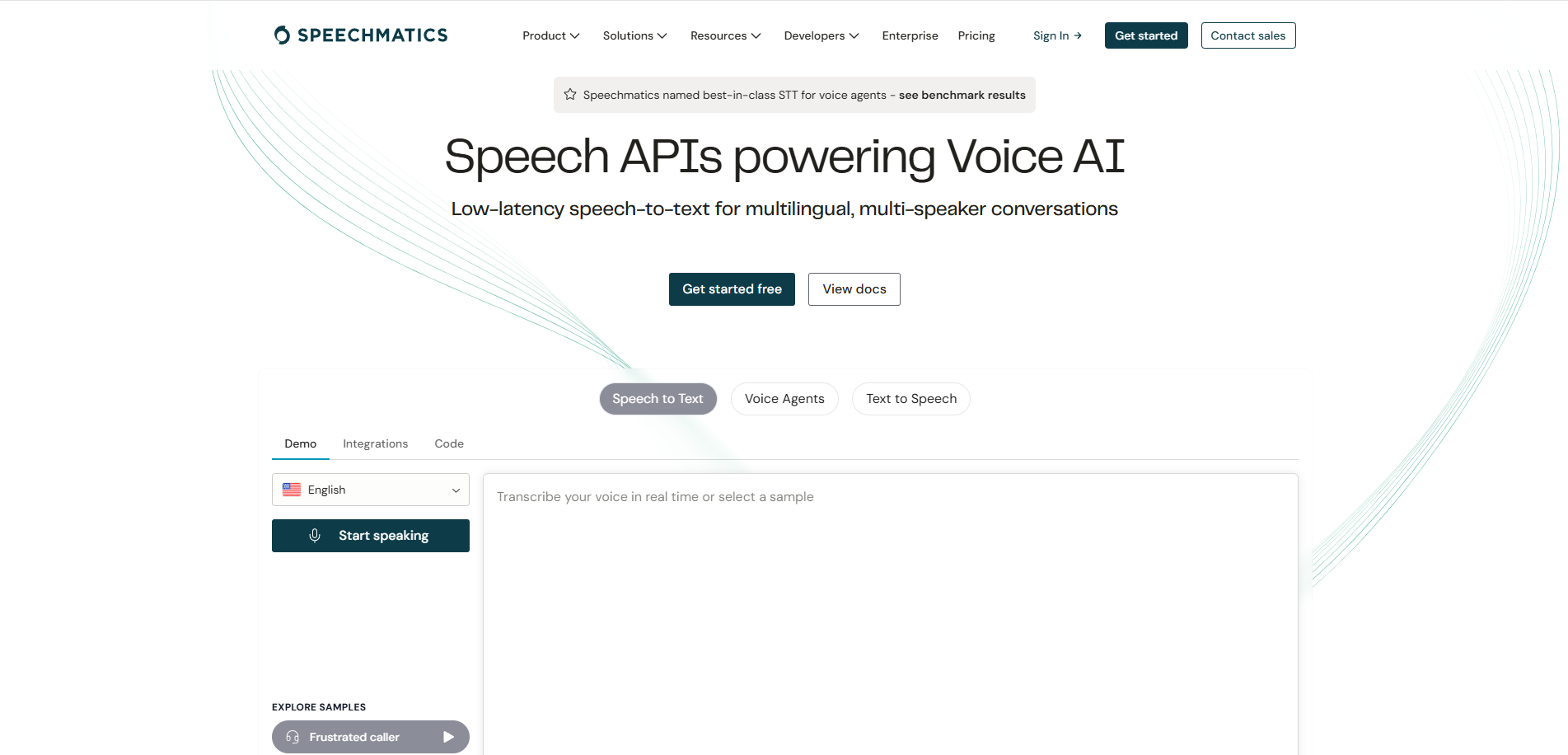
Best for enterprises that want to separate the speech layer from the rest of the voice agent stack, especially when multilingual accuracy, accents, data control, or deployment flexibility matter.
Score: 7.0/10. Strong ASR accuracy (9/10), multilingual support (9/10), and deployment flexibility (9/10).
Scored lower on conversational orchestration (5/10) and dialogue management (4/10, ASR-focused, not a full conversational AI platform).
Product Overview
Speechmatics is a speech technology company focused on speech-to-text, real-time translation, and text-to-speech components for enterprise voice systems. It supports cloud, on-device, on-premises, and hybrid deployment options.
This makes Speechmatics different from SoundHound. SoundHound sells a broader managed voice AI and conversational AI platform. Speechmatics is stronger when the buyer wants to choose the speech layer separately and combine it with its own orchestration, contact center, analytics, or agent platform.
Speechmatics is a strong fit for media, contact centers, healthcare, finance, and other environments where transcription accuracy and data handling are central requirements. Its enterprise materials emphasize noisy environments, multilingual conversations, custom vocabularies, formatting, diarization, and deployment flexibility.
Speechmatics also offers Flow On-Premise for teams that want to run a conversational AI API in their own infrastructure. That makes it more relevant to regulated voice AI use cases than a pure cloud ASR provider.
Pros and Cons
Pros:
- Strong speech recognition focus.
- Supports real-time and batch transcription.
- Broad language and accent coverage.
- Cloud, on-premises, on-device, and hybrid deployment options.
- Useful for regulated teams that want more control over the speech layer.
- Can fit into a best-of-breed voice architecture.
Cons:
- Not a full enterprise agent platform by itself.
- Buyers still need orchestration, business logic, backend actions, testing, analytics, and release governance.
- Pricing depends on usage, deployment model, and enterprise requirements.
- Less suitable for teams that want one vendor to deliver the full managed voice automation experience.
Pricing
Custom enterprise pricing. Volume-based for cloud and on-prem deployments.
Setup
Days for cloud API integration. Weeks for on-prem deployment.
Tradeoffs
Speechmatics is not a direct replacement for the full SoundHound platform. It is a stronger fit when the buyer wants to unbundle speech recognition from the rest of the voice AI stack.
Choose Speechmatics if your main requirement is enterprise speech recognition with deployment flexibility. Choose SoundHound if you want a managed voice AI platform with packaged industry solutions.
Choose Rasa if you need the orchestration and agent operating layer around the voice experience. Rasa can sit above speech and telephony providers so teams can manage conversations, backend actions, governance, and release workflows across voice and digital channels.
#9. Presto Phoenix: Best SoundHound Alternative for QSR Drive-Thru Voice Ordering
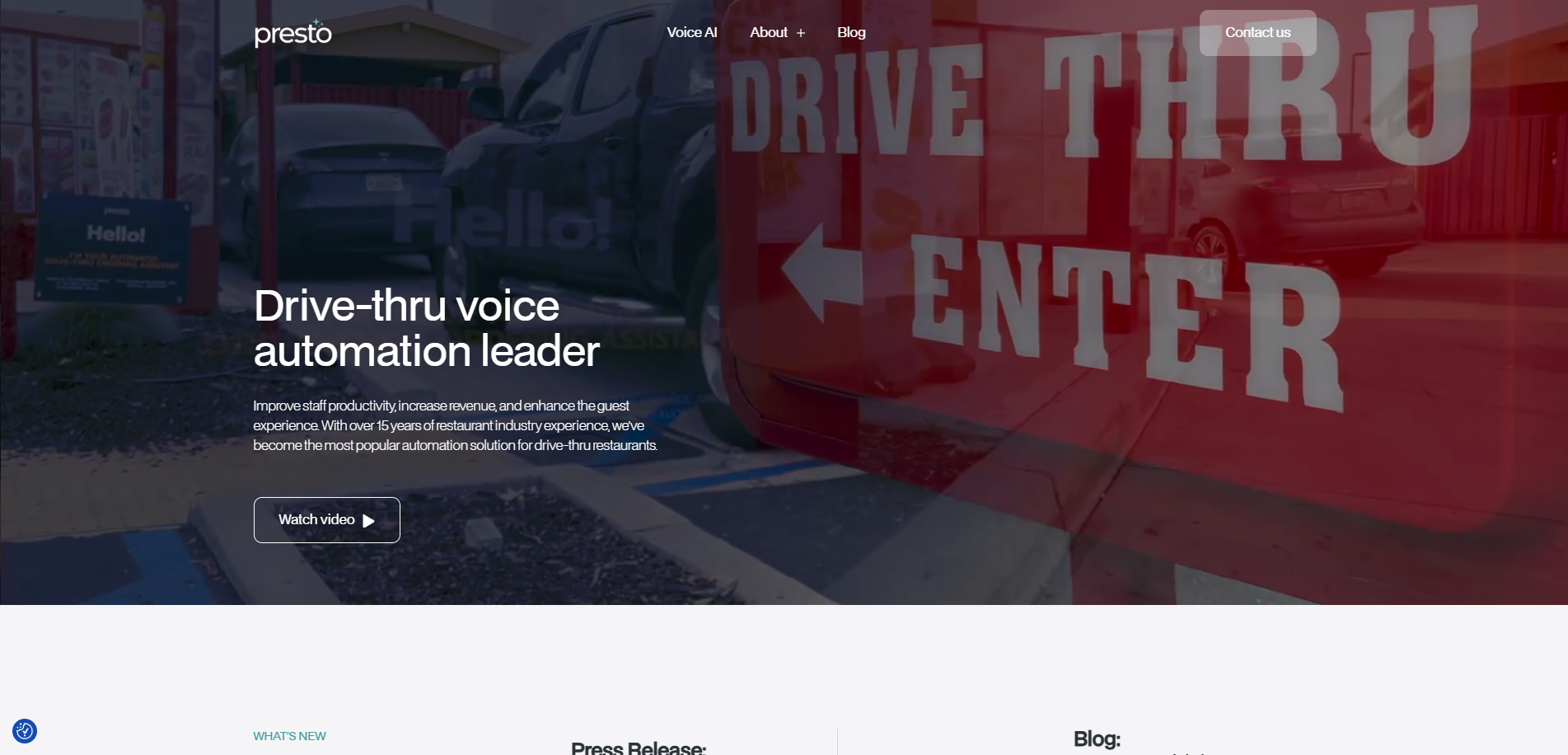
Best for quick-service restaurant chains that want voice AI specifically for drive-thru ordering.
Score: 6.8/10. Strongest QSR drive-thru specialization (10/10), proven non-intervention rates (9/10), and large-brand deployments (9/10).
Scored lower on deployment flexibility (3/10, vendor cloud only), governance architecture (4/10), and use cases beyond QSR (3/10).
Product Overview
Presto Phoenix is a specialist voice AI provider for restaurant drive-thrus. Its core product, Presto Voice, automates order-taking through existing drive-thru hardware and POS systems. Presto describes support for multiple operating modes, including supervised AI, pure AI, agent-led ordering, and unsupervised AI.
This makes Presto a more focused SoundHound alternative. SoundHound has a broader voice AI portfolio across restaurants, automotive, customer service, commerce, and enterprise agents. Presto is narrower. It is built around the restaurant drive-thru problem.
Presto is strongest when the buyer cares about order capture, upsell consistency, store operations, headset integration, POS integration, and reducing staff multitasking during peak drive-thru hours. Its public customer list includes brands such as Carl’s Jr., Hardee’s, and Fazoli’s.
Presto Phoenix also carries a procurement consideration. In January 2025, Presto Automation announced the sale of its assets to a consortium led by Remus Capital, and later company materials refer to Presto Phoenix as the largest American drive-thru Voice AI provider to the restaurant industry.
Pros and Cons
Pros:
- Purpose-built for QSR drive-thru voice ordering.
- Strong fit for order-taking, upselling, and store operations.
- Integrates with existing drive-thru hardware and POS platforms.
- Supports different operating modes depending on how much human oversight the location needs.
- More focused than broad conversational AI platforms for restaurant drive-thru use cases.
Cons:
- Narrower than SoundHound’s broader voice AI and enterprise agent portfolio.
- Not designed for general enterprise conversational AI across contact center, employee service, or digital channels.
- Buyers should evaluate current ownership, roadmap, support model, and rollout capacity after the 2025 asset sale.
- Public materials do not describe a customer self-hosted deployment option.
Pricing
Custom enterprise pricing. Sales-led for QSR chains.
Setup
Weeks per location with POS and headset integration.
Tradeoffs
Presto is a strong SoundHound alternative when the use case is specifically QSR drive-thru ordering. It is more focused than SoundHound and can be easier to evaluate if the buyer only needs restaurant order automation.
SoundHound is broader. It may be a better fit when the restaurant use case is part of a wider voice AI strategy across ordering, customer service, commerce, and other channels.
Rasa is a different category of alternative. It is not a QSR drive-thru specialist. Choose Rasa when voice is part of a broader enterprise agent platform that needs backend actions, governed workflows, customer-controlled deployment, and continuity across voice and digital channels.
#10. Retell AI: Best SoundHound Alternative for Fast Developer-Led Phone Agents
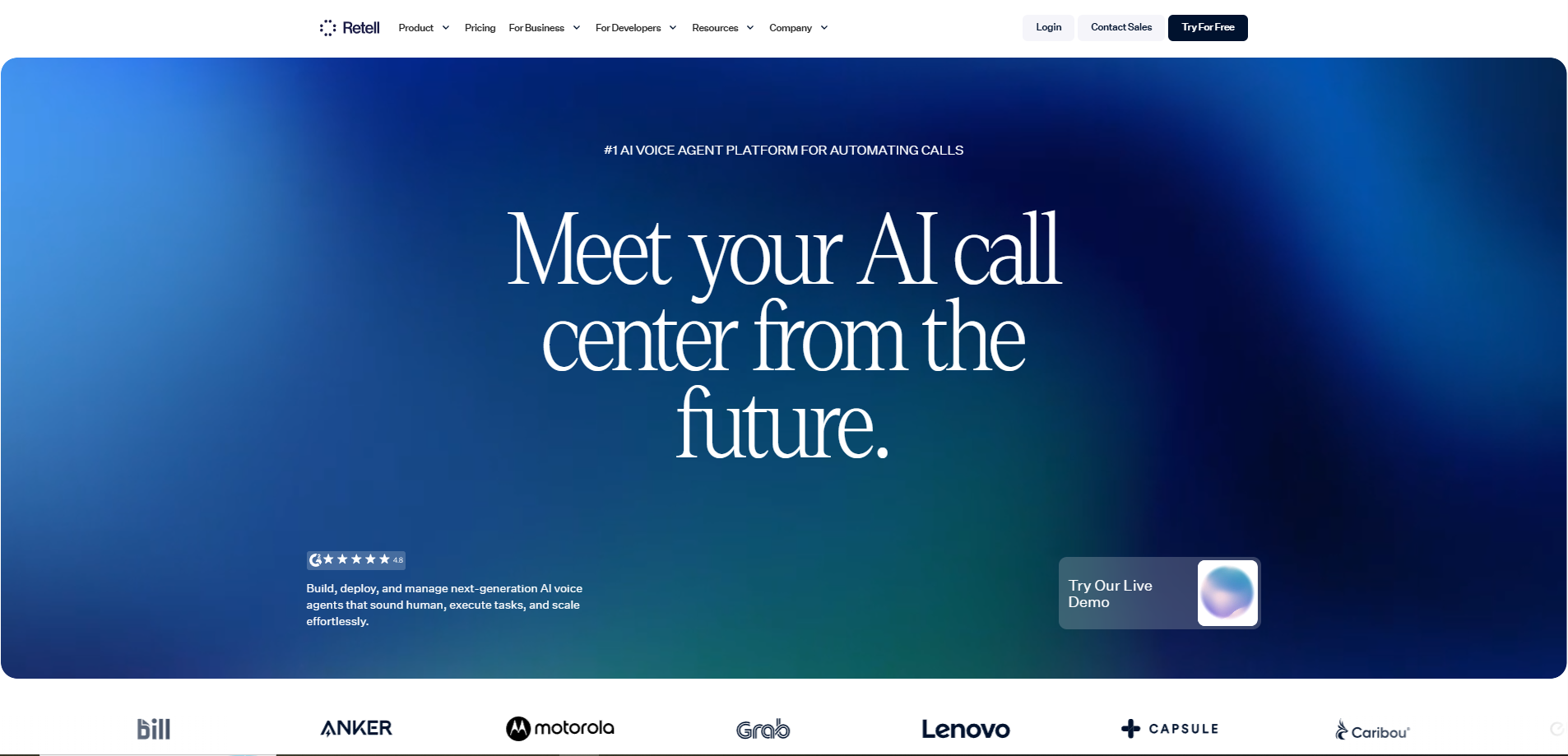
Best for engineering teams that want to build and test phone agents quickly with API-first tooling, usage-based pricing, and provider flexibility.
Score: 6.6/10. Fastest voice deployment (10/10) and pricing transparency (9/10).
Scored lower on governance (3/10), deployment flexibility (3/10), integration depth (5/10), and multi-channel support (3/10, voice-focused).
Product Overview
Retell AI is a developer-focused platform for building AI phone agents. It is built for teams that want to move fast on inbound and outbound calling without adopting a full enterprise conversational AI platform.
Retell’s main appeal is speed. Developers can create phone agents, connect telephony, choose voice and model providers, test calls, and launch simple production use cases faster than they could with a heavier enterprise platform.
This makes Retell a strong SoundHound alternative when the buyer wants phone automation as a developer project. It fits use cases such as appointment booking, lead qualification, reminders, surveys, simple support calls, and outbound follow-up.
Retell is not a full replacement for SoundHound’s broader enterprise platform. It is voice-first and API-led. Teams still need to design the surrounding operating model for governance, backend authorization, release control, analytics, compliance review, and cross-channel continuity.
Pros and Cons
Pros:
- Fast path to building AI phone agents.
- API-first experience for developers.
- Supports inbound and outbound calling.
- Usage-based pricing is easier to model than many sales-led enterprise voice platforms.
- Provider flexibility for teams that want to choose parts of the voice and LLM stack.
- Good fit for focused phone automation use cases.
Cons:
- Voice-first platform, not a full omnichannel enterprise agent platform.
- Buyers own more of the surrounding production architecture.
- Governance, release workflow, and compliance controls need careful evaluation for regulated use cases.
- Public materials should be checked carefully for deployment and data-control requirements before procurement.
- Costs can increase once speech, model, telephony, and production volume are included.
Pricing
$0.07/minute base (published). Volume discounts. Enterprise custom. ASR/TTS/LLM provider costs additional.
Setup
Hours for demo calls. Days for production with telephony and basic integrations.
Tradeoffs
Retell AI is a strong SoundHound alternative when speed and developer control matter more than a packaged enterprise platform. It is especially useful for teams that want to build phone agents quickly and keep flexibility over parts of the stack.
SoundHound is broader and more managed. It may be a better fit when the buyer wants a vendor-led voice AI platform with packaged industry solutions.
Rasa fits a different enterprise need. Choose Rasa when voice is one channel in a broader agent operating model, and the team needs backend actions, governed workflows, customer-controlled deployment, release management, and continuity across voice and digital channels.
Why Choose SoundHound Alternatives
SoundHound is a strong choice when the buyer wants a managed voice AI platform with proven voice-first products. It is especially relevant for restaurants, automotive, ordering, customer service, and commerce-led voice use cases.
Teams usually evaluate alternatives when they need a different operating model. The question is less “Does SoundHound have voice AI?” and more “Can this platform fit how we need to deploy, integrate, govern, price, and improve agents over time?”
Customer-Controlled Deployment
SoundHound’s public materials focus on managed products and cloud-delivered services. For some buyers, that is exactly the point. They want a vendor to own more of the delivery model.
Other buyers need more control over where the agent runs and how customer data is handled. This matters most in banking, healthcare, insurance, telecom, government, and other regulated environments.
Rasa supports self-hosted, private-cloud, and air-gapped deployment. Cognigy, IBM watsonx Assistant, Kore.ai, and Speechmatics also offer enterprise deployment options in some form. The right choice depends on how much of the stack the customer needs to operate directly.
Provider Choice
SoundHound’s stack is built around its own voice AI technology, including Speech-to-Meaning and Polaris. That can be an advantage when the buyer wants an integrated voice platform from one vendor.
It becomes a constraint when the enterprise wants to choose the speech provider, LLM, infrastructure, observability tools, and integration layer separately.
Rasa fits teams that want more control over the agent architecture. Speechmatics fits teams that want to separate speech recognition from the rest of the stack. Retell AI fits teams that want a fast developer-led phone agent platform with more flexibility over voice and model components.
Pricing and Cost Visibility
SoundHound’s enterprise products are sold through custom quotes. That is common in enterprise voice AI, but it can make three-year cost modeling harder when call volume, model usage, telephony, support, and implementation costs all matter.
Alternatives differ here. Rasa uses annual conversation-volume licensing. Retell AI publishes usage-based per-minute pricing. Hyperscalers such as Google and Microsoft use cloud-style consumption models. Buyers should model the full cost of the agent, not only the platform license.
Engineering Workflow Fit
Managed platforms are often designed around a vendor console. That can work well for CX-led teams that want to configure, monitor, and improve agents inside a hosted workspace.
Technical teams may need something different. They may want agent logic to live in a codebase, changes to move through review, tests to run before release, and updates to follow the same CI/CD process as the rest of their software.
Rasa is built for that operating model. It fits teams that want engineers to own the foundation while product owners, conversation designers, and subject-matter experts can still review and improve the agent through Studio.
Governance for High-Stakes Workflows
Many voice AI platforms provide guardrails, escalation, confidence checks, and monitoring. Those are useful and should be evaluated carefully.
For regulated service journeys, the deeper question is how the platform handles actions that have business risk. A password reset, insurance claim, account closure, payment issue, or healthcare workflow needs more than a natural-sounding answer. The agent has to call the right systems, follow the right policy, and leave a clear record of what happened.
Rasa’s patented Orchestrator is designed for agents that need to combine flexible conversation with governed workflows and backend actions. This is where Rasa is different from voice-first platforms that focus mainly on the phone experience.
Vendor Concentration Risk
SoundHound now covers a wide voice AI footprint. For some buyers, that breadth is attractive. For others, it raises a concentration question.
A large enterprise may not want speech, agent logic, orchestration, deployment, analytics, and improvement workflows concentrated inside one vendor’s managed stack. Alternatives become useful when the buyer wants to split responsibilities across best-of-breed providers or keep the core agent platform under its own control.
That is the main reason the SoundHound alternatives market exists. Some buyers want a managed voice vendor. Others want a platform they can own, extend, and operate as part of their own enterprise architecture.
How To Choose the Right SoundHound Alternative
Step 1: Start with the SoundHound Product You Are Replacing
SoundHound is not one product. The right alternative depends on which part of the portfolio you are evaluating.
If you are replacing Amelia-style enterprise agents, shortlist platforms such as Rasa, Cognigy, Kore.ai, IBM watsonx Assistant, Microsoft Copilot Studio, or Google Conversational Agents.
If you are replacing restaurant ordering or drive-thru automation, look at QSR specialists such as Presto Phoenix, ConverseNow, and other restaurant voice vendors.
If you are replacing embedded voice or speech recognition, look at speech and voice infrastructure providers such as Speechmatics, Retell AI, Google, Microsoft, or a best-of-breed stack built around Rasa.
Step 2: Define the Job the Agent Must Do
Do not start with the vendor demo. Start with the work the agent needs to complete.
A restaurant ordering agent, an IT service desk agent, a billing dispute agent, and a healthcare triage agent have very different requirements. Some mainly need fast voice capture and order accuracy. Others need authentication, backend actions, policy handling, audit trails, and controlled releases.
The more the agent touches high-value or regulated work, the more important the operating model becomes. You need to know who can change the agent, how changes are reviewed, where the agent runs, what systems it can call, and how failures are investigated.
Step 3: Decide How Much of the Stack You Need to Own
Some teams want a managed vendor to own more of the voice experience. That can be the right choice when speed, packaging, and vendor-led delivery matter most.
Other teams need the agent to fit into their own architecture. That means customer-controlled deployment, approved model providers, internal release workflows, backend authorization, and security review.
Rasa fits teams that want to own the agent platform and operate it as part of their own software environment. Cognigy, Kore.ai, IBM, Microsoft, Google, PolyAI, Retell AI, Speechmatics, and Presto each sit in different places on the managed-versus-owned spectrum.
Step 4: Test the Real Voice Journey
Run the shortlist against real conversations, not ideal demo scripts.
For voice use cases, test the full experience: speech recognition, latency, turn-taking, interruption handling, fallback behavior, escalation, backend actions, and cost per completed outcome.
For regulated or high-value workflows, test the moments where the agent must not improvise. Examples include identity checks, payment changes, refunds, account closure, claims intake, prescription handling, and policy exceptions.
Step 5: Model the Full Cost
Do not compare only platform license cost.
Voice AI cost includes telephony, speech recognition, text-to-speech, LLM usage, hosting, support, implementation, monitoring, and human fallback. A platform that looks cheaper per minute may be more expensive if it requires more engineering work or fails more often in production.
Rasa uses annual conversation-volume licensing. Retell AI publishes usage-based voice pricing. Hyperscalers use cloud consumption models. Many enterprise platforms use custom quotes. The right comparison is total cost per useful outcome, not just vendor price.
Step 6: Choose by Operating Model
- Choose SoundHound if you want a managed voice AI platform with strong voice-first packaging.
- Choose PolyAI if premium contact center voice is the main priority.
- Choose Presto Phoenix if the use case is specifically QSR drive-thru ordering.
- Choose Retell AI if developers need to build phone agents quickly with API-first tooling.
- Choose Speechmatics if speech recognition is the main layer you want to control.
- Choose Microsoft or Google if the agent should live mainly inside those cloud ecosystems.
- Choose Cognigy or Kore.ai if you want a broad enterprise conversational AI platform with strong visual tooling and contact center coverage.
- Choose Rasa if you need voice and digital agents to fit into your own architecture, deployment model, backend systems, release process, and long-term operating model.
Key Features to Look for When Exploring SoundHound Competitors
Customer-Controlled Deployment
Start with the deployment model your security team will actually approve.
Some teams are comfortable with a managed cloud service. Others need the agent to run in their own environment, especially in banking, healthcare, insurance, telecom, government, or other regulated industries.
Look for clear documentation on self-hosted, private-cloud, hybrid, or air-gapped deployment. Rasa supports customer-controlled deployment, including self-hosted, private-cloud, and air-gapped options. Vendors such as IBM watsonx Assistant, Kore.ai, Cognigy, and Speechmatics also offer enterprise deployment options in some form.
Provider Choice Across Speech and Model Layers
SoundHound’s Speech-to-Meaning architecture and Polaris ASR are part of its core differentiation. That can be valuable when the buyer wants an integrated voice AI stack from one vendor.
It can be limiting when the enterprise wants to choose its own speech provider, LLM, telephony layer, observability tooling, or infrastructure.
When comparing alternatives, check whether the platform lets you choose and change key providers over time. This matters when costs shift, model performance changes, or a regulated use case requires a specific approved provider.
Voice and Digital Channels in One Operating Model
Voice should not become a separate island.
If the enterprise needs both phone and digital agents, look for a platform that can share agent logic, state, backend actions, testing, and improvement workflows across channels.
Rasa supports voice through channel connectors and speech-provider integrations, while keeping voice and digital agents connected to the same broader operating model. This is useful when a customer may start in chat, continue by phone, and still expect the business to remember the context.
Governed Workflows for High-Stakes Actions
A good voice agent does more than sound natural. It also needs to know when to follow policy, when to ask for confirmation, when to call a backend system, and when to escalate.
This is especially important for identity checks, claims, billing disputes, account changes, healthcare workflows, payments, and refunds.
Look for platforms that give teams a clear way to govern risky actions. Confidence scores and guardrails help, but they are not a substitute for a well-designed workflow, backend authorization, review process, and audit trail.
Pricing You Can Model
Voice AI cost is easy to underestimate.
The full cost includes platform fees, telephony, speech recognition, text-to-speech, LLM usage, hosting, implementation, monitoring, and human fallback. A low per-minute price can still become expensive if the agent fails often or needs heavy engineering support.
Look for pricing that procurement can model over three years. Rasa uses annual conversation-volume licensing. Retell AI publishes usage-based voice pricing. Hyperscalers use cloud consumption models. Many enterprise platforms use custom quotes.
Engineering Workflow Fit
For technical teams, agent changes need to move like software changes.
Look for version control, testing, review workflows, staging, rollback, and CI/CD support. This becomes more important as agents move from simple FAQ use cases into real service workflows with backend actions and business risk.
Rasa is built for teams that want the agent codebase to remain the source of truth, while Studio gives non-technical team members a way to review, test, and improve agent behavior.
Auditability and Access Control
Regulated teams need to know what happened when something goes wrong.
A platform should make it possible to inspect conversation history, tool calls, state changes, test results, user permissions, and production changes. It should also support role-based access so the right teams can build, review, approve, and monitor agent behavior.
This matters more as the agent starts taking action in business systems instead of only answering questions.
Multi-Team Governance
Large enterprises rarely have one bot team building one assistant.
Different departments may own different policies, journeys, tools, and data sources. The platform needs to support that reality without creating fragmented agents that cannot share context or follow the same governance model.
Look for reusable capabilities, shared testing, clear ownership boundaries, and a way for business experts to contribute without bypassing engineering control.
Extensibility Beyond the Vendor Console
Configuration menus are useful, but they eventually hit a ceiling.
If the agent needs to connect to internal systems, follow company-specific policies, use approved models, or fit into existing observability and release workflows, the platform needs real extensibility.
Look for APIs, custom actions, channel connectors, MCP-style integration patterns, model choice, and ways to connect with existing development and monitoring tools. This is where Rasa is strongest for technical enterprise teams that want the agent platform to fit their architecture instead of forcing the architecture to fit the vendor.
Cost Comparison: SoundHound vs. Competitors
Looking at SoundHound and SoundHound AI competitors’ pricing, SoundHound is sales-led without published rate cards for enterprise products. The billing model matters as much as the price.
- Rasa: Developer Edition free. Enterprise custom based on annual conversation volume.
- SoundHound: Houndify has a developer-facing pricing page. Amelia 7, Smart Answering, Smart Ordering, Dynamic Drive-Thru, and Chat AI are sales-led with custom enterprise quotes.
- Cognigy: Pilots from $2,500-$5,000/month. Enterprise $100K-$350K+/year. Voice and LLM tokens bill separately.
- PolyAI: Custom enterprise pricing, typically premium.
- Kore.ai: Custom enterprise pricing. Six-figure annual typical with session-based billing.
- IBM watsonx: Lite free. Plus from $140/month + usage. Enterprise custom.
- Microsoft Copilot Studio: $200/tenant/month. Azure Speech Services billed separately per minute.
- Google CCAI: Pay-as-you-go. Session and audio-minute pricing.
- Speechmatics: Custom enterprise. Volume-based for cloud and on-prem.
- Presto Phoenix: Custom enterprise pricing for QSR chains.
- Retell AI: $0.07/minute base published. ASR/TTS/LLM provider costs additional.
Which of the SoundHound AI Alternatives Is Right for Your Business?
- Need enterprise ownership + self-hosted + voice: Rasa. Self-hosted from day one, the patented Orchestrator for architectural governance over agent behavior, native Voice Stream connectors, pluggable ASR/NLU/LLM/TTS.
- Need conversational AI contact center voice + on-premises: Cognigy (NICE). Native Voice Gateway, on-prem option, Gartner Leader.
- Need premium voice quality for brand-sensitive deployments: PolyAI. Industry-leading voice realism for hospitality and premium banking.
- Need Gartner Leader enterprise omnichannel: Kore.ai. Pre-built industry agents, on-prem option, 400 Fortune 2000 deployments.
- Need IBM stack + regulated industries: IBM watsonx Assistant. On-prem deployment, IBM compliance framework.
- Need Microsoft ecosystem voice: Microsoft Copilot Studio + Azure Speech Services. M365, Dynamics, Azure native.
- Need Google Cloud native voice: Google CCAI / Dialogflow CX. Strong NLU, CCAI telephony, Wendy's FreshAI stack.
- Need multilingual ASR with on-prem: Speechmatics. Industry-leading transcription, on-prem deployment, pairs with Rasa for orchestration.
- Need QSR drive-thru voice ordering: Presto Phoenix. Carl's Jr, Hardee's, Del Taco, Dairy Queen; 85% non-intervention rate.
- Need fast developer voice deployment: Retell AI. Transparent $0.07/min pricing, pluggable ASR/TTS/LLM, sub-second latency.
FAQs
What are the main reasons enterprises evaluate SoundHound alternatives?
Enterprises usually evaluate alternatives when they need a different operating model. Common reasons include customer-controlled deployment, stronger fit with internal engineering workflows, provider choice across speech and LLM layers, clearer long-term cost modeling, and more control over how agents are tested, released, monitored, and improved.
Some buyers also want to reduce dependence on a single managed voice AI stack. Others are comparing SoundHound’s voice-first strengths against broader enterprise agent platforms such as Rasa, Cognigy, Kore.ai, IBM watsonx Assistant, Microsoft Copilot Studio, and Google Conversational Agents.
What products does the SoundHound AI portfolio include?
SoundHound’s portfolio spans embedded voice, restaurant ordering, drive-thru automation, inbound voice answering, enterprise agents, generative AI responses, and automotive voice experiences.
Key products include Houndify, Smart Answering, Smart Ordering, Dynamic Drive-Thru, SoundHound Chat AI, and Amelia. The Amelia platform is the part of the portfolio most directly compared with enterprise conversational AI and agent platforms such as Rasa, Cognigy, Kore.ai, IBM watsonx Assistant, Microsoft Copilot Studio, and Google Conversational Agents.
What is Amelia and how does it relate to SoundHound?
Amelia is SoundHound’s enterprise conversational AI platform, added through SoundHound’s acquisition of Amelia. It extends SoundHound beyond its original voice AI footprint into enterprise agents, contact center automation, employee service, knowledge assistance, and customer service workflows.
For buyers comparing SoundHound alternatives, Amelia is usually the product that maps most closely to enterprise agent platforms. Dynamic Drive-Thru and Smart Ordering map more closely to restaurant and QSR voice specialists.
Does SoundHound support on-premises or self-hosted deployment?
SoundHound’s public enterprise materials focus on managed products and cloud-delivered services. Buyers with strict deployment requirements should confirm directly whether the specific SoundHound product they are evaluating supports their required hosting model.
If customer-controlled deployment is a core requirement, alternatives such as Rasa, Cognigy, IBM watsonx Assistant, Kore.ai, and Speechmatics should be included in the shortlist. Rasa supports self-hosted, private-cloud, and air-gapped deployment for teams that need the agent platform to run inside their own environment.
Which SoundHound alternative is best for regulated industries?
Rasa is a strong fit for regulated enterprises that need customer-controlled deployment, backend integration, governed workflows, and engineering ownership of the agent platform.
This matters in banking, insurance, healthcare, telecom, and government use cases where the agent may touch identity, payments, claims, account changes, or sensitive customer data. Rasa can be deployed in customer-controlled environments, so teams can keep data, systems, and release processes under their own operational control.
IBM watsonx Assistant and Cognigy are also credible alternatives when the buyer is already committed to the IBM or NICE ecosystem.
How does Houndify pricing work?
Houndify has developer-facing pricing, while SoundHound’s broader enterprise products are typically sold through custom enterprise quotes.
For procurement teams, the important point is full cost visibility. Voice AI cost includes platform fees, telephony, speech recognition, text-to-speech, model usage, hosting, implementation, monitoring, and support. Buyers should model total cost across projected usage, not only the initial platform quote.
SoundHound vs Cognigy: which is better for enterprise voice?
Cognigy is a stronger fit when the buyer wants an enterprise contact center AI platform with visual tooling, voice automation, agent assist, analytics, and deployment options.
SoundHound is stronger when the buyer wants a managed voice AI platform with deeper focus in areas such as restaurants, automotive, ordering, and voice-first commerce.
For contact center programs that need enterprise tooling and contact center integration, Cognigy deserves a close look. For restaurant, drive-thru, and in-vehicle voice, SoundHound may be the more natural starting point.
SoundHound vs Rasa: which should we choose?
Choose SoundHound if you want a managed voice AI platform with strong voice-first packaging, especially for automotive, restaurant, ordering, or QSR use cases.
Choose Rasa if you want to build and operate agents inside your own architecture. Rasa is stronger when technical teams need customer-controlled deployment, provider choice, backend integration, governed workflows, testing, release management, and continuity across voice and digital channels.
How does Rasa compare to SoundHound for contact center voice automation?
SoundHound is voice-first and managed. It is a strong fit when the buyer wants a vendor-led voice AI platform.
Rasa is stronger when voice is one channel in a broader enterprise agent operating model. Rasa supports voice through channel connectors and speech-provider integrations, while keeping agent logic, backend actions, testing, and release governance connected to the same platform used for digital agents.
That makes Rasa a better fit for technical teams that need the agent to work across systems, channels, policies, and internal release processes.
Which SoundHound alternatives offer provider choice for ASR and LLMs?
Rasa, Retell AI, Speechmatics, Microsoft, and Google each give buyers different levels of provider choice.
Rasa is strongest when the enterprise wants the agent platform to sit above speech, telephony, model, and backend system choices. Speechmatics is strongest when the main need is enterprise speech recognition. Retell AI is useful for developer-led phone agents. Microsoft and Google are strong when the buyer wants to build inside Azure or Google Cloud.
SoundHound’s integrated voice stack can be valuable for speed and packaging. It is less flexible for teams that want to compose the stack from multiple providers.
Are there open framework alternatives to SoundHound?
Yes. Rasa is the clearest alternative for teams that want a developer-first framework and enterprise platform rather than a closed managed voice stack.
Rasa gives engineering teams a code-first foundation for building agents, with commercial platform capabilities for enterprise deployment, governance, Studio-based collaboration, and production operations. It is a better fit when the agent needs to become part of the company’s own software environment.
Other frameworks exist, but buyers should evaluate whether they also provide the enterprise deployment, observability, testing, governance, and support model required for production use.
How does Amelia compare to other enterprise agent platforms?
Amelia is SoundHound’s enterprise agent platform for customer service, contact center automation, employee support, and knowledge-driven assistance.
It competes most directly with platforms such as Cognigy, Kore.ai, IBM watsonx Assistant, Microsoft Copilot Studio, Google Conversational Agents, and Rasa.
The right comparison depends on the buyer’s operating model. Amelia fits teams that want a managed enterprise agent platform from SoundHound. Rasa fits teams that want deeper ownership of deployment, architecture, backend actions, release workflow, and long-term agent operations.
Is SoundHound’s Speech-to-Meaning architecture better than ASR-plus-NLU?
It depends on the evaluation criteria.
SoundHound’s Speech-to-Meaning architecture is designed to process speech and meaning together, which can help with latency and structured voice experiences. That is a real strength when the buyer wants an integrated voice stack from one vendor.
A more modular architecture is better when the enterprise wants to choose its own ASR, LLM, TTS, infrastructure, observability tools, and orchestration layer. The decision comes down to whether the buyer values integrated voice performance or long-term provider flexibility more.
Does SoundHound have a public list price for enterprise voice agents?
SoundHound’s enterprise products are generally sold through custom quotes. Houndify has developer-facing pricing, but broader enterprise products such as Amelia, Smart Answering, Smart Ordering, Dynamic Drive-Thru, and Chat AI require sales-led pricing discussions.
Alternatives vary. Retell AI publishes usage-based voice pricing. Rasa uses annual conversation-volume licensing. Microsoft and Google use cloud-style consumption models. Enterprise platforms such as Cognigy, Kore.ai, IBM, and SoundHound often require custom quotes.
How do enterprises migrate from SoundHound to another platform?
Start by mapping which SoundHound product is being replaced. Amelia, Houndify, Smart Answering, Smart Ordering, and Dynamic Drive-Thru each map to different alternatives.
Then break each journey into the work the agent must complete: voice capture, intent handling, backend actions, policy steps, knowledge answers, handoff, and reporting. Rebuild those capabilities on the target platform’s primitives and test them against real conversations.
For higher-risk journeys, run the old and new platforms in parallel on a limited use case before a full cutover. The goal is not only to recreate the old experience. It is to prove the new operating model works in production.
Which SoundHound alternative is best for in-vehicle voice assistants?
SoundHound has a strong track record in automotive voice. For in-vehicle use cases, it should remain on the shortlist.
Alternatives depend on the buyer’s architecture. Automotive OEMs may evaluate Cerence, Microsoft, Google, Speechmatics, or a custom stack using a separate orchestration layer. Rasa can be relevant when the OEM wants more control over agent logic, backend actions, and integration with broader service workflows, but in-vehicle voice requires meaningful systems integration.
Which SoundHound alternative is best for QSR drive-thru voice ordering?
Presto Phoenix is one of the clearest SoundHound alternatives for QSR drive-thru voice ordering. ConverseNow is another specialist in the same category. Google CCAI is also relevant for QSR teams already building on Google Cloud.
Rasa is not a drive-thru specialist. It is a better fit when the restaurant or retail brand wants a broader enterprise agent platform that can support voice and digital journeys across customer service, operations, and backend systems.